Vietnam Goes to Polls in Expected Affirmation of One-Party Rule
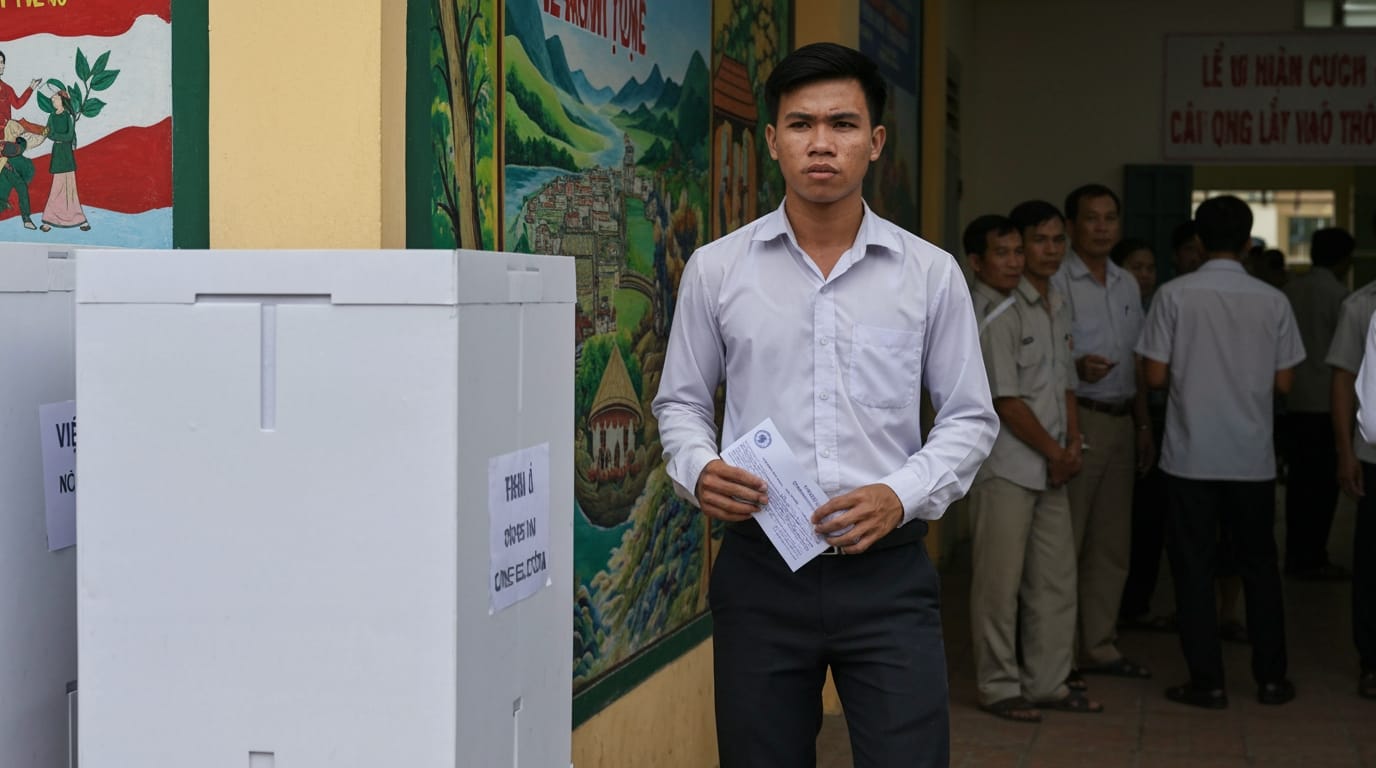
HANOI, Vietnam – Millions of Vietnamese citizens headed to polling stations across the nation Sunday to cast their ballots in legislative elections, a process widely seen as a carefully managed exercise to affirm the leadership of the ruling Communist Party of Vietnam (CPV). The nationwide vote for the 16th National Assembly and local People's Councils unfolds as the Southeast Asian country navigates robust economic growth alongside tight political control, with observers highlighting the predetermined nature of the electoral outcomes in a single-party state.
The Electoral Landscape: A Unanimous Mandate
Polling stations, which opened across Vietnam on Sunday, March 15, 2026, marked the formal commencement of a crucial electoral cycle. Voters are tasked with selecting 500 members for the powerful National Assembly from a pool of 864 candidates. Concurrently, citizens are also electing representatives to provincial and municipal People's Councils, which are instrumental in local governance and policy implementation. While the National Assembly is constitutionally designated as the country's top legislative body, its primary function, according to numerous reports, is to ratify decisions already made by the dominant Communist Party. This dual role underscores the centralized authority of the CPV within Vietnam's political architecture.
The electoral process is characterized by a high degree of state oversight. Of the 864 candidates vying for the 500 National Assembly seats, only 65 are not formal members of the Communist Party. Even these non-party candidates, including a mere four approved independent candidates, are required to undergo a rigorous three-stage selection process orchestrated by the CPV, effectively ensuring ideological alignment and loyalty. This rigorous vetting process leaves little room for genuinely independent political discourse or opposition within the legislative framework.
A One-Party System in Practice: The CPV's Enduring Grip
Vietnam operates under a single-party system, with the Communist Party of Vietnam exercising ultimate authority over all facets of governance and society. This election, therefore, serves less as a contest of differing political ideologies and more as a mechanism to renew and legitimize the Party's control. The selection of candidates is meticulously managed by the CPV, ensuring that those who stand for election adhere to the Party line.
The current political climate is notably shaped by General Secretary Tô Lâm, a former security chief who has recently consolidated power across various government spheres. His ascendancy and reported ambition to hold dual roles as party chief and president, echoing a model seen in neighboring China, highlight a tightening of political security and control over dissent and media. Such moves reinforce the centralized nature of decision-making within the Party and its pervasive influence over the electoral process. Critics view these elections as largely symbolic, contending they are "an election in name only" or a "secure sham" designed to project democratic legitimacy while maintaining absolute Party control.
Balancing Economic Growth with Repressive Control
Vietnam has emerged as a significant economic success story, achieving an impressive 8% growth last year. This rapid economic development often stands in contrast to its tightly controlled political environment. The CPV frequently highlights its role in fostering stability, which it argues is essential for continued economic prosperity. This narrative is a cornerstone of the Party's legitimacy, appealing to a population that has experienced substantial improvements in living standards.
However, international observers and human rights groups frequently point to the repressive aspects of Vietnam's one-party rule, noting that the state often jails critics and maintains strict control over freedom of expression. This tension between economic dynamism and political rigidity is a defining characteristic of modern Vietnam. While the elections are presented domestically as a demonstration of citizens' rights and the Party's commitment to fair polls, critics maintain that the absence of genuine competition and the suppression of alternative voices fundamentally undermine the democratic principles these elections ostensibly represent. The rigorous pre-selection of candidates means that the choice offered to the 73.4 to 73.5 million eligible voters is effectively confined within parameters set by the ruling Party.
The Mechanics of Participation and Civic Duty
Despite the controlled nature of the elections, voter participation is actively encouraged and often very high. Local community leaders play a significant role in mobilizing citizens, sometimes employing pressure tactics or permitting proxy voting to ensure high turnout. This emphasis on civic duty and collective participation is deeply ingrained, reflecting a culture where state-mandated engagement is a strong social expectation.
In an effort to ensure accessibility and demonstrate the Party's commitment to citizens' rights, early voting areas were established for approximately 4,000 voters, including those on ships, oil rigs, and other specialized environments, well in advance of the main election day. Additionally, the election process incorporates specific targets for candidate diversity. The law mandates that at least 18% of candidates must belong to ethnic minorities, and at least 35% must be women. This year's candidate list reflects these commitments, with 188-190 ethnic minority candidates (21.76%) and 392 female candidates (45.37%) among the contenders for National Assembly seats. These quotas aim to ensure broad representation across different demographic groups within the Party-approved candidate pool. To secure a seat, a candidate must garner at least 50% of the votes in their respective constituency. Final results are not anticipated for at least a week following Sunday's voting.
A Continual Path of Controlled Evolution
As Vietnam's polls close, the outcome is widely expected to reinforce the Communist Party's dominant position. These elections, while lacking the competitive elements found in multi-party democracies, serve as a periodic affirmation of the Party's leadership and its vision for the nation's future. They are a critical component of Vietnam's unique political model, blending socialist ideology with a market-oriented economy. The process, overseen by a tightly controlled political apparatus and guided by figures like General Secretary Tô Lâm, continues to prioritize stability and Party unity as the cornerstones of national development. While criticisms persist regarding the limitations on political freedoms, the electoral event underscores the enduring power of the CPV and its methodical approach to governance in a rapidly evolving Southeast Asian landscape.


