Protesters Attack Cuban Ruling Party Office Amid Worsening Blackouts
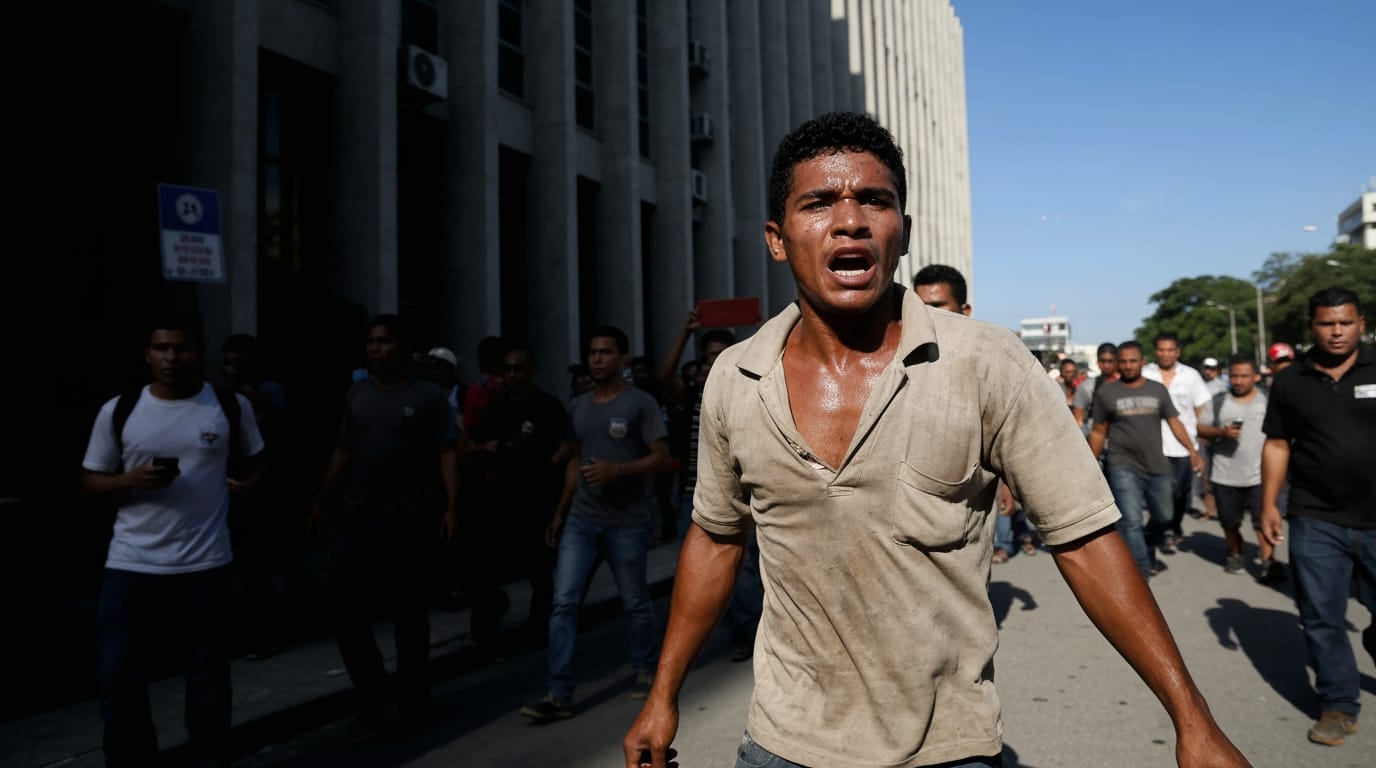
MORÓN, Cuba — Escalating frustration over prolonged and severe power outages, coupled with deep-seated economic hardship, boiled over in the central Cuban city of Morón, where anti-government protesters attacked and set fire to a local office of the ruling Communist Party of Cuba (PCC) early Saturday. The rare act of public dissent underscores the intensifying crisis gripping the island nation, which has seen its electrical grid falter and essential supplies dwindle to critical levels.
The Spark of Discontent in Morón
The unrest in Morón, a city approximately 250 miles east of Havana, began late Friday as a peaceful demonstration against pervasive power cuts and food shortages. However, the protest quickly intensified in the early hours of Saturday morning, with state-run media reporting that the rally transformed into acts of "vandalism" following an exchange with local authorities. Videos circulating on social media captured scenes of a large fire and individuals throwing rocks at the Communist Party building, accompanied by chants of "liberty." Reports from Cuban state media indicated that a "smaller group of people" threw stones at the entrance and ignited a fire in the street using furniture from the reception area. Beyond the PCC office, other government establishments in the vicinity, including a pharmacy and a state market, also sustained damage. Authorities confirmed the arrest of five individuals in connection with the incident. While some social media footage appeared to capture gunfire and a person lying on the ground, state media outlet Vanguardia de Cuba denied that anyone was injured by police gunfire, stating that an "intoxicated" participant had fallen and was being treated for injuries.
A Nation in Darkness: The Blackout Crisis
The immediate catalyst for the Morón protests, and similar, albeit smaller, demonstrations across the island, is Cuba's worsening energy crisis. The country has been plagued by severe and prolonged power outages, with some regions experiencing electricity cuts lasting 15 to 20 hours daily. These blackouts are a symptom of a deeply fragile and aging electrical grid, a system heavily reliant on oil-fired thermal plants built decades ago that are now in deteriorated condition.
Frequent breakdowns, such as those at the Antonio Guiteras Thermoelectric Power Plant, the island's largest electricity provider, often trigger widespread outages. The crisis is further compounded by a critical lack of fuel shipments. Cuba traditionally depended on subsidized oil from Venezuela, but these shipments have drastically declined, particularly after the U.S. government, under former President Donald Trump, intensified sanctions and moved to curtail Venezuelan oil supplies to the island. Cuban officials, including President Miguel Díaz-Canel, have explicitly blamed the U.S. embargo and "financial and energy persecution" for the difficulties in importing fuel and spare parts necessary for maintaining the power infrastructure. The government recently acknowledged that fuel reserves are "very limited." The consequences of these blackouts extend beyond mere inconvenience; they lead to food spoilage, disrupt communication services, and strain an already struggling healthcare system reliant on scarce diesel for emergency generators.
Deepening Economic Hardship and Social Unrest
The energy crisis is inextricably linked to Cuba's broader and severe economic downturn, considered by many to be the worst since the dissolution of the Soviet Union in 1991. Decades of economic mismanagement, coupled with tightening U.S. sanctions, have created acute shortages of food, medicine, and other basic necessities. Inflation is rampant, and the purchasing power of ordinary Cubans has eroded significantly.
Public protests, especially those that turn violent, are historically uncommon in Cuba due to the government's tight control and potential for harsh retaliation. However, the ongoing hardships have led to increasing public discontent. Beyond the recent events in Morón, smaller-scale demonstrations have occurred in Havana and other cities, often taking the form of "cacerolazos" — banging pots and pans to express frustration over power cuts. University students have also staged sit-ins to protest electricity restrictions. The 2019 Cuban constitution grants citizens the right to demonstrate, yet specific legislation defining this right remains stalled, leaving protesters in a precarious legal position.
Government Response and International Scrutiny
The Cuban government has consistently attributed the nation's economic woes and energy shortages to the long-standing U.S. embargo, labeling it a form of "financial and energy persecution." Cuban President Miguel Díaz-Canel has blamed the U.S. for inciting unrest and warned that any protests would be "processed rigorously under our revolutionary law." State media has also engaged in efforts to counter what it describes as "media manipulation" aimed at "sowing fear and confusion."
Following the Morón incident, the Interior Ministry announced an investigation into the "vandalism acts." Human rights organizations, however, have voiced concerns over the government's response to protests, citing a history of arbitrary detentions and lengthy prison sentences for participants in previous demonstrations, such as those in July 2021. Rights groups reported that over 650 protesters from the 2021 demonstrations remain imprisoned, with prosecutors often framing criticism of the government or peaceful protest as criminal behavior. The United Nations Working Group on Arbitrary Detention has deemed some of these detentions to be arbitrary. International travel advisories have also highlighted the severe disruptions to essential infrastructure, fuel shortages, and the potential for protests to escalate, urging visitors to exercise caution.
An Uncertain Future
The attack on the Communist Party office in Morón represents a significant escalation in public discontent within Cuba, reflecting the profound and growing desperation among its citizens. With persistent blackouts, dwindling food supplies, and a deepening economic crisis, the social fabric of the island is under immense strain. The Cuban government faces the daunting challenge of addressing these systemic issues while simultaneously managing a populace increasingly willing to voice its grievances despite the risks. The ongoing crisis, exacerbated by external pressures and internal vulnerabilities, leaves Cuba's immediate future uncertain, with the potential for further social unrest looming large.


