Roman Restoration Sparks Political and Artistic Firestorm Over Angel's Resemblance to Premier Meloni
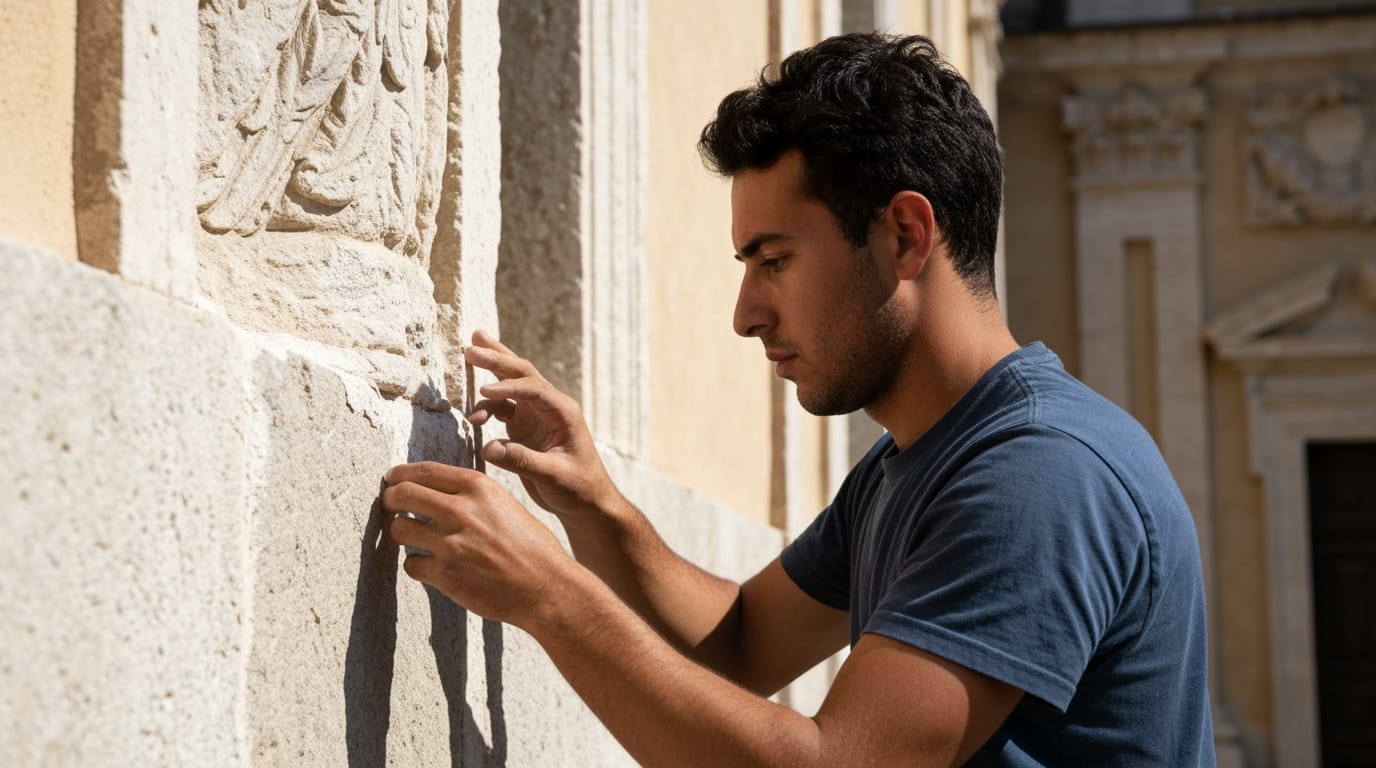
ROME, Italy – A recent restoration project within the ancient Basilica of San Lorenzo in Lucina has ignited a fervent national debate, drawing the attention of Italy's culture ministry and sparking widespread discussion across political and artistic circles. The controversy centers on a newly restored fresco of an angel, whose facial features have been widely noted to bear a striking resemblance to current Italian Prime Minister Giorgia Meloni. The unexpected likeness has prompted an official probe, raising critical questions about artistic integrity, restoration ethics, and the intersection of politics with Italy’s unparalleled cultural heritage.
The Emergence of an Unlikely Likeness
The heart of the dispute lies within the fifth-century Basilica of San Lorenzo in Lucina, a historic edifice nestled in central Rome. The specific artwork in question features two angels that flank a marble bust dedicated to Umberto II of Savoy, Italy's last king, whose brief reign concluded in 1946. It was during the recent restoration of these figures that the alleged transformation occurred. Originally depicted as a simpler cherubic form, one angel's visage now purportedly mirrors that of Prime Minister Giorgia Meloni. The resemblance was initially reported by La Repubblica newspaper and quickly gained traction, spreading across social media and becoming a pervasive topic of public discourse. The unexpected outcome has turned what would typically be a routine conservation effort into a complex political and cultural flashpoint.
Questions of Artistic Integrity and Oversight
The restoration work, which produced the controversial angel, was reportedly not executed by the professional restorers engaged in other parts of the Basilica. Instead, reports indicate the project was undertaken by a "sacristan and decorator" with prior connections to political figures, including former Premier Silvio Berlusconi, and a history of involvement with a now-disbanded right-wing political coalition. This detail has intensified scrutiny surrounding the project's approvals and methods.
Bruno Valentinetti, identified as the restorer, has vehemently denied intentionally crafting a likeness of Meloni, dismissing the claims as "inventions." He maintains that his work aimed to restore the fresco to its appearance from 25 years prior, emphasizing the necessity to adhere to existing designs and colors. However, the rector of the Basilica, Monsignor Daniele Micheletti, conceded to news agency ANSA that upon inspection, "there is a certain resemblance," suggesting the restorer be questioned directly regarding his choices. The Diocese of Rome also expressed "astonishment" at the angel's appearance, indicating an "artistic intervention seemed obvious" and that they had been unaware of the issue or the restorer's intentions.
This situation highlights a crucial aspect of cultural preservation in Italy: adherence to the Cultural Heritage and Landscape Code. This stringent legal framework explicitly forbids "arbitrary alterations, customizations, and interventions not strictly based on scientific and historical-artistic criteria" in the restoration of protected properties. Critics, particularly from the opposition Partito Democratico (PD), argue that the alleged alteration constitutes a "potential and serious violation" of this code and have demanded that Culture Minister Alessandro Giuli intervene and contact the Superintendency of Rome for an immediate investigation. The debate underscores the vital role of oversight bodies like the Superintendency, which are mandated to approve and supervise restorations, especially for sites of significant artistic value.
Political Echoes in Sacred Art
The controversy quickly transcended the realm of art and cultural heritage, morphing into a political hot potato. Prime Minister Giorgia Meloni herself weighed in on the matter, albeit with an ironic tone, sharing a photograph of the angelic figure on her social media alongside the caption, "No, I definitely do not resemble an angel." While seemingly lighthearted, her comment did little to quell the political discussion that ensued.
Opposition parties have seized upon the incident, framing it as more than just an artistic misstep. The center-left Partito Democratico (PD) has been particularly vocal, with representative Irene Manzi asserting that "what has emerged is unacceptable" and demanding accountability from the Culture Ministry. The implications extend beyond the immediate incident, touching upon concerns about the politicization of cultural institutions and the potential for undue influence in the safeguarding of national treasures. The debate taps into a broader narrative regarding the delicate balance between artistic expression, political symbolism, and the sacred nature of religious art.
Italy's Enduring Struggle with Heritage Preservation
Italy, a nation steeped in history and art, possesses some of the world's most treasured cultural heritage sites. Its commitment to preserving this legacy is enshrined in robust legislation, such as the Cultural Heritage and Landscape Code, which seeks to protect and enhance these assets for future generations. However, the path of preservation is not always smooth, and restoration projects frequently become subjects of intense public and expert scrutiny. Historically, major restoration efforts, such as those on the Sistine Chapel, have sparked fierce debates among art historians and conservationists over methodologies and artistic intent.
The current "angel-gate" incident reflects an ongoing tension within Italy's cultural landscape. There have been recent legislative discussions, particularly initiated by the League party, aimed at potentially weakening the "binding" nature of rulings by the powerful conservation arm of the culture ministry, the Superintendency. While Culture Minister Alessandro Giuli reportedly opposed these changes, the very existence of such proposals indicates a persistent pressure to balance strict preservation guidelines with other national interests. The controversy at San Lorenzo in Lucina serves as a vivid reminder of the high stakes involved in cultural heritage management and the necessity of upholding strict scientific and ethical standards in any intervention on historic artworks.
The probe into the San Lorenzo in Lucina restoration is more than an investigation into an artistic anomaly; it is a profound examination of the principles governing Italy's priceless heritage. It highlights the complex interplay between artistic license, political influence, and the rigorous demands of preserving cultural artifacts. As the culture ministry delves deeper, the incident will undoubtedly contribute to the ongoing national conversation about how Italy protects its past while navigating the currents of its present political and social landscape. The outcome of this investigation will set an important precedent for future restoration endeavors and the stewardship of Italy's invaluable artistic patrimony.


