Romanian President's PM Appointment Stokes Constitutional Crisis, Deepens Democratic Concerns
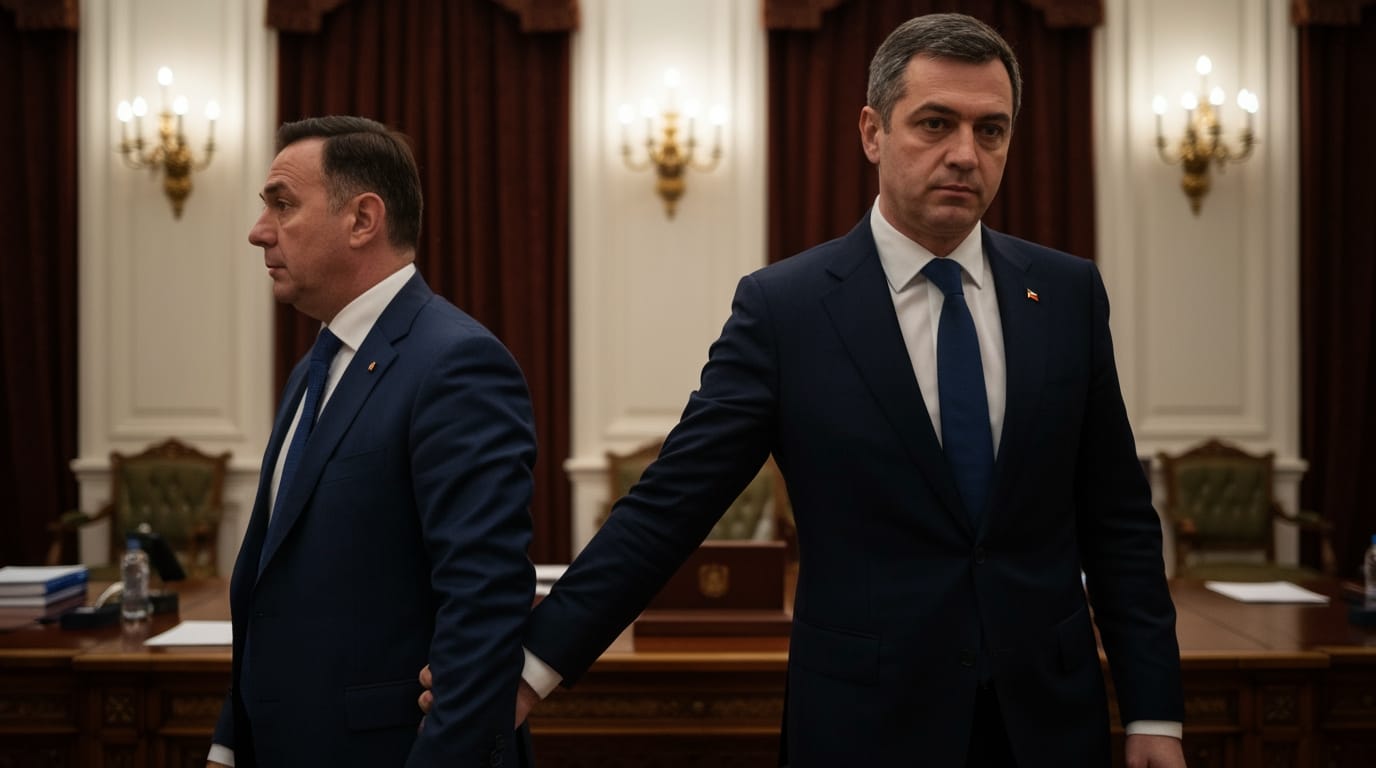
Romania is once again embroiled in political turmoil, as President Nicușor Dan's recent appointment of Adrian Veștea as Prime Minister has ignited a fresh constitutional debate and raised alarms about the country's adherence to democratic norms. The move, coming amidst a backdrop of increasing polarization and institutional instability, marks a critical juncture for the European Union member state, which has witnessed a concerning erosion of democratic principles in recent years.
The latest crisis began with the ousting of former Prime Minister Ilie Bolojan in early May 2026, following a no-confidence vote that saw the Social Democratic Party (PSD) align with the far-right Alliance for the Union of Romanians (AUR). This led President Dan to initially nominate Eugen Tomac as Prime Minister-designate. However, Tomac withdrew his candidacy after failing to secure sufficient parliamentary support to form a cabinet within the allotted ten days. In a swift and controversial turn, President Dan then tapped Adrian Veștea, a former mayor, to lead the government. This second nomination has drawn sharp criticism, particularly from the National Liberal Party (PNL), which accused President Dan of bypassing crucial constitutional consultation procedures.
A Presidential Decree Under Fire
The appointment of Adrian Veștea without prior consultations with the PNL, a significant political entity, has been decried by some as a direct breach of the Constitution. Senator Daniel Fenechiu, a PNL leader, publicly stated that President Dan's actions were unconstitutional, emphasizing that the purpose of such appointments is to establish a viable government, not to create further political strife. While acknowledging the unconstitutional nature of the move, Fenechiu tempered calls for the President's suspension, instead advocating for adherence to constitutional procedures. President Dan, for his part, has defended his decision, expressing confidence that Veștea possesses the ability to navigate the current crisis and forge a parliamentary majority. However, the President's evasiveness regarding the potential reliance on votes from the far-right AUR to secure parliamentary approval for Veștea's government has fueled further skepticism. This is particularly noteworthy given Dan's prior stance against accepting support from the far-right. Veștea now faces the formidable challenge of forming a minority government and securing a vote of confidence from a deeply fragmented Parliament.
Erosion of Democratic Norms: A Troubling Trajectory
The current imbroglio is not an isolated incident but rather the latest manifestation of a worrying trend in Romania's democratic evolution. The country's political landscape has been marked by significant turbulence since 2023, characterized by escalating polarization, institutional instability, and a visible weakening of democratic norms. A stark indicator of this decline came in 2024 when Romania was downgraded by the Economist Intelligence Unit's Democracy Index from a "flawed democracy" to a "hybrid regime" – a classification reserved for states that blend formal democratic processes with authoritarian practices. This downgrade followed the highly controversial annulment of the 2024 presidential election by the Constitutional Court, a decision attributed to allegations of widespread foreign interference and digital manipulation. That unprecedented event led to the extension of former President Klaus Iohannis's term, who ultimately resigned in February 2025. Persistent issues such as political clientelism, electoral manipulation, and judicial interference continue to undermine public trust and the integrity of democratic institutions. These systemic weaknesses have created fertile ground for the rising influence of nationalist, sovereigntist, and illiberal forces, further complicating the political landscape and challenging the foundations of Romania's post-communist democracy.
Economic Stakes and International Watchfulness
Beyond the immediate political ramifications, the prolonged instability carries significant economic consequences for Romania. The country is grappling with one of the highest budget deficits within the European Union, coupled with rampant inflation and a technical recession. The ongoing political gridlock threatens to delay the implementation of crucial reforms necessary for the disbursement of vital EU funds, particularly those allocated under the Recovery and Resilience Plan. With a deadline for implementation looming in August 2026, the political infighting could jeopardize billions of euros intended for economic stabilization and development. This situation places Romania under heightened scrutiny from its European partners, who are keen to see the country uphold its commitments to the rule of law and sound economic governance. Despite the internal challenges, President Dan has reiterated his desire for a "pro-Western government" committed to reforms, underscoring Romania's strategic alignment amidst a complex geopolitical environment.
Navigating an Uncertain Future
As Adrian Veștea embarks on the challenging task of forming a government, Romania stands at a critical crossroads. The current political crisis, triggered by the President's unilateral appointment of a Prime Minister-designate and exacerbated by underlying democratic fragilities, underscores the urgent need for a renewed commitment to constitutional principles and inter-institutional dialogue. The ability of the country's political actors to transcend partisan interests and prioritize national stability will determine whether Romania can navigate this period of profound uncertainty, secure its economic future, and reverse the troubling trend of democratic backsliding. The eyes of both its citizens and the international community remain fixed on Bucharest, awaiting a resolution that reinforces, rather than erodes, the tenets of a functioning democracy.


