Ukraine's Drone Blitz Exposes Cracks in Russia's Air Defenses
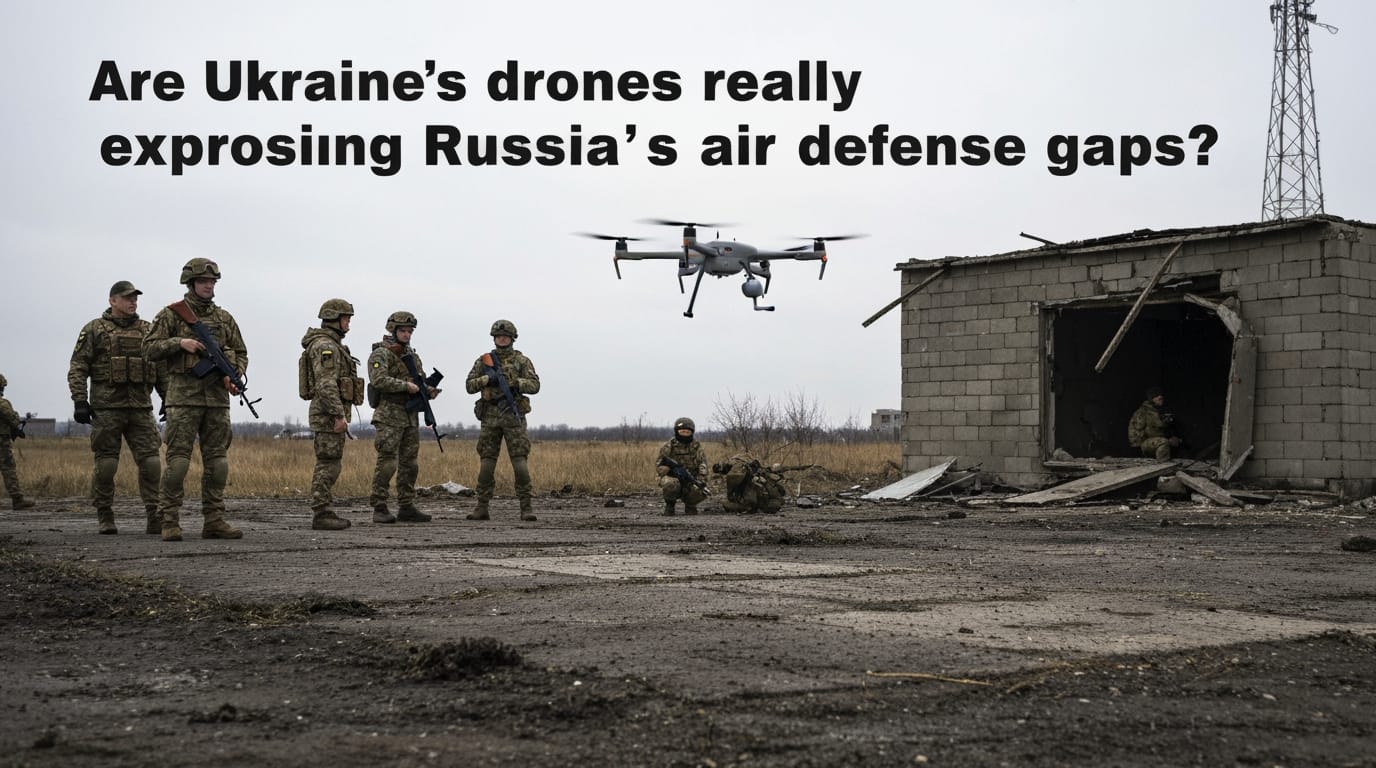
Kyiv's escalating drone campaign against targets deep within Russian territory is increasingly highlighting significant vulnerabilities in Moscow's sophisticated air defense network, forcing a strategic reallocation of resources and inflicting tangible economic and psychological damage. What began as sporadic incursions has evolved into a systematic and extensive aerial offensive, challenging the perception of Russian invincibility and reshaping the dynamics of modern warfare. This relentless pressure, characterized by swarms of domestically produced unmanned aerial vehicles (UAVs), suggests that Russia's layered defense systems, once considered among the world's most advanced, are struggling to adapt to the asymmetric threat posed by low-cost, high-volume drone attacks.
The Swarm Strategy: Ukraine's Expanding Drone Offensive
Ukraine has demonstrably ramped up its drone production and deployment, leveraging a variety of domestically developed UAVs to strike targets hundreds, and even thousands, of kilometers inside Russia. Types such as the FP-1 Firepoint, RS-1 Bars, Bars-SM Gladiator, UJ-26 Beaver, and UJ-22 Airborne are now frequently seen in these long-range operations, with some capable of reaching up to 2,700 kilometers from their launch points. This aggressive campaign targets a wide array of strategic infrastructure, including oil refineries, military installations, logistics hubs, and air defense systems themselves.
The tactic of overwhelming air defenses through sheer numbers has proven particularly effective. During a major attack on Moscow, for instance, Ukrainian forces reportedly utilized multiple types of drones, including decoy UAVs, with Firepoint drones forming the primary strike force. This approach can saturate radar systems and exhaust limited interceptor missile stocks, creating openings for some drones to reach their intended targets. Estimates suggest that in March 2026 alone, Ukraine launched more long-range drone strikes than Russia, deploying over 7,000 systems. Ukraine's Security Service has claimed that the military is systematically destroying Russian air defense assets, including launchers and radars, with 166 such targets neutralized since the beginning of 2026 and over 1,432 since the full-scale invasion began.
Russia's Struggling Defenses: A Mismatch in Modern Warfare
Russia operates a multi-tiered air defense network, featuring advanced systems like the S-300, S-400 Triumf, Pantsir-S1, Pantsir-S2, Tor, and Buk. These systems were largely designed to counter traditional aerial threats such as aircraft, ballistic, and cruise missiles, rather than the influx of small, low-flying, and often slow-moving drones. This inherent design limitation is proving to be a critical vulnerability.
Recent incidents have highlighted the chaotic and often improvised nature of Russia's response. During one of the largest drone attacks on Moscow, CNN reported video footage showing Russian soldiers firing man-portable air defense systems from busy roads, with one failed missile launch reportedly striking an oil tank on the outskirts of the capital. Experts from the Stockholm International Peace Research Institute and McKenzie Intelligence Services described this as a hasty, unprofessional, and improvised reaction. The S-400 system, Russia's premier long-range air defense asset, reportedly experienced severe operational failures during a mass drone offensive on Moscow, with its radars becoming saturated by the sheer volume of incoming targets. This saturation, combined with the difficulty in detecting and tracking numerous drones attacking simultaneously from different directions, significantly reduces the effectiveness of these advanced systems.
Strategic Redeployment and Resource Depletion
The increasing frequency and depth of Ukrainian drone attacks have compelled Russia to redeploy its air defense assets, scattering them across a vast territory to protect vital infrastructure and population centers. This dispersal weakens overall defensive cohesion and creates further gaps that Ukrainian drones can exploit. The Institute for the Study of War (ISW) noted that these regular strikes deep inside Russia expose the air defense system's inability to fully protect its own population.
Furthermore, there are indications that Russia is facing a depletion of its air defense missile stocks. Ukrainian officials have reported a reduction in Russia's S-300 missile interceptor stockpiles, partly due to their repurposing for offensive surface-to-surface strikes and partly due to their expenditure against the increasingly capable Ukrainian drone waves. International sanctions also exacerbate this problem, limiting Russia's access to the necessary technology to develop new anti-drone systems or even to sustain existing production rates. This forces Russia to choose between unfavorable defense options, making it progressively harder to effectively counter Ukraine's evolving drone tactics.
Broader Implications and the Evolving Nature of Air Defense
The effectiveness of Ukraine's drone campaign extends beyond immediate physical damage, having significant psychological, economic, and military implications. The strikes have brought the realities of the conflict directly to Moscow, challenging the Kremlin's narrative of security and prompting criticism from pro-war military bloggers regarding the authorities' failure to protect civilians. Economically, the attacks on oil refineries have caused substantial disruption, leading to a reported 43% drop in Russian oil exports in one week in March 2026, costing an estimated $1 billion in lost revenue. Ukrainian officials indicate that these strikes have reduced Russian refining capacity by approximately 17%. Court proceedings have also shown the collapse of major fuel contracts due to drone-induced damage to oil storage facilities, with some court rulings finding that storage operators failed to take adequate security measures.
Militarily, Ukraine's drone innovation is credited with reversing some Russian gains, enabling Ukrainian forces to disrupt Russian command and control, logistics, and forcing the dispersal of Russian forces. This demonstrates the evolving nature of air defense in modern conflict, where traditional systems designed for large, fast-moving threats are outmatched by swarms of smaller, slower, and often low-cost UAVs. Experts predict that unless Russia significantly upgrades its air defense network to specifically counter these drone threats, it will continue to struggle against coordinated drone attacks.
In conclusion, Ukraine's persistent and technologically advancing drone campaign is undeniably exposing profound gaps and vulnerabilities in Russia's air defense capabilities. The combination of overwhelming swarm tactics, the inherent design limitations of Russian systems against small UAVs, resource depletion, and strategic redeployment pressures is creating a complex challenge for Moscow. These drone operations are not only inflicting material damage and economic costs but are also reshaping the psychological landscape of the conflict and highlighting the critical need for continuous adaptation in air defense strategies in the face of rapidly evolving drone warfare.


