Rome Introduces Entry Fee for Iconic Trevi Fountain in Bid to Manage Mass Tourism
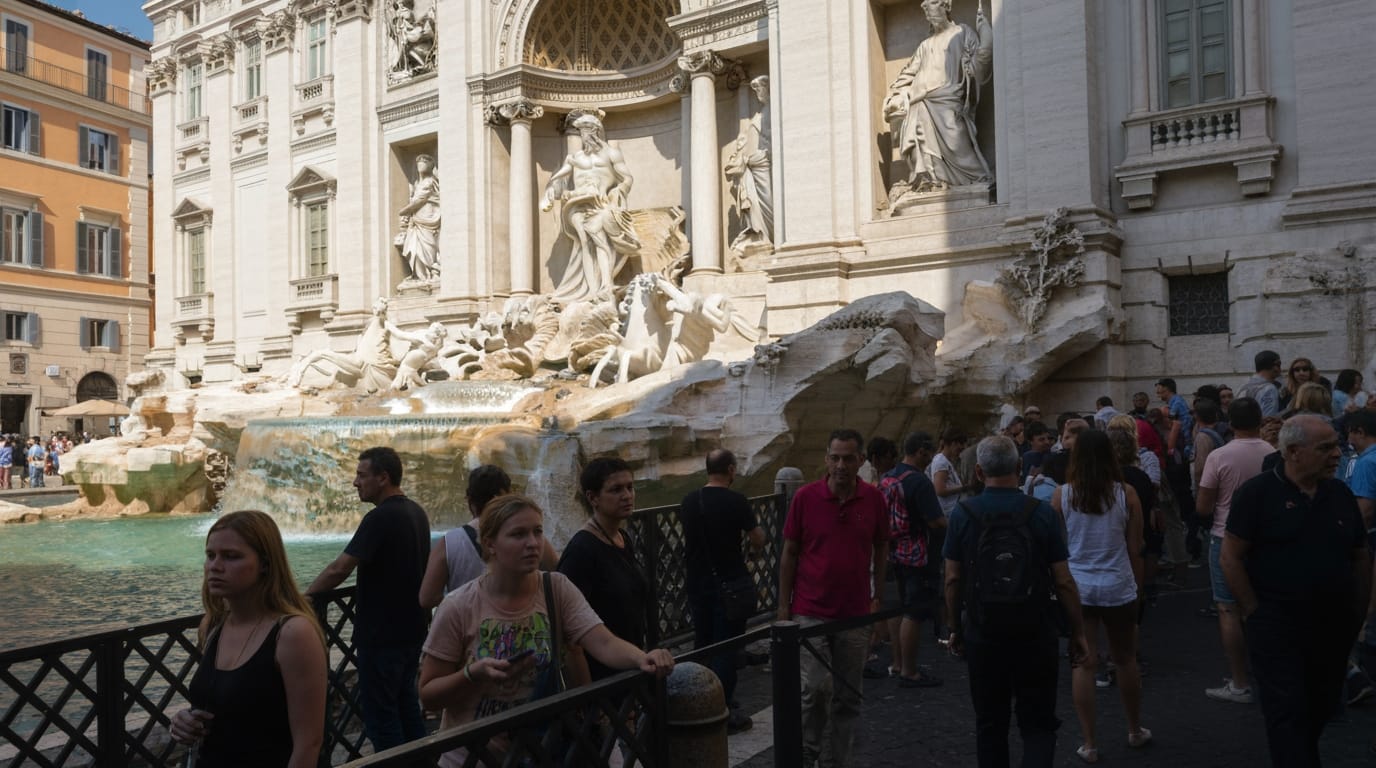
Rome, Italy – In a significant shift for one of the world's most beloved landmarks, tourists seeking close access to the historic Trevi Fountain will soon be required to pay a €2 entry fee, effective February 1, 2026. The measure, confirmed by Rome Mayor Roberto Gualtieri on Friday, December 19, 2025, marks a pivotal step in the Eternal City's ongoing efforts to manage the burgeoning crowds and preserve its invaluable cultural heritage. This new charge, targeting only non-residents, aims to regulate visitor flow, enhance the experience, and generate revenue for monument upkeep and urban improvements.
The Trevi Fountain, an exquisite Baroque masterpiece completed in 1762, has long been a symbol of Rome, drawing millions annually with its grandeur and the charming tradition of tossing a coin into its waters to ensure a return to the city. However, its immense popularity has led to unprecedented challenges, including overcrowding, environmental strain, and a diminished visitor experience. The introduction of this entry fee represents a proactive strategy by Roman authorities to strike a delicate balance between welcoming tourists and safeguarding the monument's integrity for future generations.
A New Era of Access Management
Under the new system, tourists will face a €2 fee to access the immediate vicinity of the fountain, specifically the stone steps leading down to its basin. The broader Piazza di Trevi, from which the fountain can still be viewed, will remain freely accessible to the public. Roman residents, conversely, will continue to enjoy free and unrestricted access to the monument, utilizing dedicated lanes to differentiate them from paying visitors. This tiered access model reflects a growing trend in European cities grappling with the impact of mass tourism.
The implementation of the ticketing system is being facilitated through collaboration between the Campidoglio (Rome's city council), the in-house company Zètema, responsible for cultural heritage management, and the Capitoline Superintendence. While initial reports suggested a January 7, 2026, start date, Mayor Gualtieri's announcement solidifies February 1, 2026, as the official commencement. Payment will be streamlined, with options for credit card purchases available on-site, in addition to potential online booking systems. Authorities have also clarified that no permanent barriers will be installed in the piazza itself, maintaining the public square's open character. The new regulations will limit the number of individuals in the immediate viewing area to approximately 400 people at any given time, a stark contrast to the thousands who often jostle for space.
The Imperative of Preservation and Experience
The decision to impose an entry fee is rooted in critical concerns about overtourism and its adverse effects on both the monument and the visitor experience. In the first six months of 2024 alone, the Trevi Fountain recorded over 5.3 million visitors, surpassing the Pantheon's total admissions for the entirety of 2024. Between January 1 and December 8, 2025, approximately nine million tourists visited the area, averaging 30,000 people daily. This staggering influx has led to "gridlock," as described by Mayor Gualtieri, and has contributed to issues such as wear and tear on the monument, difficulty for visitors to appreciate its artistry, and challenges with public order, including a rise in pickpocketing.
City officials, including Councillor for Tourism and Major Events Alessandro Onorato, have strongly advocated for the fee, emphasizing the need to protect the fragile site and improve the quality of visits. The system is also intended to discourage disruptive behaviors, such as people eating on the steps, feeding pigeons, or even attempting to re-enact famous scenes from films like Federico Fellini's "La Dolce Vita." Onorato suggested that such measures would make it "more complicated" for individuals to violate rules, as their entry would be registered. The move follows a year-long trial of visitor quotas, which limited the number of people to 400 at a time, proving effective in managing crowds.
Economic Returns and Reinvestment
The new entry fee is projected to generate substantial revenue for the city. Mayor Gualtieri estimates that the €2 charge for the Trevi Fountain alone could bring in approximately €6.5 million annually. Some reports from Corriere della Sera even suggest a city-wide revenue potential of €20 million annually from this and other new fees. These funds will not be directed into the general municipal treasury but are earmarked for specific purposes: enhancing tourist services, improving accessibility, ensuring regular maintenance and conservation works for the fountain, and contributing to broader urban redevelopment projects.
It is important to note that this new fee is entirely separate from the centuries-old tradition of tossing coins into the fountain. The estimated €1 to €1.5 million collected annually from these coins, which typically amounts to €3,000 to €4,000 daily, will continue to be donated entirely to Caritas, a charity supporting food banks and social programs in Rome. The distinction highlights the city's commitment to both preserving its heritage and supporting its community.
Divided Opinions and a Broader European Trend
The announcement has elicited a range of reactions, sparking debate among locals, tourists, and consumer associations. The Italian consumer watchdog Codacons has voiced strong opposition to the monetization of cultural sites, arguing that tourists should be able to enjoy Rome's beauty for free. Codacons acknowledged the necessity of limiting overcrowding for preservation but expressed concerns that the fee could penalize access to one of Rome's most visited sites. Critics also worry that the introduction of a fee could detract from the "historic charm" of the fountain, transforming a public space into a commercialized attraction.
Conversely, proponents like Councillor Onorato defend the move as "really super logical," claiming that similar attractions in other countries would charge significantly more. Many residents and some visitors support the measure, hoping it will alleviate congestion and improve the overall atmosphere.
Rome's initiative is part of a broader trend across Italy and Europe to address overtourism. The Italian culture ministry introduced a €5 entry fee for the Pantheon in 2023, while Venice implemented a tourist entry fee during peak periods in 2024. Verona also recently began charging for access to the famous Juliet's balcony. These measures underscore a growing recognition among European cities that sustainable tourism management is crucial for the long-term viability of their cultural landmarks and the quality of life for their residents.
The Trevi's Enduring Legacy
The Trevi Fountain, designed by Nicola Salvi and later completed by Giuseppe Pannini, stands as a testament to late Roman Baroque artistry, depicting Oceanus, the god of water, flanked by allegorical figures and tritons. Its origins trace back to the Aqua Virgo aqueduct, dating to 19 B.C., which supplied water to ancient Rome. For centuries, it has been a public and accessible monument, its fame cemented by cinematic appearances and global admiration.
The transition from a completely free public space to a partially ticketed attraction marks a significant moment in the fountain's long history. The €2 fee, while nominal for most tourists, symbolizes a recalibration of priorities, where the preservation of cultural heritage and the quality of the visitor experience are increasingly taking precedence over unrestricted access. As Rome moves into 2026, the Trevi Fountain will serve as a prominent example of how major urban centers are evolving their tourism strategies to meet contemporary challenges.


