Russia Grapples with Deepening Fuel Crisis Amidst Escalating Attacks and Logistical Strain
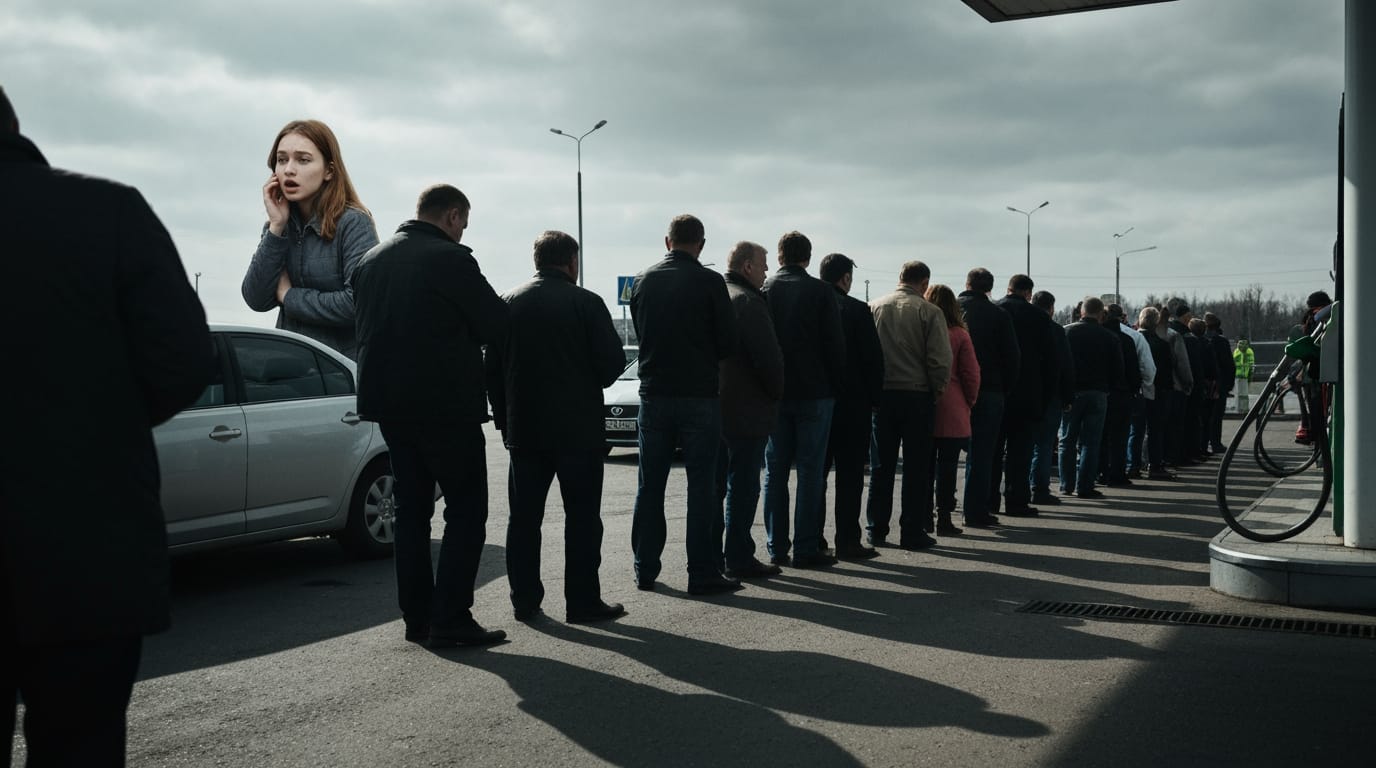
Russia is currently navigating a deepening fuel crisis, characterized by widespread shortages, rationing at gas stations, and significant price increases across numerous regions, including its major cities. The instability in the fuel market stems primarily from sustained Ukrainian drone attacks on key refining infrastructure, compounded by persistent logistical bottlenecks and the ongoing impact of international sanctions. This confluence of factors is exerting considerable pressure on the Russian economy and civilian population, with potential ramifications for the nation's broader war effort.
Widespread Shortages and Spiraling Prices Grip the Nation
Reports from across Russia paint a picture of escalating fuel scarcity. Over 70 regions, encompassing vital economic hubs like Moscow and St. Petersburg, are experiencing restrictions on gasoline and diesel sales. Major fuel retailers have instituted limits, with Tatneft stations, for example, capping sales of AI-92 and AI-95 gasoline at 20 liters per customer and diesel at 40 liters in some areas. Rosneft, another prominent operator, has imposed a 90-liter limit per vehicle, while Lukoil restricts purchases to 100 liters of either gasoline or diesel per transaction. These measures are designed to curb panic buying and manage dwindling supplies.
The shortages extend beyond individual motorists. Farmers in southern Russia, the Central Black Earth zone, and the Volga region are grappling with significant diesel delivery gaps, particularly critical during the ongoing planting season. The aviation sector has also been impacted, with several cities, including Nizhny Novgorod and Krasnodar, implementing restrictions on aircraft refueling. Wholesale prices for AI-95 gasoline and diesel saw a 10% increase in the first half of June alone, with retail gasoline prices rising 3.93% over the month to early June, marking the sharpest jump since 2018. This surge contributes to an overall inflation rate that could exceed 6% year-on-year.
Ukrainian Drone Strikes: A Primary Catalyst
The most significant factor driving Russia's current fuel woes is the intensified campaign of Ukrainian drone attacks targeting the nation's oil refining infrastructure. These strikes have escalated dramatically, with the number of drone attacks on Russian refineries nearly doubling since the beginning of 2026. Military intelligence suggests that these assaults have disabled more than 30% of Russia's total refining capacity, with at least 16 major oil refineries and terminals hit and over 40 technological units forced offline.
The damage has been substantial. For instance, the Ryazan and Novokuybyshevsk refineries, operated by Rosneft, sustained significant hits. The Ryazan plant, crucial for supplying fuel to the Moscow region, saw approximately half of its fuel output halted due to damage to two of its three main refining units. The Novokuybyshevsk refinery, considered technologically advanced, had its key atmospheric distillation unit completely shut down. Energy Intelligence estimated that almost a third of Russia's refining capacity, approximately 2.14 million barrels per day, was idle in early June. The cumulative effect of these sustained and repeated strikes on both refining infrastructure and distribution networks has been particularly impactful, with experts noting that the oil refining sector has seen a decline to levels last observed during the 2009 economic crisis.
Sanctions and Logistical Bottlenecks Exacerbate Challenges
Beyond direct attacks, international sanctions continue to complicate Russia's ability to recover from these disruptions. The lack of imported spare parts and specialized equipment poses a significant challenge to repairing damaged refineries, leading to prolonged shutdowns. This impediment prevents Russia from quickly restoring operational capacity, thereby prolonging and deepening the domestic fuel shortage.
Furthermore, Russia's extensive logistical networks, vital for fuel distribution across its vast territory, are facing considerable strain. Attacks on fuel depots and railway hubs have, in some instances, led to a collapse of the logistics system, particularly evident in occupied Crimea. The peninsula's transport networks have proven vulnerable to attacks on bridges and supply routes, forcing authorities in Sevastopol to suspend fuel distribution after tanker trucks failed to reach the city. Internal logistical bottlenecks, heavy reliance on railway infrastructure, and delays in rail transport—partially due to redirected export flows from west to east—further exacerbate the issue. Remote regions, such as Murmansk, face additional difficulties and increased costs in transporting fuel, rendering distribution economically unviable in some cases and threatening the closure of independent filling stations.
Government Response: Quality Sacrifices and Export Controls
In an attempt to mitigate the growing crisis, the Russian government has implemented several measures. Notably, it has authorized some refineries to produce lower-grade gasoline and diesel for the domestic market. This involves relaxing environmental standards, allowing for higher levels of sulfur and aromatic hydrocarbons, a measure that was initially introduced in autumn and extended in May. While allowing for greater fuel quantity, this policy compromises fuel quality; for instance, gasoline can now contain up to 150 parts per million of sulfur, 15 times the maximum permitted in Europe, China, and India. Drivers may not be aware of the lower quality, as the fuel can still carry the Euro-5 label without specific markings.
The government has also turned to export controls to prioritize domestic supply. In July 2025, officials reportedly considered a fresh ban on gasoline exports for August and September due to rising domestic prices. This follows existing restrictions imposed since March 1, 2025, for traders, oil depots, and smaller producers. Additionally, jet fuel exports have been banned until the end of November to safeguard domestic supplies. Previously, a nationwide ban on gasoline exports and restrictions on diesel exports were implemented until the end of 2025 in response to drone attacks.
The "damper mechanism," a system of subsidies designed to compensate refiners for selling fuel domestically below export prices, has also seen adjustments. President Vladimir Putin signed a decree loosening restrictions on these subsidies to ensure continued state support, particularly as wholesale prices for gasoline and diesel exceed predefined thresholds. This measure aims to encourage a consistent flow of fuel to the domestic market, even when exporting is more profitable. Despite these efforts, Deputy Prime Minister Alexander Novak had previously stated in February 2026 that the situation was "absolutely stable" with production volumes exceeding domestic demand. However, current developments indicate a stark contrast to this assessment.
An Uncertain Outlook
The current situation suggests Russia's fuel market is facing considerable strain. While some analysts, like Energy Intelligence, have warned of a potential "worst fuel crisis in Russia's history," others, such as Bloomberg, noted in early June that the situation had not yet reached the crisis levels seen in 2023. Nevertheless, the cumulative impact of persistent Ukrainian drone attacks, which are systematically targeting critical infrastructure, combined with the difficulties in acquiring spare parts due to sanctions, poses a significant long-term threat to the stability of Russia's fuel supply.
The government's reactive measures, including quality compromises and export bans, highlight the severity of the challenge. Should the attacks continue unabated and logistical issues persist, the current disruptions could escalate into a more severe and prolonged crisis, impacting both the civilian population's daily life and the operational capacity of the Russian military. The ability of Russia to repair and protect its energy infrastructure will be a critical determinant of its domestic fuel market stability in the coming months.


