Russia Turns to India to Stem Critical Labor Shortage
MOSCOW — Russia is increasingly looking to India to alleviate a severe and deepening labor crisis, a predicament exacerbated by the ongoing conflict in Ukraine, long-term demographic challenges, and a significant outflow of its domestic workforce and traditional migrant laborers. A series of recent agreements and a sharp increase in work permits signal a strategic pivot by Moscow to tap into India's vast and youthful population to fill critical gaps across its economy. This evolving partnership, however, comes with both significant opportunities for Indian workers and serious concerns regarding their safety and welfare.
Russia's Escalating Workforce Deficit
The Russian economy is grappling with an acute labor shortage, a problem that has intensified dramatically over the past two years. Estimates suggest that by the end of 2024, Russia was short approximately 2.6 million workers, with projections indicating this deficit could swell to 3.1 million by 2030. Some analyses even forecast a need for more than 12 million foreign workers by 2032 to sustain economic growth.
Several intertwined factors contribute to this critical shortfall. The war in Ukraine has mobilized hundreds of thousands of working-age men into military service, while also prompting a mass exodus of those who fled the conflict or sought opportunities abroad. Additionally, Russia's long-standing demographic challenges, characterized by low birth rates in the 1990s and early 2000s, mean fewer young people are entering the workforce. This demographic crunch is further compounded by a significant departure of Central Asian migrant workers, who traditionally formed a substantial part of Russia's labor force. The tightening of immigration regulations following a terrorist attack in March 2024 and the weakening ruble have made Russia less attractive to these workers, driving many away. The resultant competition for scarce labor has led to rapidly rising wages, particularly in the defense industry, fueling inflation and straining the civilian sector.
India Emerges as a Key Labor Source
In response to its deepening crisis, Russia has significantly ramped up efforts to recruit workers from India. This initiative gained substantial momentum following a labor mobility agreement signed between India and Russia in December 2025 during Russian President Vladimir Putin's visit to India. The agreement aims to simplify procedures for Indian workers to enter Russia.
Data reflects a clear trend: Russian authorities issued 56,500 work permits to Indian citizens in 2025, a notable increase from 36,200 in 2024 and 8,000 in 2022. These figures mark the highest levels since at least 2017. For 2025, Russia's Labor Ministry allocated nearly a third of its total foreign worker quota – approximately 71,817 positions – specifically to Indian passport holders. This strategic focus underscores Russia's view of India's massive youth population, with a median age of 28.4, as a crucial asset.
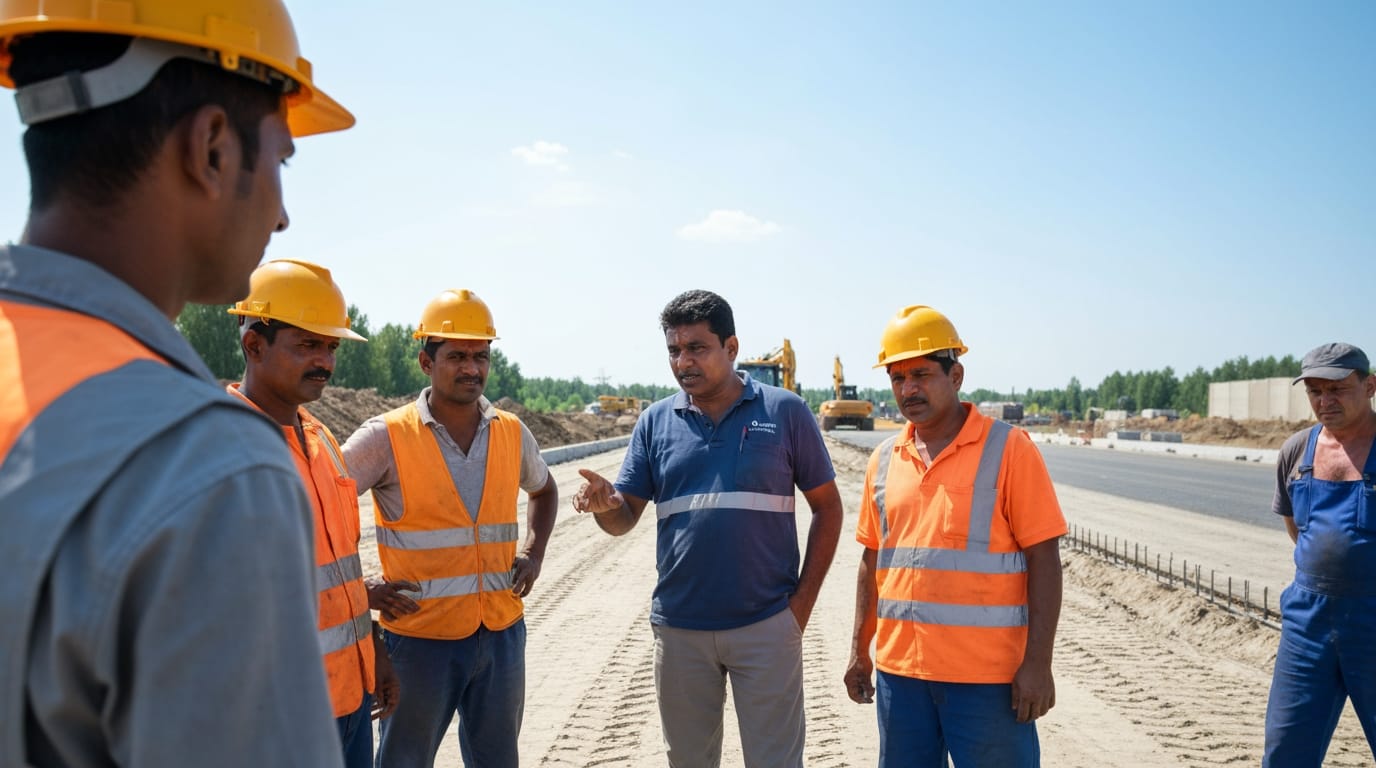
Indian workers are being sought across various sectors, including construction, manufacturing, and textiles. Specific regions with high demand include the Moscow region (for tailors, maintenance workers, trowelmen), the Amur region (construction workers), and the Leningrad region (garment workers, installation personnel). Russian employers find Indian laborers appealing due to their combination of experience, youth, and comparatively lower wage expectations. Beyond traditional blue-collar roles, there is also rising interest in skilled Indian professionals for machinery and electronics sectors. Some estimates suggest the number of Indian labor migrants in Russia could eventually reach as many as 400,000.
Opportunities and Perils for Indian Migrants
For many Indian workers, Russia offers the promise of significantly higher wages than they could earn for similar work in their home country, providing a compelling financial incentive. Recruitment agencies, such as Vira International Placements, play a role in connecting Indian workers with overseas opportunities, emphasizing India's strong position in the global labor market due to its large working-age population. The Indian government, recognizing the potential, has also been actively pursuing labor mobility deals and a new bill to safeguard its workers abroad, aiming to leverage its workforce as a strategic asset.
However, this pursuit of economic opportunity is shadowed by serious risks. Reports indicate that hundreds of Indian workers have been forcibly recruited or duped into fighting for Russia in Ukraine. Over the past two to three years, at least 202 Indian workers are believed to have been affected, with 26 fatalities. Families of these workers allege they were lured by agents promising well-paying non-military jobs and were sent to Russia on visitor visas, only to find themselves on the front lines. Concerns about inadequate labor protection laws in Russia and the potential for exploitation remain significant. There is a lack of clear frameworks for rescuing those who fall victim to such deceit. Experts warn that without extensive efforts from the Indian government, the possibility of more Indian workers being coerced into war efforts remains a real threat. Social tensions and the potential for racial profiling against economic migrants from India, similar to the experiences of Central Asian workers, are also concerns.
Geopolitical and Economic Dynamics
The burgeoning labor migration between India and Russia represents a complex interplay of economic necessity and geopolitical shifts. For Russia, securing a consistent supply of foreign labor is crucial for maintaining its economic stability and supporting its industrial base, particularly as its war economy demands increased production. The pivot towards India reflects a conscious strategy to diversify its labor sources away from Central Asian countries and address deep-seated workforce issues.
For India, facilitating overseas employment is a means to harness its demographic dividend and boost remittances, which reached an estimated $135 billion in 2024. India has actively sought to create structured pathways for its workforce to global markets facing labor shortages. This approach seeks to transform India's large working-age population into a strategic asset. However, the challenges are considerable, including skills mismatches, the need for continuous updates to agreements, and most critically, ensuring the protection of its citizens abroad. The government is focused on strengthening institutional coordination, establishing best practices for migration agreements, and enforcing welfare protections for Indian workers.
Navigating a Complex Future
The reliance on Indian labor signifies a new chapter in Russia's economic strategy and a critical development in India's global labor mobility initiatives. While this presents an opportunity for thousands of Indians to seek better livelihoods, it also highlights the inherent vulnerabilities in a globalized labor market. The success of this collaboration hinges on robust mechanisms to ensure the ethical recruitment, fair treatment, and comprehensive protection of Indian workers in Russia. Without these safeguards, the pursuit of economic opportunity risks exposing vulnerable individuals to exploitation and dire consequences. The coming years will reveal whether this strategic alliance can effectively balance the economic needs of one nation with the human security of another's citizens.


