Russia Unleashes Massive Strikes on Ukraine's Power Grid Amid Freezing Winter
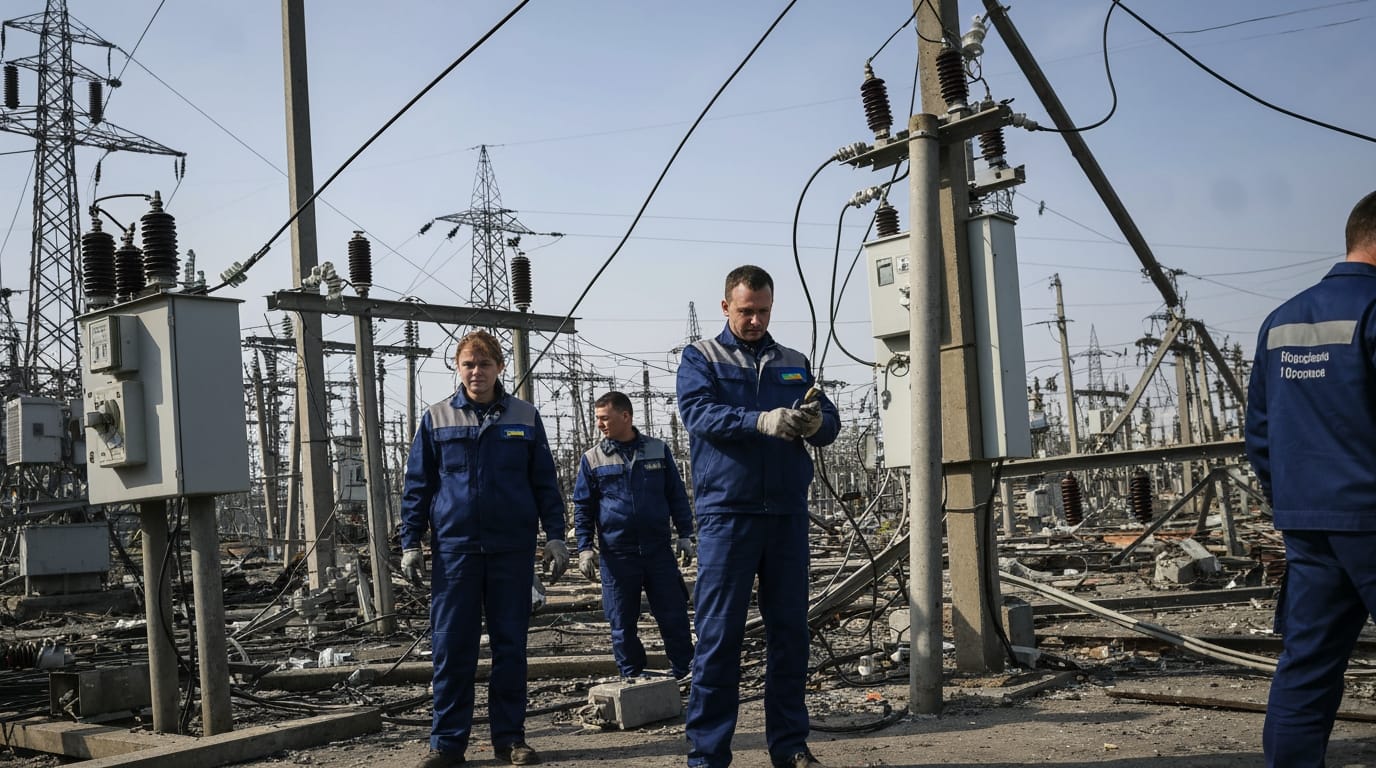
KYIV, Ukraine – Russia has launched another "massive attack" on Ukraine's energy infrastructure, triggering widespread emergency power outages across the nation as temperatures plummet to dangerously low levels. The latest barrage, which occurred on February 7, 2026, targeted critical substations, high-voltage transmission lines, and thermal power plants in multiple regions, exacerbating an already dire humanitarian situation and underscoring Moscow's persistent strategy of weaponizing winter against the civilian population. Ukrainian officials have described the ongoing campaign as an attempt to undermine morale, disrupt essential services, and pressure Kyiv into accepting unfavorable peace terms.
A Relentless Campaign: The Weaponization of Winter
Since its full-scale invasion began in February 2022, Russia has systematically targeted Ukraine's energy sector, transforming power grids, heating systems, and water supplies into direct battlegrounds. These attacks have intensified since the spring of 2024, representing a deliberate and calculated strategy to inflict maximum hardship on Ukrainian civilians. The campaign aims to cause mass blackouts, disrupt daily life, and create new waves of displacement, potentially pushing authorities towards a peaceful resolution on Moscow's terms. Ukrainian Energy Minister Denys Shmyhal reported that the recent strikes hit key elements, including 750-kilovolt and 330-kilovolt overhead transmission lines which form the backbone of Ukraine's electricity network, alongside thermal power plants such as Burshtyn and Dobrotvir in western Ukraine. This latest assault saw emergency power outage schedules enacted across most regions, with additional critical measures in eastern and northern areas.
The scale of destruction to Ukraine's energy infrastructure is staggering. By 2022-2023, approximately half of the nation's power generation capacity was either occupied, damaged, or destroyed. The occupation of the Zaporizhzhia nuclear power plant alone reduced available Ukrainian power generation capacity by 6 gigawatts. Further attacks between March and May 2024 led to the loss of an additional 9 gigawatts, primarily from thermal and hydro assets, leaving Ukraine with only about one-third of its pre-war capacity. The Royal United Services Institute (RUSI) reported that by mid-June 2024, Russian strikes had cumulatively destroyed 9 gigawatts of Ukraine's domestic power generation, equating to half of the country's production capacity when compared to the winter 2023 peak consumption of 18 GW. Beyond generation facilities, combined heat and power plants and hundreds of boiler houses have also been extensively damaged or completely destroyed.
Humanitarian Crisis Deepens as Infrastructure Crumbles
The human cost of Russia's sustained assault on the power grid is profound and growing. Millions of Ukrainians are routinely left without electricity, heating, and running water, often during sub-zero temperatures. Kyiv, for instance, experienced a forecast of -19 degrees Celsius (-2 degrees Fahrenheit) around the time of the latest attacks, with over 1,200 residential buildings reportedly without heat for days following previous bombardments. Such conditions not only jeopardize physical health but also exacerbate mental health concerns, with nearly half the population reporting such issues, according to World Health Organization assessments.
The disruption extends to critical services, including healthcare. Repeated strikes on energy infrastructure have led to power outages that directly affect hospitals and clinics across the country. This forces healthcare facilities to postpone surgeries and ration care, particularly in intensive care units and neonatal facilities, making vulnerable populations — including the elderly, children, and those with disabilities — disproportionately affected. The World Bank, the European Commission, and the United Nations estimate that Ukraine's energy sector has suffered more than $20 billion in direct war damage, illustrating the massive economic toll alongside the human suffering. Moreover, the International Atomic Energy Agency (IAEA) has repeatedly warned that attacks on the electrical grid pose significant risks to nuclear safety and security. Fluctuations caused by military activity have led to nuclear power plant units automatically shutting down or reducing power, and facilities like the Chornobyl site have had to rely on emergency diesel generators due to a complete loss of off-site power.
Ukrainian Resilience Meets Global Solidarity
Despite the relentless and devastating attacks, Ukraine has demonstrated remarkable resilience in keeping its energy system operational. Emergency crews work around the clock, often under direct fire, to repair damaged infrastructure and restore services. Ukraine has implemented demand-regulation measures and temporarily ceased electricity exports to the European Union to prioritize domestic supply. Efforts are also underway to decentralize the power grid, aiming to create a more robust and less vulnerable system.
International partners have played a crucial role in bolstering Ukraine's energy resilience. Support includes providing technical assistance, supplying essential repair parts, and delivering generators — some as large as one-megawatt units — to keep hospitals and shelters functional. Canada, for example, has pledged significant financial aid for repairs, including CAD$115 million in December 2022, with further commitments of CAD$20 million in June 2024 and CAD$50 million in February 2025. Sweden recently announced a new SEK 1 billion support package for Ukraine's energy sector, emphasizing the provision of vital equipment like generators, heat pumps, and spare parts. These efforts, combined with expedited delivery of advanced air defense systems, are critical to protecting existing infrastructure and enabling rapid recovery.
Legal and Diplomatic Ramifications
Ukraine has consistently accused Russia of illegally targeting civilian infrastructure, a charge echoed by international legal bodies. International law permits targeting a power grid only if it "directly affects a valid military target" and does not cause excessive civilian casualties. Legal experts contend that Russia's "indiscriminate and widespread targeting does not come close to what is legal." In a significant development, pretrial judges from the International Criminal Court (ICC) issued arrest warrants in 2024 for top Russian military officials, including the former defense minister, for their alleged involvement in missile strikes targeting electricity infrastructure.
The ongoing attacks also cast a shadow over diplomatic efforts to end the conflict. Ukrainian President Volodymyr Zelenskyy has stated that every such Russian strike "erodes the diplomacy that is still ongoing and undermines the efforts of partners who are helping to end this war." Despite U.S.-brokered peace talks being held, including recent discussions in Abu Dhabi, the continuation of strikes highlights a fundamental disconnect and a lack of breakthrough on key issues.
Conclusion
As Ukraine endures another harsh winter under the constant threat of Russian strikes on its power grid, the resolve of its people and the unwavering support of the international community remain critical. The deliberate targeting of civilian energy infrastructure is not merely a tactic of war; it is a profound humanitarian crisis designed to break the spirit of a nation. While the damage is immense and the challenges daunting, Ukraine's continuous efforts to repair and adapt, bolstered by global solidarity, offer a testament to its determination to overcome this devastating weaponization of essential services. The ongoing struggle for electricity, heat, and water is an integral part of the broader fight for Ukraine's sovereignty and future.