Sachsenhausen: A Chronicle of Nazi Terror Near Berlin
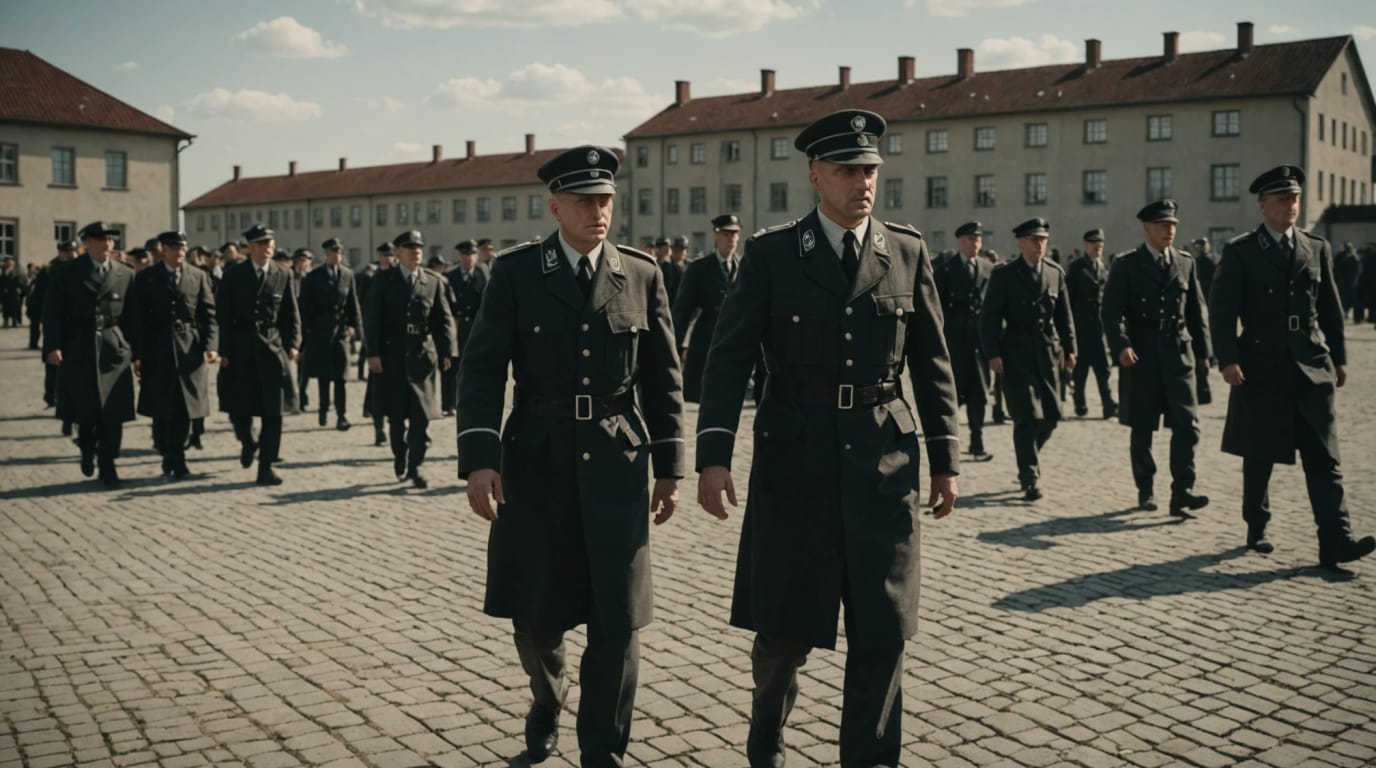
Sachsenhausen, a name synonymous with Nazi brutality, stands as a chilling reminder of the horrors perpetrated during the Third Reich. Located just north of Berlin, this concentration camp served as a training ground for SS guards, the administrative center for the entire Nazi camp system, and a place of unimaginable suffering for over 200,000 people between 1936 and 1945. Today, the Sachsenhausen Memorial and Museum stands on the site, a somber testament to the victims and a stark warning against the dangers of intolerance and hatred.
The Model Camp
Established in the summer of 1936, Sachsenhausen was not the first concentration camp in Nazi Germany, but it was designed to be a model facility. Heinrich Himmler, Chief of the German Police, envisioned it as an "ideal" camp, a place where the SS could implement its ideology of racial purity and absolute control. The camp's architecture, planned by SS architects, was intended to visually reinforce the SS's power and the prisoners' subjugation. Its proximity to Berlin, the Reich capital, further amplified its significance as a showcase for the Nazi regime. The camp's layout, with its triangular shape and the "T" building housing the central administration, was designed to maximize surveillance and control over the prisoners.
Sachsenhausen quickly became a training center for SS guards who would later be deployed to other concentration camps across Europe. The "Inspection of the Concentration Camps," the central administrative office for all camps, was moved from Berlin to Oranienburg in 1938, further solidifying Sachsenhausen's central role in the Nazi terror apparatus.
A Diverse Population of Suffering
Initially, Sachsenhausen primarily held German political prisoners, including communists, social democrats, and trade unionists, as well as Jews and others deemed "asocial" by the Nazi regime. However, with the outbreak of World War II, the camp's population swelled with prisoners from across occupied Europe. Poles, Soviets, Czechs, Dutch, French, and many others were deported to Sachsenhausen for resisting Nazi occupation, for their ethnicity, or simply for being in the wrong place at the wrong time.
By 1944, foreigners constituted approximately 90% of the camp's population, with Soviet and Polish citizens forming the largest groups. Among the prisoners were also approximately 20,000 women. The diversity of the prisoner population reflected the Nazis' pan-European campaign of persecution and extermination.
Daily Life and Death
Life in Sachsenhausen was characterized by brutal forced labor, starvation, disease, and constant abuse. Prisoners were forced to work in construction, armaments production, and other industries, often to the point of exhaustion. The SS subjected inmates to inhumane treatment, including torture, beatings, and arbitrary executions.
Food rations were meager, and disease was rampant due to the unsanitary conditions and lack of medical care. Typhus epidemics swept through the camp, claiming the lives of hundreds of prisoners. Executions were a daily occurrence, with prisoners being shot, hanged, or gassed. In the autumn of 1941, the SS murdered at least 10,000 Soviet prisoners of war, many of whom were Jewish, in a purpose-built "neck shot unit" and through the testing of gassing vehicles. In 1942, an extermination unit was constructed in the industrial yard, complete with a crematorium, a neck shot unit, and a gas chamber added in 1943.
Medical experiments were also conducted on prisoners, including testing of new drugs and procedures, often resulting in severe injury or death. The camp's "Cell Block" was used for the punishment, interrogation, and torture of prisoners, including prominent figures like Martin Niemöller and Georg Elser.
Liberation and Aftermath
As the Soviet Red Army advanced in April 1945, the SS began evacuating Sachsenhausen. More than 30,000 remaining prisoners were forced on "death marches" towards the northwest. Thousands died from exhaustion, starvation, or were shot by the SS guards. On April 22, 1945, Soviet and Polish troops liberated approximately 3,000 sick prisoners, nurses, and doctors who had been left behind in the camp. However, even after liberation, hundreds of former inmates succumbed to the effects of their imprisonment.
After the war, from 1945 to 1950, the Soviet NKVD used Sachsenhausen as a special camp for political prisoners, former SS functionaries, and those convicted by Soviet military tribunals. During this period, approximately 60,000 people were imprisoned, and at least 12,000 died due to hunger and disease.
In 1961, the German Democratic Republic (GDR) established the Sachsenhausen National Memorial on the site of the former camp. After German reunification in 1990, the memorial was expanded and redesigned.
Sachsenhausen Today
Today, the Sachsenhausen Memorial and Museum serves as a place of remembrance, education, and warning. The site includes preserved remnants of the camp, a museum, and educational resources that provide a comprehensive understanding of the camp's history and its role in the Holocaust. Visitors can walk through the former barracks, the roll call area, the crematorium, and other key locations, gaining a visceral understanding of the horrors that occurred there.
The memorial also features several permanent exhibitions that explore various aspects of the camp's history, including the persecution of different groups of prisoners, the camp's role in the Nazi concentration camp system, and the experiences of survivors. The Sachsenhausen Memorial stands as a stark reminder of the consequences of hatred, intolerance, and political extremism. It serves as a vital resource for educating future generations about the Holocaust and promoting human rights and understanding. The lessons learned from Sachsenhausen remain relevant today, as societies grapple with issues of prejudice, discrimination, and the rise of extremist ideologies. By remembering the victims and understanding the history of Sachsenhausen, we can work to prevent such atrocities from ever happening again.


