Saif al-Islam Gaddafi, Once Heir Apparent, Reportedly Assassinated in Libya
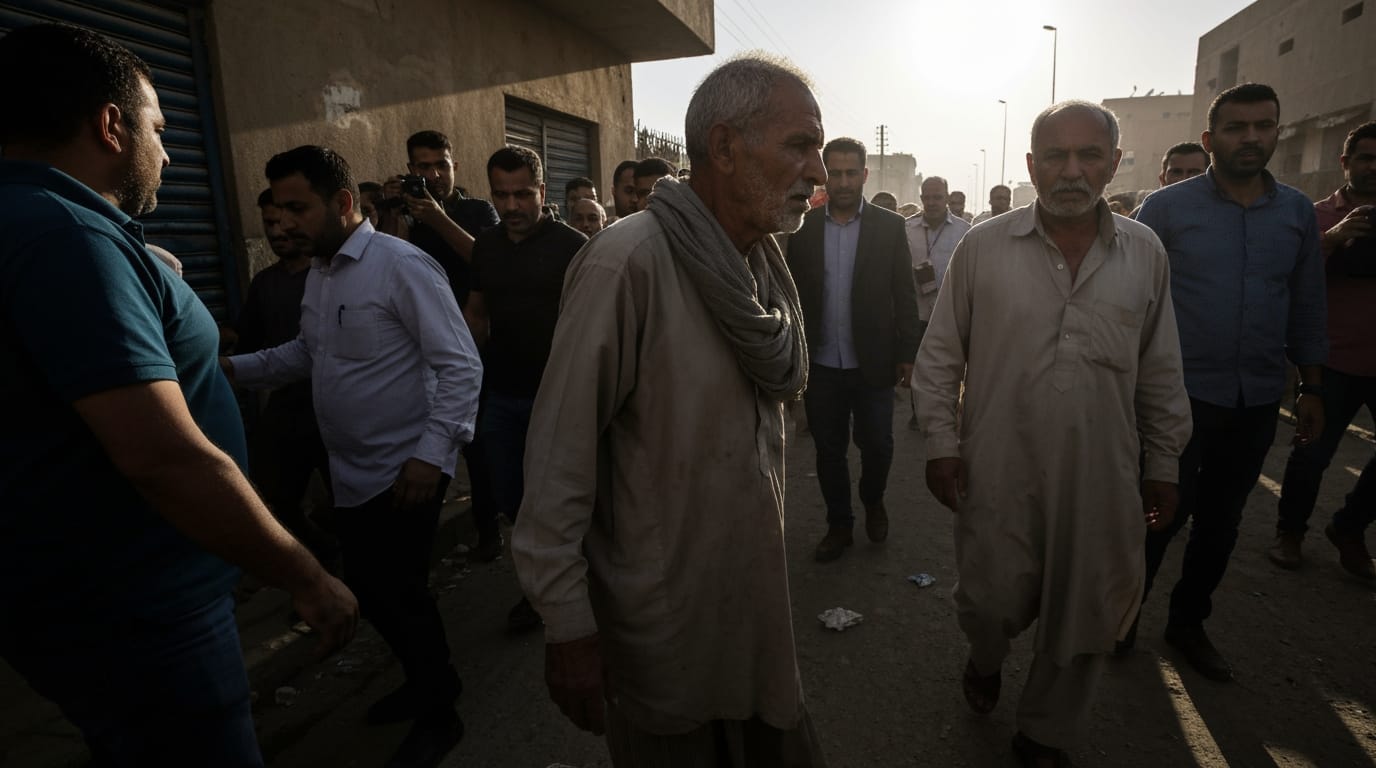
ZINTAN, Libya – Saif al-Islam Gaddafi, the once prominent son of former Libyan dictator Muammar Gaddafi and a figure central to the nation's tumultuous post-2011 landscape, has reportedly been shot dead at his home in the western Libyan city of Zintan. The news, emerging Tuesday, marks another dramatic turn in the ongoing saga of the Gaddafi family and Libya's prolonged instability, raising immediate questions about the perpetrators and the implications for the country's fragile political future.
The reported assassination comes over a decade after the fall of his father's four-decade rule and amidst a backdrop of persistent internal divisions and a stalled transitional process in Libya. Saif al-Islam, 53, had been a controversial and enigmatic presence since his capture in 2011, having been sentenced to death in absentia by a Tripoli court and sought by the International Criminal Court (ICC) for alleged crimes against humanity. His death removes a figure who, despite years in captivity and relative obscurity, continued to command a degree of influence and remained a potential, albeit divisive, political force.
The Assassination: A Targeted Attack in Zintan
Reports indicate that Saif al-Islam Gaddafi was killed at his residence in Zintan on Tuesday. According to his lawyer, Khaled al-Zaidi, and advisor Abdullah Osman Abdurrahim, he was shot dead by a four-man commando unit that stormed his home. Initial accounts suggest the attackers disabled surveillance cameras before carrying out the assassination, highlighting a calculated and coordinated operation. The head of his political team also confirmed his death.
The Libyan Attorney General's Office has since launched an investigation into the killing to identify the suspects and determine the full circumstances surrounding the incident. However, details remain scarce, and no group has immediately claimed responsibility. Competing narratives have also surfaced, with one report citing his sister claiming he died near Libya's border with Algeria, contrasting with the more widely reported Zintan location. The 444 Combat Brigade, a prominent military unit, has categorically refuted any involvement in the incident or the ongoing conflict in Zintan.
From Reformist Hope to Regime Loyalist
Born in 1972, Saif al-Islam Muammar al-Gaddafi was the second son of Muammar Gaddafi and his second wife, Safia Farkash. Educated in Europe, including at the London School of Economics, and fluent in English, he was often perceived as the more moderate and Western-friendly face of the Gaddafi regime in the 2000s. Although he held no official government position, Saif al-Islam served as a key advisor to his father, playing a significant role in Libya's diplomatic efforts.
He was instrumental in negotiating Libya's rapprochement with Western powers, including discussions that led to Libya abandoning its weapons of mass destruction program and compensation for the victims of the 1988 Lockerbie bombing. Many international observers and even some internal reform advocates saw him as a potential successor who could modernize Libya, with some considering him the de facto prime minister. However, this image sharply contrasted with his actions during the 2011 uprising, when he became a vocal and architect of the brutal crackdown against anti-government protesters, unequivocally aligning himself with his father's hardline stance.
A Decade of Captivity, Controversy, and Presidential Ambitions
After the fall of Tripoli in August 2011 and the subsequent death of his father in October of the same year, Saif al-Islam attempted to flee to neighboring Niger but was captured in November 2011 by a militia in the town of Zintan. His capture was a significant event, as he was wanted by the International Criminal Court (ICC) on charges of crimes against humanity for his alleged role in suppressing the 2011 protests.
In 2015, a Libyan court in Tripoli, operating without his physical presence, sentenced him to death for war crimes committed during the civil war. This trial was widely criticized internationally for its fairness and legitimacy. Despite the death sentence and the ICC warrant, he remained in the custody of the Zintan militia for nearly six years. He was controversially released in June 2017 under an amnesty law by a Tobruk-based government, triggering international outcry.
Following his release, Saif al-Islam re-emerged in Libya's political landscape, attempting to register as a candidate for the 2021 Libyan presidential election. His candidacy highlighted the enduring influence of the Gaddafi name among some segments of the population and further complicated Libya's efforts to achieve unified national elections and a stable political transition. His presence served as a constant reminder of the previous regime and a point of contention among the various factions vying for control.
Implications for Libya's Fractured Future
The assassination of Saif al-Islam Gaddafi eliminates a figure whose very existence symbolized the lingering shadow of the past for many Libyans, while representing a potential return to order for others. His death comes at a critical juncture for Libya, a nation still grappling with profound political fragmentation, a fractured state, and the continued influence of numerous armed groups and rival administrations.
The immediate implications of his killing are uncertain. While some may view it as the final chapter for the Gaddafi family's direct political involvement, others fear it could ignite new cycles of violence or further destabilize the already volatile environment. Moussa Ibrahim, a former spokesman for the Gaddafi regime, expressed sentiments of profound loss, suggesting the assassination aimed to sow further discord and undermine efforts towards national unity. The lack of clarity regarding the identity and motives of the assassins will only fuel speculation and mistrust among Libya's competing factions.
Saif al-Islam is not the first of Muammar Gaddafi's sons to meet a violent end. His brothers Mutassim and Khamis were killed in October and August 2011, respectively, during the civil war. Another brother, Saif al-Arab, was killed in a NATO airstrike in April 2011. The demise of Saif al-Islam marks a significant blow to any remaining political aspirations of the Gaddafi lineage and underscores the brutal realities of Libya's post-revolutionary period. His controversial life, marked by proximity to power, attempts at reform, and ultimately a role in his father's downfall, has now concluded in a violent end, leaving behind a legacy as complex and contested as the nation he once sought to lead.


