Satire Takes Center Stage: Trump Depicted in Cologne's Rose Monday Parade
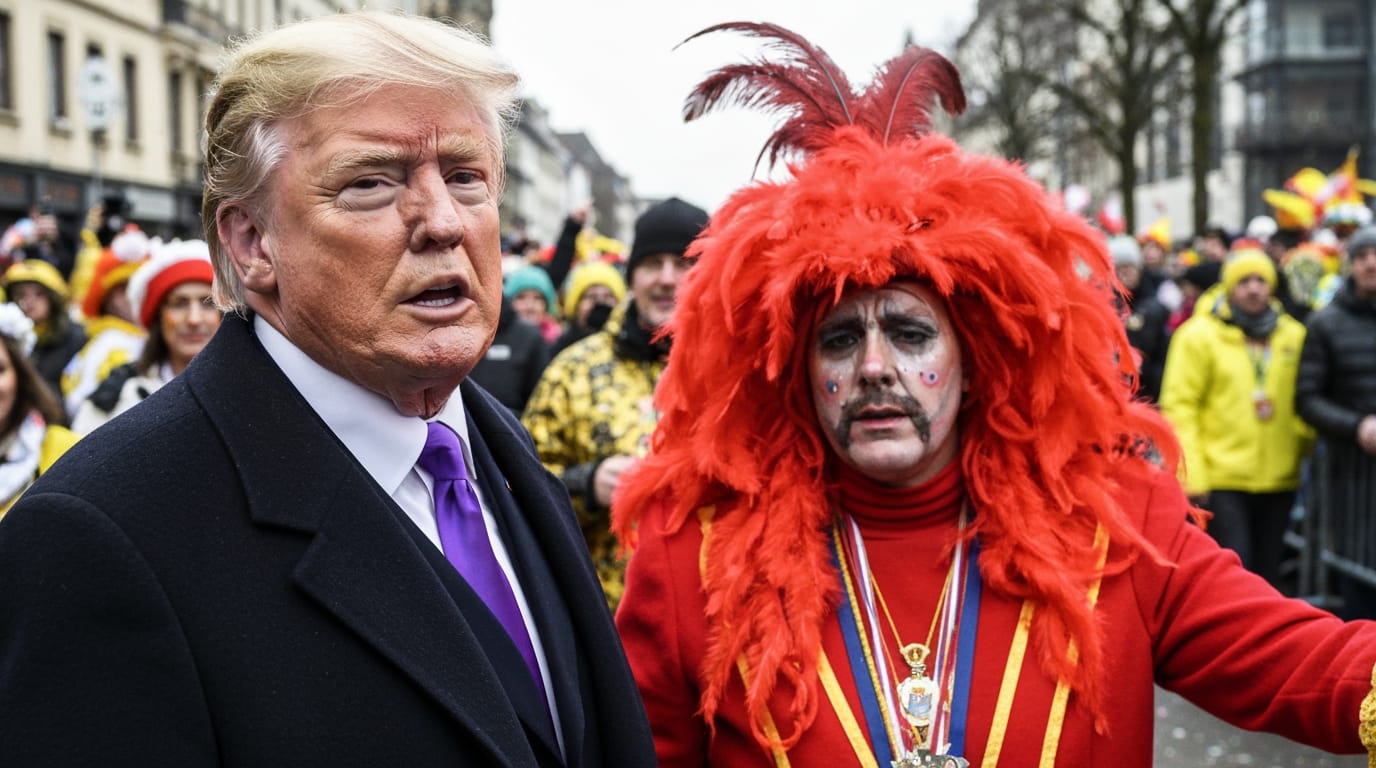
COLOGNE, GERMANY – Amidst the jubilant cacophony and vibrant spectacle of Cologne's annual Rose Monday (Rosenmontag) parade, a particularly striking float captured international attention, spotlighting former U.S. President Donald Trump in a stark satirical depiction. The iconic procession, a hallmark of German Carnival culture, once again served as a potent platform for political commentary, drawing hundreds of thousands of revelers into the streets of the Rhineland city. The floats, known for their provocative and often biting social critiques, underscored a long-standing tradition of using humor and hyperbole to engage with global events and figures.
The Potent Imagery of Political Critique
One of the most talked-about floats featured a large-scale effigy of Donald Trump, engaging with powerful symbols of democracy and justice. This particular float portrayed the former U.S. President balancing a globe precariously on his outstretched middle finger, a gesture widely interpreted as mocking his perceived disregard for global stability and international cooperation. Further enhancing the float's critical message, Trump was depicted placing the Statue of Liberty and the goddess Justitia—both universal symbols of freedom, democracy, and the rule of law—on a chain. The imagery conveyed a clear message regarding the perceived threats to foundational democratic principles during his tenure, resonating with both local and international observers. Accompanying signs on the float, such as "Fatal love" and "Donald's freak show," further amplified the satirical intent, leaving little ambiguity about the float builders' perspective.
This specific depiction in Cologne was part of a broader trend seen across various German Carnival parades where Trump was a frequent subject of satire. In Düsseldorf, another prominent Carnival city, a float portrayed Trump alongside Russian President Vladimir Putin, making what was termed a "Hitler-Stalin Pact 2.0" and depicted crushing Ukraine, reflecting concerns over geopolitical alliances and conflicts. Another Düsseldorf float, pushing boundaries even further, featured nude effigies of Trump, Putin, and Chinese leader Xi Jinping. In Mainz, yet another major Carnival celebration, a Trump float showed him drilling into the ground with the slogan "Drill, baby, drill!", a critique of his environmental policies. The recurring presence and diverse portrayals of Trump across these parades highlighted his continued status as a polarizing figure on the world stage and a fertile subject for artistic and political critique.
A Rich Tapestry of Satirical Tradition
The inclusion of such politically charged floats is not an anomaly but rather a deeply ingrained tradition within the German Carnival, particularly during Rose Monday. For centuries, these festivities have provided a unique outlet for societal expression, allowing for open, often irreverent, commentary on political leaders, social norms, and international affairs. The parades in traditional Carnival strongholds like Cologne, Düsseldorf, and Mainz are renowned for their grand scale, attracting hundreds of thousands of participants and spectators annually.
Float builders, such as Jacques Tilly in Düsseldorf, are celebrated for their sharp wit and artistic prowess, often creating elaborate and visually impactful tableaux that encapsulate complex political narratives. Tilly himself acknowledged the constant source of inspiration provided by figures like Trump, noting that the "madness" of such personalities makes it challenging for artists to "keep up" with the satirical possibilities. This environment fosters a unique form of public discourse, where humor and caricature are employed to provoke thought, question authority, and offer an alternative perspective to mainstream media. The parades often feature floats targeting a wide array of global and domestic issues, demonstrating the Carnival's role as a mirror reflecting contemporary concerns. The Rose Monday parade in Cologne is not merely a celebration but a vibrant act of collective social and political commentary.
Broader Political and Social Commentary
While the Trump floats garnered significant international attention, they were part of a larger spectrum of satirical themes present in the 2025 Rose Monday parades. Other floats tackled pressing global issues, including the ongoing conflict in Ukraine, with depictions of Ukrainian President Volodymyr Zelenskyy and Russian President Vladimir Putin. Domestic German politics also faced scrutiny, with floats lampooning figures from the far-right Alternative for Germany (AfD) party and critiquing their policies. Even institutions like the Catholic Church were not spared, with one float drawing sharp criticism for linking Jesus with the church abuse scandal, demonstrating the comprehensive and often fearless nature of Carnival satire.
This wide-ranging critique underscores the integral role of Carnival as a valve for public sentiment. It allows for the public expression of dissent, frustration, and humor regarding issues that might otherwise be discussed in more constrained forums. The sheer scale of participation, with schools often closed in western regions so children can join the parades, highlights the cultural importance of this event. Despite heightened security measures in place following recent terror attacks in Germany, revelers flocked to the streets, demonstrating a resilience and commitment to their traditions, underscoring the deep cultural value placed on these celebrations.
Enduring Significance of Carnival Satire
The Rose Monday parade in Cologne, with its memorable depiction of Donald Trump, serves as a powerful reminder of the enduring significance of satirical art in public life. Far from being mere entertainment, these elaborate floats act as a form of social commentary, capturing the zeitgeist and reflecting popular sentiment towards political leaders and global events. The explicit and often irreverent nature of the satire is a defining characteristic of the German Carnival, providing a unique space for critique and challenging the status quo.
In an increasingly complex world, events like the Cologne Rose Monday parade demonstrate the continued relevance of traditional cultural expressions in fostering public discourse and holding power to account. The striking imagery of Trump, balancing the world on a finger and shackling symbols of liberty, will likely remain a memorable example of how folk art can engage with and interpret the highest echelons of global politics, ensuring that even in merriment, serious messages find their way to the public consciousness.