Scandals Rock Hungary's Political Landscape, Threatening Orbán's Re-election Bid
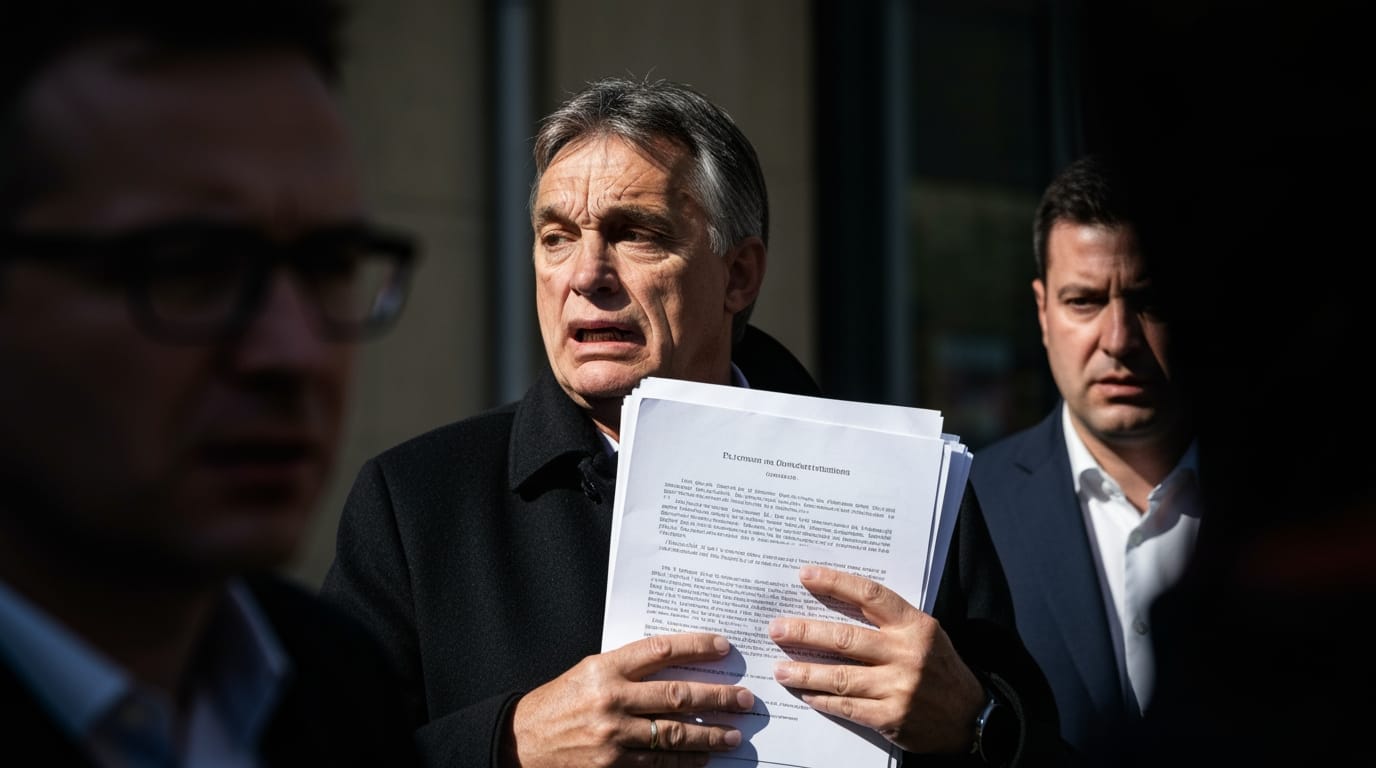
BUDAPEST, Hungary – With parliamentary elections set for April 12, 2026, Hungary's political arena is gripped by a series of cascading scandals, primarily centered on child abuse, that have fundamentally reshaped the electoral landscape and cast an unprecedented shadow over Prime Minister Viktor Orbán's long-standing rule. What was once seen as an unshakeable grip on power for Orbán and his Fidesz party now faces its most formidable challenge in 16 years, driven by widespread public outrage and the emergence of a potent new opposition force. The integrity of state institutions, the effectiveness of social welfare systems, and the government's self-proclaimed commitment to "family values" are all under intense scrutiny, making the upcoming vote a critical juncture for the Central European nation.
Child Abuse Scandals Erode Public Trust and Fidesz's Foundation
The most significant tremor to Orbán's government originated in February 2024 with the revelation that then-President Katalin Novák had granted a presidential pardon to Endre Kónya, a former deputy director of a state-run children's home in Bicske. Kónya had been convicted of coercing a child to retract a testimony against the institution's director, János Vásárhelyi, who himself was found guilty of sexually abusing minors between 2004 and 2016. The pardon ignited a firestorm of public anger, leading to Novák's resignation and the subsequent departure of former Justice Minister Judit Varga, who had countersigned the controversial clemency. This scandal struck at the heart of Fidesz's carefully cultivated image as a champion of "traditional family values" and child protection, exposing a deep hypocrisy that resonated broadly across Hungarian society.
The fallout continued to intensify in December 2025, when new allegations emerged concerning physical and sexual abuse, and an alleged prostitution ring, at a juvenile correction facility in Budapest. Videos depicting employees physically abusing children within the facility were made public, triggering fresh outrage and accusations that the government had failed to act despite years of reported misconduct. The crisis deepened further with the release of a previously unpublished 2021 government report, which indicated that over a fifth of children in state-run care institutions had experienced abuse. These successive revelations have not only fueled mass protests demanding accountability but have also significantly damaged the moral standing of the ruling party. Prime Minister Orbán publicly condemned the abuse and, in the wake of Novák's resignation, vowed to introduce a constitutional amendment to prevent clemency for convicted child abusers. However, critics argue that the government's response has often been defensive, attempting to portray the emerging cases as evidence of a functioning child protection system rather than a systemic failure.
The Unexpected Rise of Péter Magyar
Out of the turmoil created by the pardon scandal, a new and unexpected political figure has emerged as Orbán's most credible challenger: Péter Magyar. A former Fidesz insider and ex-husband of Judit Varga, Magyar dramatically broke with the ruling party in early 2024, criticizing its handling of the child abuse scandal and accusing the government of widespread corruption and cronyism. His criticisms resonated with a public weary of scandals and seeking genuine change.
Magyar swiftly launched the Tisza (Respect and Freedom) party, which has rapidly gained traction, with several independent polls now placing it ahead of Orbán's Fidesz. Tisza's platform is distinct, focusing on social and economic dissatisfaction, pledges to combat corruption, and a commitment to restoring Hungary's standing within the European Union. Magyar has also promised comprehensive overhauls of the healthcare, education, welfare, and child protection systems, appealing to a broad spectrum of voters disillusioned with the current administration. His appeal lies in presenting himself as a center-right alternative, aiming to attract not only disaffected opposition voters but also those from Fidesz who feel their party has strayed from its original values. The unprecedented nature of this challenge has forced Fidesz to engage in intensive campaigning much earlier than in previous election cycles. The intense political climate has also seen Magyar warn of potential smear tactics, including allegations that government-linked individuals are preparing to release an illicit video of him to discredit his campaign.
Persistent Healthcare Woes and Broader Corruption Concerns
Beyond the child abuse scandals, Hungary's healthcare system continues to be a source of public discontent, contributing to the broader anti-incumbency sentiment. The system is plagued by chronic underfunding, a significant emigration of doctors and nurses, and an aging medical workforce, with public spending on health consistently falling below the EU average. Critics argue that despite promises of reform, the Orbán government dissolved the Ministry of Health in 2010 and has largely failed to implement fundamental structural changes. While Prime Minister Orbán announced a "nationwide healthcare reconstruction" in December 2025, claiming significant renovations, the deeper systemic issues persist. State Secretary for Health Péter Takács has, at times, deflected blame onto the Tisza party and EU funding freezes, further highlighting the politicization of healthcare issues. Adding to these concerns, the World Medical Association (WMA) expressed deep concern in August 2025 over governmental pressure on the Hungarian Medical Chamber, accusing the government of undermining medical independence.
These issues are compounded by widespread concerns about corruption, which Transparency International identified as being the worst in the European Union in 2023. Critics allege that Orbán's Fidesz government has systematically consolidated power, eroding checks and balances and redirecting state resources and contracts to politically connected individuals and entities. This institutionalized corruption is believed to contribute to inefficiencies and a lack of accountability across various sectors, including healthcare.
Orbán's Defensive Campaign and the Stakes of the Election
Facing an increasingly energized opposition, Viktor Orbán and his Fidesz party have intensified their campaign efforts, emphasizing the Prime Minister's international standing and his close relationships with figures like former U.S. President Donald Trump. Orbán's rhetoric frequently frames the upcoming election as a crucial decision point regarding Hungary's stance on the war in Ukraine, portraying his party as the guarantors of peace against a "pro-Ukraine, pro-Brussels, pro-war" opposition. He has also sought to counter Magyar's rise by painting the Tisza party as a proxy for Brussels and Kyiv, aiming to dismantle existing protections and draw Hungary into conflict.
Despite these efforts, the child abuse scandals have undeniably created a "moral crisis" within Fidesz's traditional voter base, making Orbán's re-election bid significantly more precarious. The entrenched nature of Fidesz loyalists within state institutions and media, along with past changes to the electoral system, provide a formidable advantage. However, the sheer scale of public discontent, galvanized by the recent scandals and channeled by a fresh opposition figure, suggests that the 2026 parliamentary elections will be a profoundly contested and unpredictable event. The outcome will not only determine Hungary's leadership for the next term but could also significantly influence the direction of populist movements across Europe and redefine Hungary's relationship with its European partners.


