Scorching Melbourne Sun Halts Australian Open Play as Heat Policy Invoked
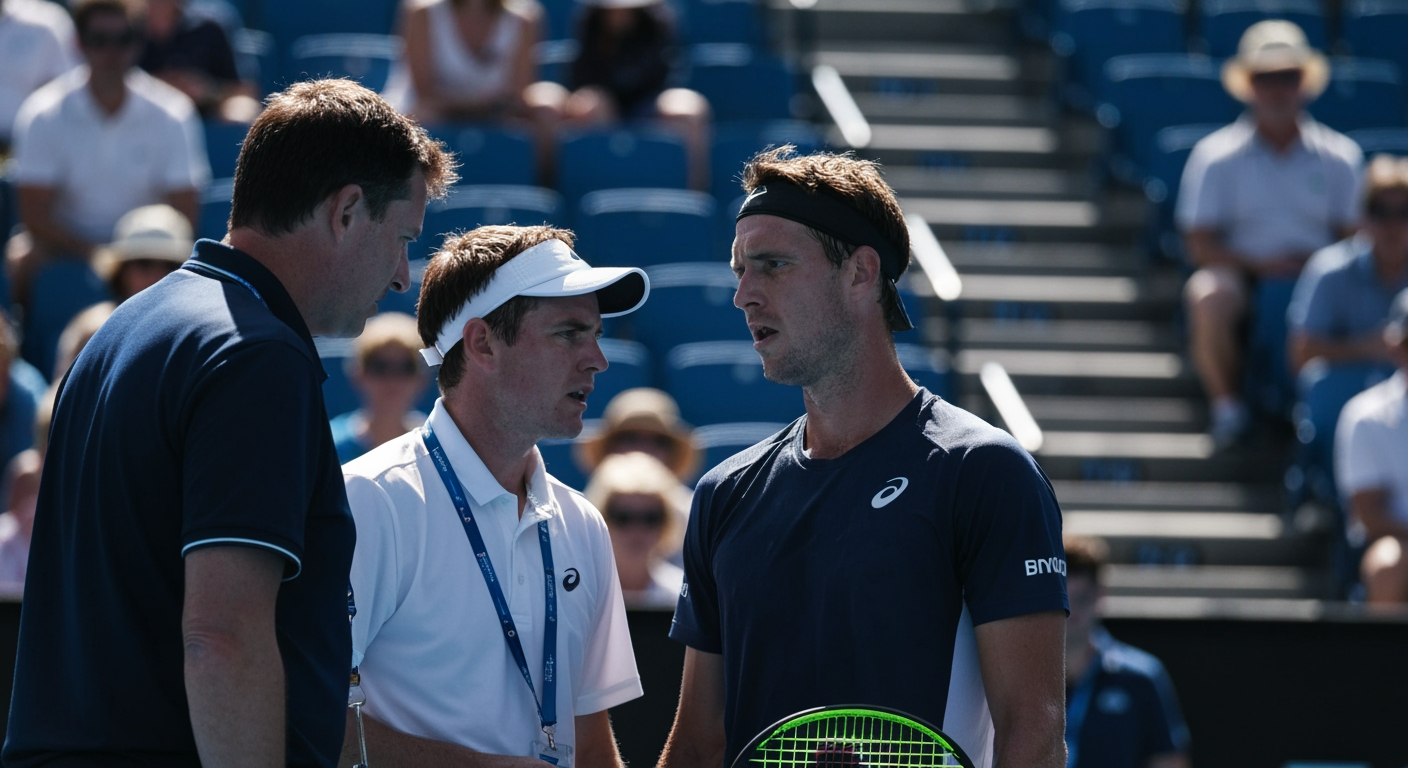
MELBOURNE – Extreme heat brought the Australian Open to a standstill on Saturday, January 24, 2026, as tournament officials enacted the Extreme Heat Protocol, suspending play on all outside courts at Melbourne Park. The decision came as temperatures soared, pushing the event's innovative Heat Stress Scale to its highest level, creating hazardous conditions for players and spectators alike. Matches on the three main show courts with retractable roofs, including Rod Laver Arena, Margaret Court Arena, and John Cain Arena, continued under climate-controlled conditions, but the disruption underscored the perennial challenge posed by Australia's summer swelter.
The Scorching Reality on Court
As Melbourne experienced a day where temperatures were forecast to reach 40 degrees Celsius (104 degrees Fahrenheit) in the late afternoon, the tournament's five-point Heat Stress Scale (AO HSS) climbed to level 5, automatically triggering the suspension of outdoor play. The actual temperature was approximately 35 degrees Celsius (95 degrees Fahrenheit) when the policy was invoked, yet the "feel" registered at a sweltering 101 degrees Fahrenheit, highlighting the combined environmental factors at play. The stoppage, which was expected to last at least three hours, saw players scramble for shade and medical attention, while fans were urged to hydrate and seek refuge from the sun.
The timing of the suspension proved particularly dramatic for some, including defending champion Jannik Sinner. During his third-round match against Eliot Spizzirri on Rod Laver Arena, Sinner was reportedly struggling with severe cramping just as the heat scale hit its peak. While play on his court was briefly halted to allow the roof to close, the immediate respite seemed to aid his recovery, as he returned to the court to win the match. This scenario brought into sharp focus the impact of the heat on player performance and well-being, even for the most elite athletes. Conversely, earlier matches on the covered courts saw players like Madison Keys and Jessica Pegula advance without significant heat-related issues, with Pegula noting her familiarity with hot climates as a "Floridian."
An Evolving Battle Against the Elements
The Australian Open, famously held during the peak of the Australian summer, has a long history of grappling with extreme heat. The tournament first introduced an Extreme Heat Policy (EHP) in 1998, a response to previous challenging conditions. Over the years, this policy has undergone several revisions, reflecting ongoing efforts to prioritize player safety and maintain competitive integrity. Early iterations in 1998 and 2002 set temperature thresholds for stopping play at 40°C and 38°C respectively. A significant change in 2203 introduced the Wet-Bulb Globe Temperature (WBGT) measure alongside ambient temperature. The policy continued to evolve, allowing matches in progress to be halted at the conclusion of a set from 2008 and granting the tournament referee more discretion.
The current iteration, the AO Heat Stress Scale, was introduced in 2019 following extensive medical research. This sophisticated system goes beyond simple air temperature, incorporating four crucial climate factors: air temperature, radiant heat (the sun's strength), humidity, and wind speed. The scale ranges from 1 to 5, with each level dictating specific interventions. A rating of 3 encourages increased hydration and cooling strategies, while a 4 allows for extended breaks between sets. The critical Level 5, as witnessed on Saturday, mandates the automatic suspension of play on outdoor courts and the closure of roofs on the main arenas, providing a consistent and evidence-based framework for managing heat risk. This granular approach is designed to account for physiological variations among athletes, including adults, wheelchair players, and juniors, ensuring a comprehensive safety net.
Player Welfare and the Spirit of Competition
The implementation of the Heat Stress Scale, while crucial for player welfare, often sparks debate among the tennis community. While many acknowledge the necessity of protecting athletes from heat-related illnesses such as heat stroke, some traditionalists argue that battling the elements is an inherent part of the Australian Open challenge. Past tournaments have seen players endure grueling conditions, leading to withdrawals and visible signs of distress. For instance, the 2014 tournament saw temperatures consistently above 40°C, resulting in a record number of withdrawals and numerous instances of heat exhaustion among both players and fans.
Modern tennis, with its increased physicality and demanding schedules, places immense strain on players' bodies. Policies like the AO HSS aim to mitigate the risks, ensuring that matches are decided by skill and endurance rather than who can best withstand extreme physiological stress. The ability to close roofs on major courts offers a degree of control, allowing high-profile matches to continue while safeguarding players. However, this also creates a disparity between those playing on covered courts and those relegated to the exposed outdoor courts, raising questions about fairness and competitive balance within the tournament.
Beyond the Courts: Impact on Fans and Future Considerations
The impact of extreme heat extends beyond the players to the thousands of fans who flock to Melbourne Park. Organizers proactively issue warnings, encouraging attendees to wear hats, apply sunscreen, drink plenty of water, and utilize cooling stations and misting fans scattered throughout the precinct. Despite these measures, instances of heat exhaustion among spectators have been reported in previous heatwaves, underscoring the broad public health concerns associated with such conditions.
As global climate patterns continue to evolve, the challenge of staging major sporting events in extreme weather conditions is likely to intensify. The Australian Open's proactive approach with its evolving heat policy serves as a model for other tournaments and large-scale outdoor events. The integration of advanced medical research and real-time environmental monitoring is critical in making informed decisions that balance the spectacle of professional tennis with the paramount need for safety. The Saturday suspension serves as a stark reminder that even with sophisticated protocols in place, the Melbourne summer can still deliver conditions that demand a pause, ensuring the well-being of all involved.
Related Articles

Ratko Mladić, "Butcher of Bosnia" and Convicted War Criminal, Dies at 84
THE HAGUE, Netherlands – Ratko Mladić, the former Bosnian Serb military commander known as the "Butcher of Bosnia" and convicted of genocide, war crimes, and crimes against humanity, has died at the age of 84. Serbian...

Long-Awaited 9/11 Mastermind Trial Set for 2028, Decades After Attacks
GUANTANAMO BAY, Cuba – Nearly a quarter-century after the devastating terror attacks of September 11, 2001, a military judge has finally set a trial date for Khalid Sheikh Mohammed, the alleged mastermind behind the...