Second Ceasefire Declared Between Cambodia and Thailand as International Powers Urge De-escalation
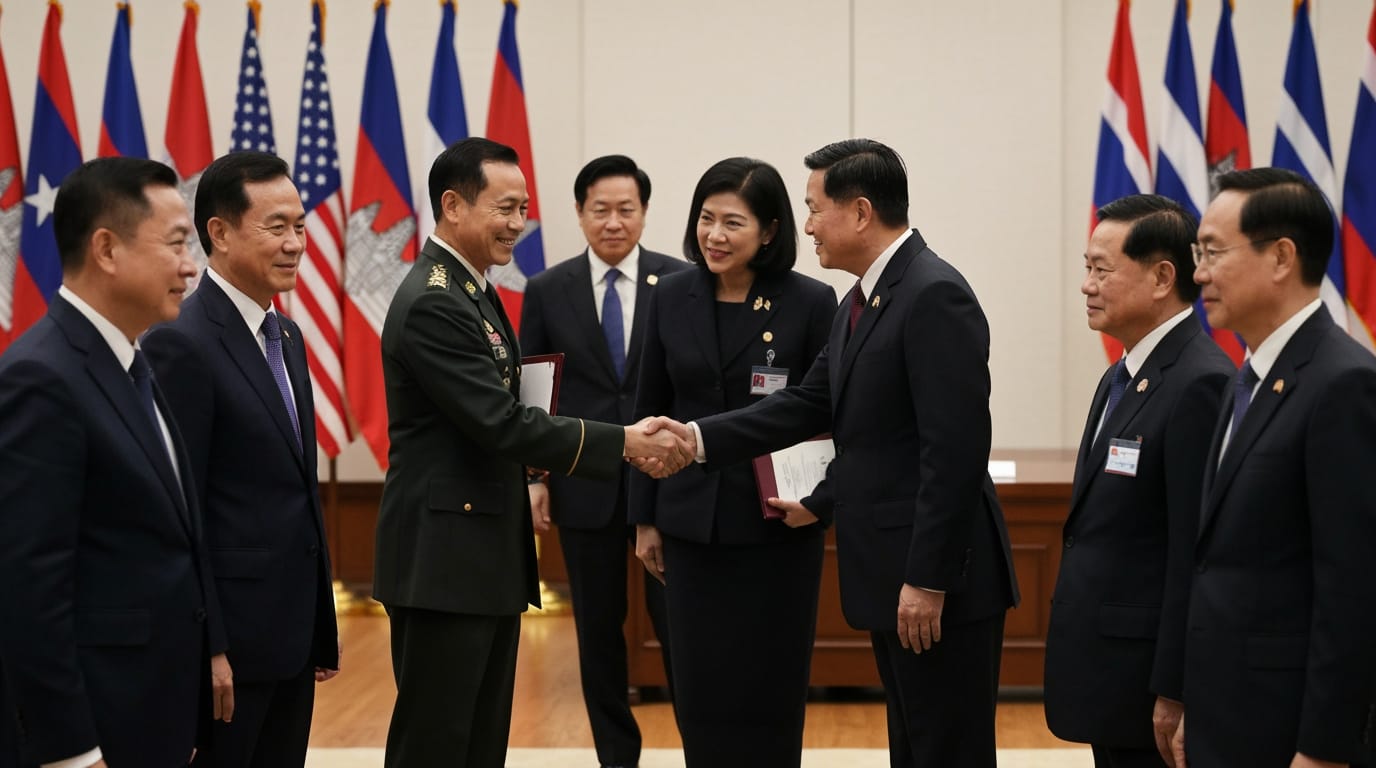
A fragile peace has descended upon the volatile Cambodia-Thailand border following the declaration of a second ceasefire on December 27, 2025, aiming to halt weeks of renewed deadly clashes. The agreement, brokered with significant diplomatic pressure from both the United States and China, seeks to end a conflict that has claimed over 100 lives and displaced more than half a million people, largely stemming from a long-running territorial dispute centered on the ancient Preah Vihear temple. International observers, while welcoming the cessation of hostilities, caution that deeply entrenched nationalism and unresolved boundary issues present ongoing challenges to a lasting peace.
Decades of Dispute Erupt into Renewed Violence
The roots of the Cambodia-Thailand border conflict trace back to colonial-era maps and treaties from the early 20th century, which ambiguously defined sections of their shared 817-kilometer frontier. A central point of contention has been the 11th-century Preah Vihear temple, perched atop a cliff in the Dangrek Mountains. Despite an International Court of Justice (ICJ) ruling in 1962, reaffirmed in 2013, that placed the temple within Cambodian territory, surrounding land and access routes have remained hotly disputed. This historical grievance periodically ignites into armed confrontation.
The year 2025 witnessed a sharp escalation of these tensions. A skirmish near Preah Vihear on May 28, resulting in the death of a Cambodian soldier, triggered a series of retaliatory actions and heightened military posturing. By late July, the situation had spiraled into a full-scale, five-day conflict affecting at least 12 border sites, leading to 48 deaths and the displacement of approximately 300,000 civilians.
The First Truce and its Collapse
In the wake of the July escalation, international efforts led to a first ceasefire agreement on July 28, mediated by Malaysia in Kuala Lumpur and encouraged by both the United States and China. U.S. President Donald Trump publicly claimed credit for brokering this initial truce, asserting he had made trade incentives contingent on de-escalation. The ceasefire was formally expanded into a broader agreement in October, laying out a path for resolving the conflict.
However, the initial optimism was short-lived. Minor skirmishes resumed in November, and the first ceasefire officially collapsed after Thailand withdrew from the agreement, citing a landmine incident that injured two of its soldiers. Both nations blamed each other for violating the truce, and by early December, hostilities had reignited into intense combat along the border. The subsequent three weeks saw heavy exchanges of artillery fire and even aerial sorties, drastically increasing the casualty count to over 100 fatalities and displacing more than 500,000 people from their homes.
A Second Attempt at Peace: Terms and International Endorsement
Against this backdrop of escalating violence, the defense ministers of Thailand and Cambodia signed a new ceasefire agreement on Saturday, December 27, 2025. Thai Defence Minister Natthaphon Narkphanit and Cambodian Deputy Prime Minister Tea Seiha formalized the accord at the Prum–Ban Phak Kad border checkpoint in Thailand's Chanthaburi Province. The immediate ceasefire, effective at noon local time on December 27, mandates a complete halt to all hostilities, including the use of "all types of weapons" and attacks on civilians. Key provisions include freezing current troop deployments without further movement, allowing displaced civilians to return home, and cooperating on demining efforts and combating cybercrime.
A critical component of the agreement is Thailand's commitment to repatriate 18 Cambodian soldiers who had been held captive since the July fighting, a major demand from Phnom Penh, with their release contingent on a sustained 72-hour ceasefire.
The United States and China swiftly welcomed the new agreement, underscoring their shared interest in regional stability. U.S. Secretary of State Marco Rubio had previously urged Thailand to de-escalate and return to the ceasefire deal. Meanwhile, China intensified its diplomatic efforts, with Foreign Minister Wang Yi speaking with his Thai and Cambodian counterparts and actively pressing for the truce. Beijing also hosted top diplomats from both nations in Yunnan Province for two days of talks immediately following the ceasefire signing, aiming to solidify the agreement and foster lasting peace. China further demonstrated its support by announcing 20 million yuan in emergency humanitarian aid for Cambodia. Malaysian Prime Minister Anwar Ibrahim, as the current ASEAN chair, also lauded the immediate ceasefire, emphasizing the shared recognition of the need for restraint in the interest of civilians.
Challenges to Sustained Peace
Despite the international relief accompanying the ceasefire, experts and regional observers remain cautiously optimistic about its longevity. The underlying territorial disputes remain fundamentally unresolved, and nationalist sentiments in both countries, often fueled by domestic political agendas, pose significant obstacles to lasting reconciliation. Political turmoil in Thailand, for instance, has previously contributed to the severity of the dispute, with some leaders adopting hardline stances for electoral gain.
The role of external powers like the U.S. and China, while crucial for de-escalation, also highlights the complex geopolitical dynamics at play in Southeast Asia. While a temporary halt to the fighting is a welcome development, the true test will be whether both nations can move beyond the immediate cessation of hostilities to address the deeper historical and territorial grievances that continue to threaten regional stability. Without a concerted effort to build trust and implement sustainable solutions, this second ceasefire risks becoming merely another pause in a protracted and dangerous conflict.


