"Sentimental Value" Dominates European Film Awards, Ignites Oscar Speculation
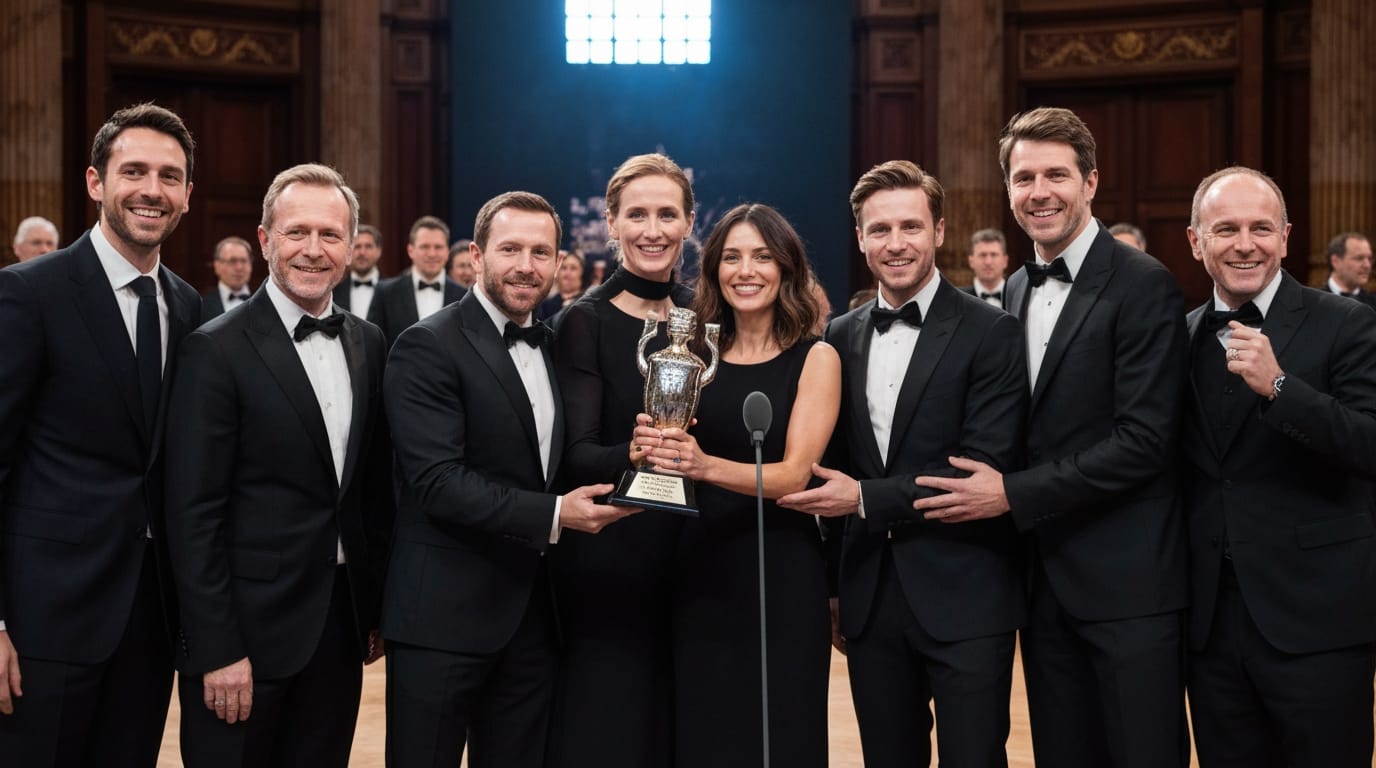
BERLIN, Germany — Joachim Trier's poignant family drama, "Sentimental Value," has swept the 38th European Film Awards (EFA), securing a remarkable six top honors, a victory that immediately propels the Norwegian production into the heart of the upcoming Academy Awards conversation. The film's overwhelming success, including Best Film, Best Director, and acting accolades for its leads, signals a significant moment for European cinema on the global stage, raising fervent questions about its potential to translate European prestige into Oscar gold.
A Night of Unprecedented Triumph for European Cinema
The ceremony, held in Berlin, witnessed "Sentimental Value" claim the coveted "Big Five" awards: Best European Film, Best European Director for Joachim Trier, Best European Screenwriter for Trier and Eskil Vogt, Best European Actor for Stellan Skarsgård, and Best European Actress for Renate Reinsve. The film further solidified its dominance by earning Best European Composer for Hania Rani, marking a near-clean sweep of the major categories. This comprehensive victory echoes recent EFA trends where a single film often captures the majority of top prizes, a pattern observed with "Anatomy of a Fall" in 2023 and "Emilia Pérez" in 2024.
The European Film Awards, often dubbed "Europe's answer to the Oscars," serve as a crucial platform for showcasing the continent's cinematic excellence. The triumph of "Sentimental Value" underscores a growing momentum for European productions, especially as Hollywood reportedly scales back on adult-oriented dramas, creating a vacuum that international films are increasingly filling. The decision to move the EFAs to mid-January, strategically positioning them between the Golden Globes and the Academy Awards, reflects a deliberate effort to enhance the visibility and influence of European films during the crucial Oscar campaigning season.
The Resonance of "Sentimental Value"
Directed by acclaimed Norwegian filmmaker Joachim Trier, "Sentimental Value" is a meta-drama that delves into the complex relationship between an aging filmmaker, portrayed by Stellan Skarsgård, and his estranged daughter, played by Renate Reinsve. The filmmaker attempts to recruit his daughter for his final cinematic endeavor, exploring themes of familial bonds, artistic legacy, and the creative process. The film's profound emotional depth and sophisticated narrative have garnered widespread critical acclaim.
Its journey to EFA glory began with significant recognition at the Cannes Film Festival last year, where it was awarded the prestigious Grand Prix. More recently, Stellan Skarsgård's compelling performance earned him the Best Supporting Male Actor in a Motion Picture at the 2026 Golden Globes, further cementing the film's artistic merit and its actors' celebrated performances. These earlier accolades establish a strong critical foundation, indicating that "Sentimental Value" resonates beyond European borders and possesses the qualities often favored by major international award bodies.
On the Road to Hollywood: Oscar Prospects
The question now shifts to whether this European triumph can translate into Academy Award success. "Sentimental Value" has already been included on the Oscars shortlist for the Best International Feature Film category, signifying its initial acceptance into the Oscar race. This early inclusion, coupled with its EFA dominance, positions it as a formidable contender. The film's critical reception and the strategic timing of its recent awards could build considerable momentum as Academy voters begin their final considerations.
Historically, a direct path from EFA Best Film to the coveted Best Picture Oscar has been elusive. While seven EFA Best Film winners have received Best Picture nominations, none have ultimately won the top Academy Award. However, the current landscape of cinematic appreciation is evolving. Industry commentators suggest that the perceived decline in "adult" dramas from major American studios opens the door wider for international films that deliver complex narratives and compelling character studies. This changing dynamic could potentially favor a film like "Sentimental Value," allowing it to contend not only in the International Feature category but also for broader recognition in directing, acting, and screenplay categories.
The European Film Awards, through its enhanced visibility and the success of films like "Sentimental Value," are actively influencing the global film discourse. Filmmakers like Joachim Trier are demonstrating that deeply personal, artistically rich narratives can achieve both critical acclaim and mainstream attention, challenging traditional notions of awards season contenders.
A Broader Canvas for European Storytelling
Beyond "Sentimental Value," the 38th European Film Awards celebrated a diverse range of cinematic achievements. Oliver Laxe's Spanish road-trip thriller, "Sirāt," also had a notable evening, securing multiple craft awards including for casting, cinematography, editing, production design, and sound. "Sirāt" is Spain's official Oscar submission, indicating a robust year for European entries in the international race. The Best European Documentary award went to Igor Bezinović's "Fiume o Morte!", while Ugo Bienvenu's "Arco" was recognized as the Best European Animated Feature.
The awards also served as a platform for important cultural dialogue, with Iranian director Jafar Panahi issuing a powerful plea for artists to speak out against injustices, emphasizing that "silence in a time of crime is not neutrality." These moments underscore the EFA's commitment not only to artistic excellence but also to the role of cinema as a medium for social commentary and human expression.
Anticipation Builds for Hollywood's Verdict
As the awards season progresses toward its climax, all eyes will be on "Sentimental Value" and its journey to the Academy Awards. Its resounding success at the European Film Awards positions it as a leading voice from European cinema, carrying the hopes of many for broader international recognition. While the path to an Oscar is notoriously challenging, the film's critical acclaim, compelling narrative, and strong performances create a powerful case. "Sentimental Value" has not only captured the hearts of European critics but has also ignited a global conversation about the power and reach of non-English language cinema, potentially marking a pivotal moment for its future.