Seoul Signals New Era: President Lee Jae-myung Pivots to Engagement with Pyongyang
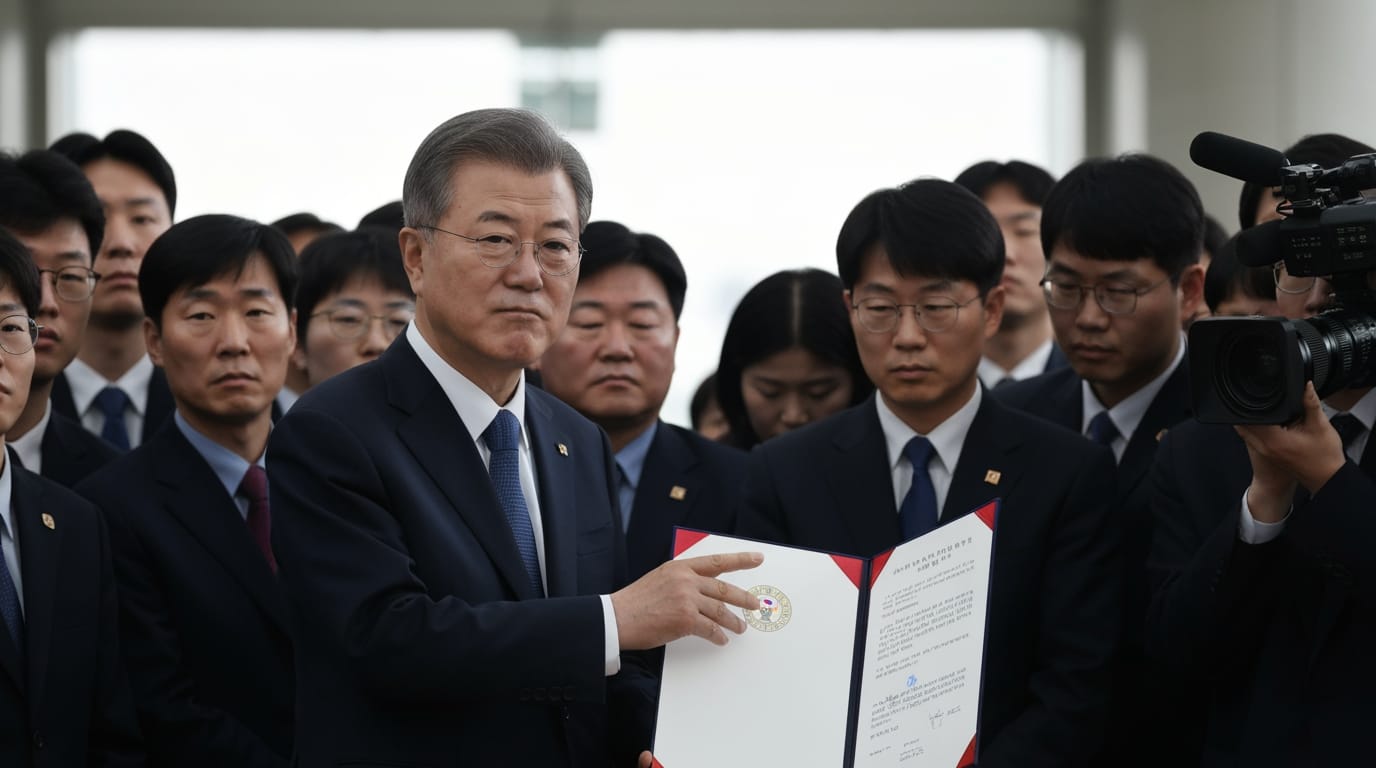
SEOUL – In a significant recalibration of South Korea's approach to its northern neighbor, President Lee Jae-myung has demonstrably steered the nation away from the hardline stance of previous administrations, advocating for renewed engagement and a pragmatic pathway to inter-Korean stability. The shift, articulated through a series of policy pronouncements in late 2025 and early 2026, marks a departure from strategies that prioritized denuclearization as a prerequisite for dialogue, opting instead for a framework built on peaceful coexistence and reduced military tensions. This strategic pivot comes amid a deeply fractured geopolitical landscape and persistent North Korean recalcitrance, posing both opportunities and formidable challenges for regional peace.
A New Compass for Inter-Korean Relations
President Lee Jae-myung has laid out a comprehensive vision for North Korea policy, encapsulated in his "Exchange, Normalization, and Denuclearization" (END) initiative. This approach signifies a substantial philosophical shift, moving away from the more confrontational posture adopted by his conservative predecessors. Key to Lee's strategy are his "Three Principles" for inter-Korean engagement: respecting the North Korean regime, disavowing unification through absorption, and committing to no hostile acts of any kind. These principles are complemented by "Three Goals": institutionalizing peaceful coexistence, establishing a foundation for joint growth, and ultimately achieving a Korean Peninsula free of war and nuclear weapons.
Crucially, Lee's policy downgrades the emphasis on immediate denuclearization as a precondition for dialogue, a notable distinction from past conservative governments that conditioned economic aid and cooperation on Pyongyang's nuclear disarmament. Instead, his administration suggests that engagement, including economic cooperation, can proceed in parallel with progress on the nuclear issue, reflecting a belief that fostering trust and mutual benefit might eventually create a more conducive environment for denuclearization talks. In his January 2026 New Year's address, President Lee emphasized transforming the "cost of hostility into the dividends of peace," aspiring to turn the current "Korea risk" into a "Korea premium".
Pragmatism Guides Foreign Policy Recalibration
Beyond inter-Korean relations, President Lee Jae-myung has repositioned South Korea's broader foreign policy on a pragmatic, national-interest-focused trajectory. This represents a conscious recalibration away from the "values-based diplomacy" that characterized the administration of his predecessor, Yoon Suk-yeol. Lee advocates for strengthening ties with China and Russia, underscoring their economic interdependence and geographical proximity, while still affirming the crucial alliance with the United States. This balanced approach aims to ensure Seoul is not sidelined in regional diplomatic efforts, particularly concerning potential renewed diplomacy between the U.S. and North Korea.
Lee's administration has explicitly prioritized reducing military tensions on the peninsula and reviving long-stalled dialogue. There have even been discussions within his administration about the possibility of suspending regular South Korea-U.S. military drills, a long-standing point of contention for Pyongyang, as a means to encourage North Korea back to the negotiating table. Furthermore, President Lee has openly weighed issuing an apology to North Korea concerning allegations that his conservative predecessor intentionally escalated military tensions, including through drone flights and propaganda leafleting, prior to a brief martial law declaration in December 2024. While acknowledging domestic political sensitivities, Lee stated, "I do think we need to apologize, but I haven't been able to say so because I worry it could be used to smear (me) as pro-North Korean or spark political ideological battles".
Persistent Hurdles: Pyongyang's Stance and Geopolitical Realities
Despite Seoul's overtures, Pyongyang's response has remained largely unyielding. North Korea has consistently maintained a hardline stance, institutionalizing South Korea as a "principal enemy" rather than a partner for unification. Since late 2023, North Korea has explicitly redefined inter-Korean relations as those between "two hostile states," abandoning unification as a policy objective. This shift has led to a significant deterioration in inter-Korean relations, with dialogue largely suspended since April 2023. Leader Kim Jong Un has publicly stated that his government has no interest in dialogue with Seoul, ignoring Lee's peace gestures.
The broader international context further complicates Seoul's efforts. North Korea has significantly diversified its foreign policy, elevating its relationship with Russia to a "quasi-alliance" and expanding ties with China and other nations, lessening its isolation. Pyongyang views Seoul as an ineffective counterpart for achieving its core objectives, such as sanctions relief and regime stability, believing only the U.S. holds such authority. This stance suggests that North Korea is likely to maintain its strict policy of disinterest towards direct inter-Korean dialogue, at least in the short term, while potentially pursuing opportunistic diplomacy with the United States.
Implications for Domestic and International Arenas
President Lee's policy shift carries significant implications both domestically and internationally. Within South Korea, the move away from a strict hardline approach could face criticism from conservative factions who advocate for a firm posture against North Korea's nuclear ambitions. The debate over engagement versus pressure has historically divided South Korean politics, and Lee's conciliatory gestures risk reigniting "pro-North Korean" accusations. Achieving national consensus on this new direction will be crucial for its long-term viability.
Internationally, South Korea under Lee aims to carve out a unique role as a "pacemaker" in regional diplomacy, actively supporting the resumption of North Korea-U.S. talks and working to build consensus with global powers, including the United States and China, on peace and stability on the Korean Peninsula. The administration hopes to leverage these indirect diplomatic channels to foster an environment conducive to crisis control, especially given the anticipated high-stakes diplomacy involving the U.S. and North Korea in 2026.
Conclusion: A Winding Road Ahead
President Lee Jae-myung's abandonment of a hardline course represents a calculated gamble, prioritizing engagement and tension reduction as pathways to a more stable Korean Peninsula. His administration is committed to pursuing pragmatic policies and fostering a climate of mutual respect, even considering unprecedented gestures like an apology for past alleged provocations. However, the path ahead is fraught with challenges, primarily North Korea's entrenched hostility and its broadened international alliances. While Seoul endeavors to initiate a new chapter of dialogue and cooperation, the effectiveness of this policy pivot will ultimately hinge on Pyongyang's willingness to reciprocate and the complex dynamics of regional and global power politics. The coming year will be a critical test for President Lee's vision for peace on the peninsula.


