Seoul Urges Beijing to Broker Peace Amid Escalating Korean Peninsula Tensions
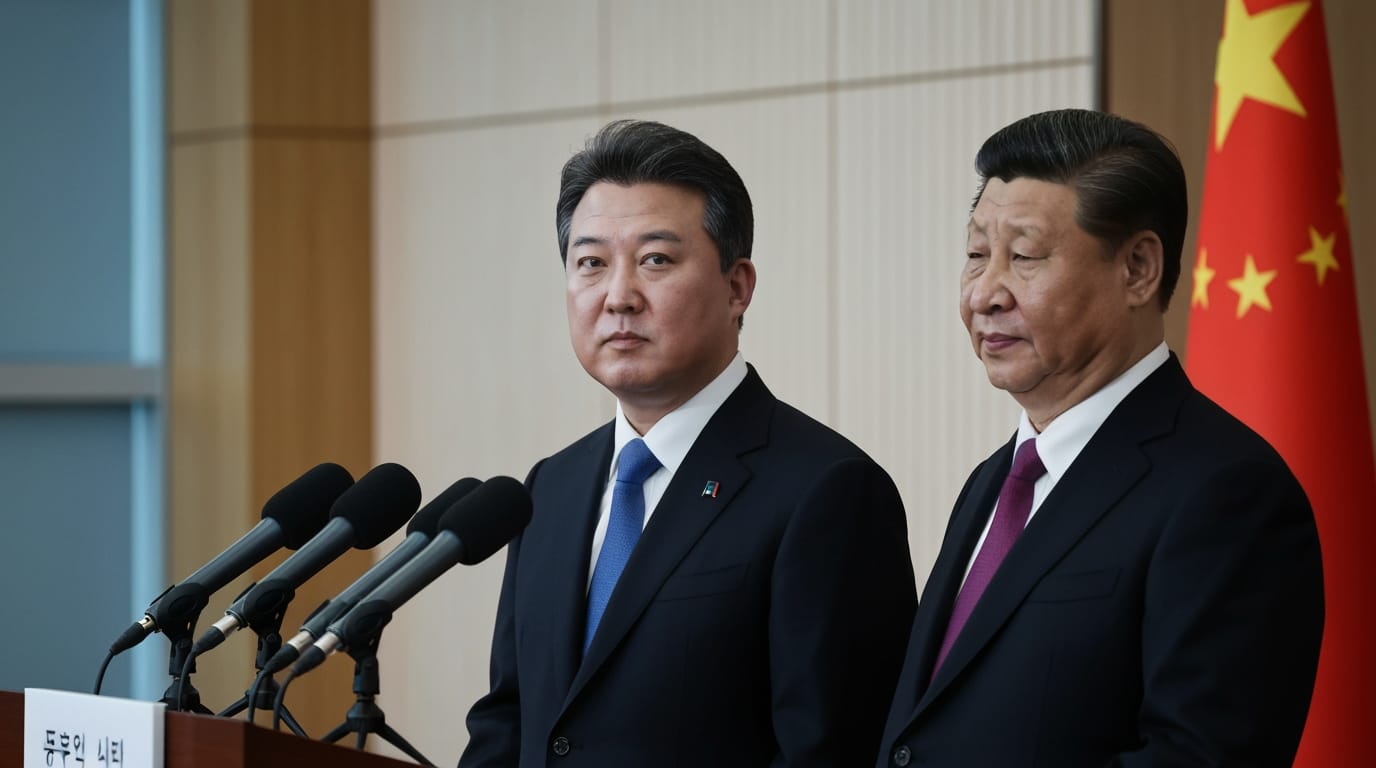
SEOUL – In a significant diplomatic push to de-escalate tensions on the Korean Peninsula, South Korean President Lee Jae-myung has formally requested Chinese President Xi Jinping to assume a "mediator" role between Seoul and Pyongyang. The appeal, made during Lee's four-day state visit to China earlier this week, underscores the deepening chasm in inter-Korean relations and highlights the critical, albeit complex, position China holds in regional stability. With all communication channels between the two Koreas severed and mutual trust at an all-time low, Seoul is looking to Beijing, Pyongyang's key ally and largest trading partner, to facilitate dialogue on pressing issues, including North Korea's escalating nuclear ambitions.
Seoul's Diplomatic Overture Amidst Rising Tensions
President Lee's state visit to China, his first since taking office in June 2025, was largely aimed at resetting bilateral ties that had experienced a period of strain and enlisting Beijing's support for regional peace. The request for mediation came during a pivotal meeting with President Xi Jinping on Monday, January 5th. Lee candidly described the state of inter-Korean affairs, noting that "all our channels are completely blocked" and that "zero trust" now defines the relationship, dominated by hostility.
The urgency of Lee's appeal was magnified by events coinciding with his diplomatic mission. Just a day prior to his meeting with Xi, North Korea conducted its first ballistic missile test of the year, launching hypersonic missiles on Sunday, January 4th. This provocation served as a stark reminder of Pyongyang's persistent military advancements and its disregard for international calls for denuclearization. To jumpstart stalled negotiations, President Lee put forward a specific proposal to President Xi: a freeze in North Korea's nuclear program in exchange for "compensation or some form of return." He articulated a phased approach, suggesting that even a halt to further production of nuclear weapons, cessation of nuclear material transfers, and no additional development of intercontinental ballistic missiles (ICBMs) would represent a significant gain, paving the way for gradual reductions and, ultimately, a nuclear-free Korean Peninsula.
The current South Korean administration's proactive stance marks a distinct shift, as it has consistently sought to restore ties with Pyongyang since its inauguration. However, these overtures have been met with silence from the North. This diplomatic vacuum is a stark contrast to the inter-Korean efforts seen in previous years, with relations having deteriorated sharply under the preceding administration, whose policies were seen by some as contributing to the current impasse. Lee's strategy signals a renewed effort to leverage multilateral diplomacy to navigate the intractable challenge posed by North Korea.
Beijing's Pivotal but Deliberate Role
China's role in the Korean Peninsula's security landscape is undeniably central. As North Korea's sole security guarantor, its largest trading partner, and a historical ally, Beijing wields considerable influence over Pyongyang. This unique leverage positions China as a crucial potential interlocutor capable of nudging North Korea toward a more conciliatory posture and encouraging dialogue with South Korea. Historically, China provided significant support to North Korea during the Korean War and has maintained robust ties, despite some fluctuations. Beijing's strategic interest lies in maintaining stability on the peninsula, which aligns with its broader regional objectives, including limiting the presence of foreign military forces, particularly those of the United States, in East Asia.
According to President Lee, the Chinese leadership received his mediation request "positively." However, President Xi's public response was notably measured, emphasizing the need for "patience" in dealing with Pyongyang. Xi reportedly remarked that "talk is easy, but action is not so easy," acknowledging the arduous nature of building trust and respect between nations. While China's foreign ministry refrained from directly commenting on Lee's specific remarks, it reiterated Beijing's general position: "Maintaining peace and stability on the (Korean) Peninsula is in the common interests of all parties. China will continue to play a constructive role towards this in its own way." Analysts observed that China's official readout of the summit, which focused on reaffirming shared interests in peace and stability on the Korean Peninsula, conspicuously omitted any explicit reference to the denuclearization of North Korea, suggesting a divergence in immediate priorities or approaches between Seoul and Beijing. This nuanced response highlights the delicate balance China seeks to maintain between its strategic alliance with North Korea and its economic and diplomatic relations with South Korea.
The Complex Dynamics of Inter-Korean Diplomacy
The path to de-escalation and potential resolution on the Korean Peninsula is fraught with inherent complexities. North Korea's persistent unresponsiveness to South Korean overtures and its continued development of advanced weaponry, as evidenced by the recent missile tests, present significant hurdles to any mediation efforts. The success of China's potential involvement hinges on its willingness and ability to sway Pyongyang, a task that has proven challenging for all international actors. Furthermore, South Korea must carefully balance its pursuit of improved inter-Korean relations through Chinese mediation with its long-standing alliance with the United States. Lee's visit itself was also an attempt to mend past strains in Sino-South Korean ties, particularly those stemming from the 2017 deployment of the U.S. Terminal High Altitude Area Defense (THAAD) missile system in South Korea, which Beijing viewed as a threat to its security. While analysts noted that the summit primarily served to stabilize relations between Seoul and Beijing, rather than achieving immediate breakthroughs on the North Korean issue, this stabilization itself is considered a crucial stepping stone. It signals an effort by South Korea to engage all major powers in a concerted push for peace, recognizing that a unified approach is essential for any meaningful progress.
A Path Forward, Fraught with Challenges
President Lee Jae-myung's direct appeal to President Xi Jinping to mediate in the inter-Korean standoff underscores the urgency of the situation and the critical role China is being asked to play. Beijing's unique relationship with Pyongyang positions it as arguably the most influential external actor capable of facilitating dialogue and encouraging a de-escalation of tensions. While President Xi's response emphasized patience, it also acknowledged a constructive role for China. The immediate goal of establishing communication channels and fostering a degree of trust remains paramount, especially given the current state of "zero trust" between the two Koreas.
The road ahead is undoubtedly challenging. North Korea's consistent pursuit of its nuclear and missile programs, coupled with its unresponsiveness, will test the resolve and diplomatic acumen of all parties involved. However, the South Korean initiative, by actively engaging China, seeks to harness all available diplomatic leverage. The ultimate aspiration remains a nuclear-free Korean Peninsula, and while concrete outcomes may be distant, the initiation of such high-level dialogue represents a vital, albeit fragile, step towards breaking the long-standing impasse and fostering a more stable and peaceful future for the region.