Shifting Sands: US Intensifies Latin America Trade Push as EU-Mercosur Deal Stumbles
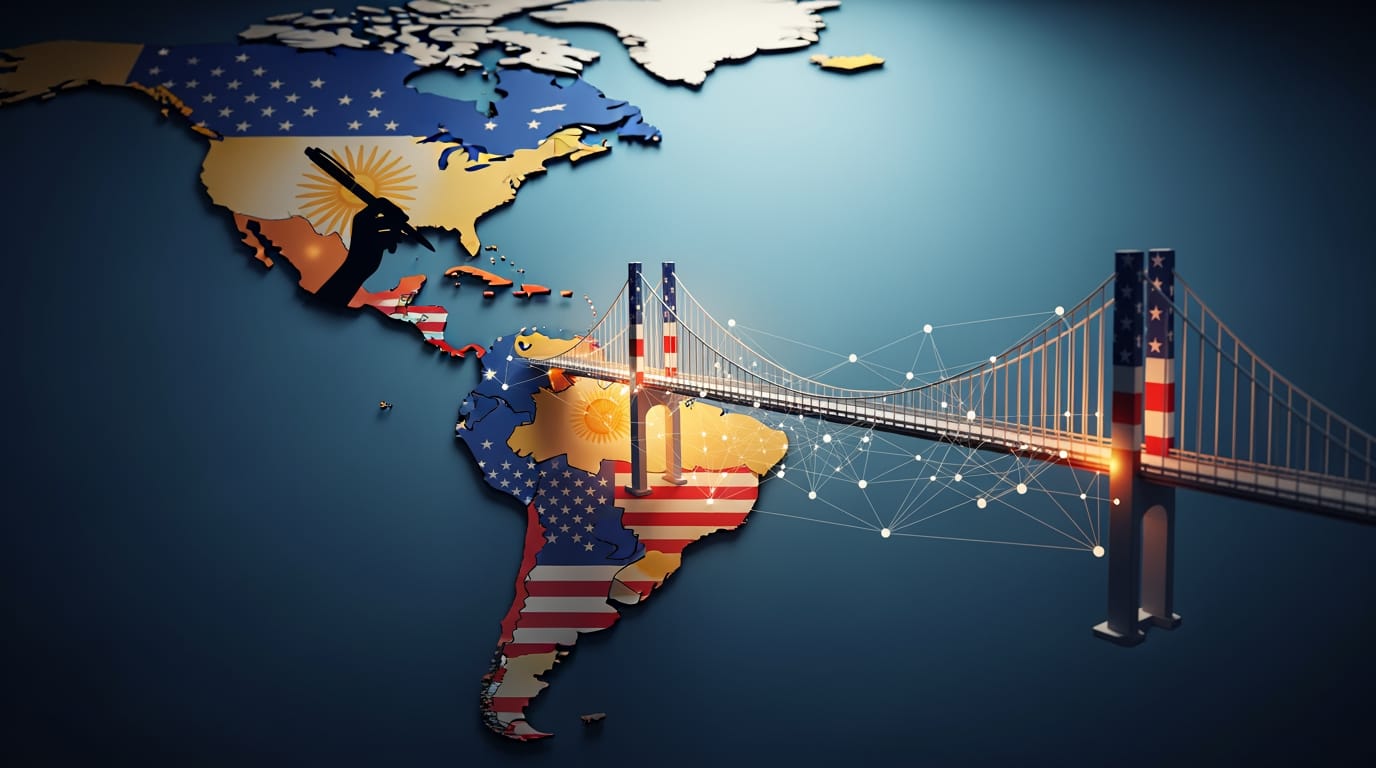
Washington D.C. & Brussels – As the European Union’s ambitious trade pact with the Mercosur bloc faces persistent hurdles, the United States is redoubling its efforts to deepen economic ties with Latin America, aiming to redefine regional partnerships and counter growing geopolitical competition. The Biden administration's "Americas Partnership for Economic Prosperity" (APEP) is gaining momentum amidst a global landscape marked by rising protectionism and a strategic push for resilient supply chains, presenting a stark contrast to the drawn-out saga of the EU-Mercosur agreement.
The EU-Mercosur deal, hailed as potentially one of the world's largest free trade agreements, remains in a state of prolonged limbo despite a political agreement reached in December 2024, following over two decades of negotiations. This stagnation opens a window for the U.S. to solidify its economic presence in a region increasingly vital for global trade and strategic resources.
The Protracted Pause: EU-Mercosur's Rocky Road to Ratification
The journey of the EU-Mercosur trade agreement has been arduous, spanning over 20 years before a political agreement was finally announced in December 2024. This comprehensive pact, intended to create a free trade area encompassing nearly 750 million consumers and eliminate billions in tariffs, has been seen by proponents as a significant opportunity for economic growth, diversified markets, and access to crucial raw materials for both blocs. The EU is already Mercosur's second-biggest trade partner, with the deal aiming to elevate that status.
However, the agreement's ratification has been consistently stalled by substantial opposition, primarily from within Europe. Environmental concerns have emerged as a major flashpoint, with non-governmental organizations and agricultural lobbies raising alarms about the potential for increased deforestation in the Amazon, particularly driven by expanded beef and soy production. Critics argue that the sustainability provisions within the deal are often non-binding and lack effective enforcement mechanisms, thereby undermining the EU's own climate and human rights standards.
Adding to the complexity, European farmers across several member states, including Ireland, France, Austria, Hungary, Poland, and the Netherlands, have voiced strong objections. They fear unfair competition from cheaper Mercosur agricultural imports—such as beef, poultry, sugar, and maize—which they contend are produced under less stringent environmental, social, and labor standards. Concerns over labor protections, social dumping, and human rights violations in Mercosur countries have also contributed to the opposition. Despite the European Commission transmitting the agreement to the Council in September 2025, the final texts have yet to be finalized, signed, or ratified, leaving its ultimate fate uncertain.
Washington's Renewed Focus: APEC and "Friendshoring"
Against the backdrop of the EU-Mercosur impasse, the United States has accelerated its own economic engagement with Latin America. The Biden administration launched the "Americas Partnership for Economic Prosperity" (APEP), also known as APEA, in June 2022, following an announcement at the Summit of the Americas. Negotiations for this initiative began in January 2023 with 11 predominantly Latin American nations, signaling a strategic pivot in U.S. foreign policy towards the Western Hemisphere.
APEP differentiates itself from traditional free trade agreements by not primarily focusing on tariff reductions. Many of the participating countries—including Barbados, Canada, Chile, Colombia, Costa Rica, the Dominican Republic, Ecuador, Mexico, Panama, Peru, and Uruguay—already maintain existing free trade agreements with the U.S. Instead, APEP emphasizes cooperation across critical areas such as labor standards, supply chain resilience, climate change initiatives, and pandemic response preparedness.
A key driver behind this renewed U.S. interest is a broader geopolitical strategy: countering China's expanding influence in Latin America and diversifying global supply chains. Treasury Secretary Janet Yellen has championed a "friendshoring" strategy, advocating for increased trade and investment with allied nations to build more resilient supply chains, thereby reducing reliance on geopolitical rivals. The U.S. aims to position Latin American countries as trusted partners in key sectors, including clean energy and critical mineral production.
Challenges and Criticisms of the US Approach
While APEP represents a significant recommitment by the U.S. to Latin American economic engagement, it has not been without its critics. Some observers argue that the initiative remains too vague and lacks the concrete market-opening measures that would generate substantial enthusiasm among participating nations. The initial exclusion of major South American economies like Brazil and Argentina from APEP also raised questions about the comprehensiveness and ultimate impact of the partnership, though officials have indicated the list of participants could grow.
The Biden administration's focus on APEP is also seen by some as being primarily driven by the imperative to counter China, rather than solely fostering equitable economic partnerships. Furthermore, concerns persist regarding the U.S. administration's prioritization of other regional challenges, such as migration, over more robust trade outcomes.
Looking ahead, the potential impact of a renewed Trump administration introduces another layer of uncertainty. Past and prospective policies, particularly the imposition of aggressive tariffs, could disrupt regional economies and potentially prompt Latin American nations to seek deeper engagement with China as an alternative. This suggests that while the U.S. aims to strengthen its position, its approach is subject to internal political shifts and external pressures.
Latin America's Strategic Calculus in a Fragmented World
For Latin American nations, the diverging trade policies of the EU and the U.S. present both opportunities and complex choices. The region finds itself in a global environment characterized by geoeconomic fragmentation, where traditional trade rules are being challenged and supply chains are being redrawn.
The ongoing delay of the EU-Mercosur deal, coupled with protectionist sentiments in Europe, could prompt Mercosur countries to further diversify their trade relationships, potentially looking beyond traditional partners. Similarly, the U.S. push, while offering avenues for closer economic integration and supply chain resilience, requires careful consideration from Latin American governments. Countries must weigh the benefits of deeper ties with the U.S. against the risk of becoming entangled in U.S.-China geopolitical competition.
Latin America’s ability to adapt will depend on its capacity to diversify exports, reduce structural vulnerabilities, and strengthen its position in an increasingly polarized international environment. Opportunities such as "nearshoring" could boost exports and attract foreign direct investment, but they necessitate significant reforms in areas like infrastructure, customs, and governance. The region's strategic response to these shifting trade dynamics will ultimately define its role in the evolving global economy.
Conclusion
The current trade landscape in Latin America is shaped by a dual narrative: the European Union's struggle to finalize a comprehensive trade agreement with Mercosur and the United States' proactive, albeit nuanced, efforts to forge new economic alliances. While the EU-Mercosur deal remains mired in environmental, agricultural, and political disputes, the U.S. is strategically repositioning itself through initiatives like APEP, aiming to enhance regional cooperation and counter rival influences. This dynamic interplay underscores the growing geopolitical importance of Latin America, forcing its nations to navigate a complex web of opportunities and challenges as global powers vie for economic partnership and strategic alignment. The outcome of these parallel trade narratives will significantly influence the future economic trajectory and geopolitical standing of Latin America.