Shinzo Abe's Assassin Jailed for Life, Closing Chapter on Nation-Shaking Event
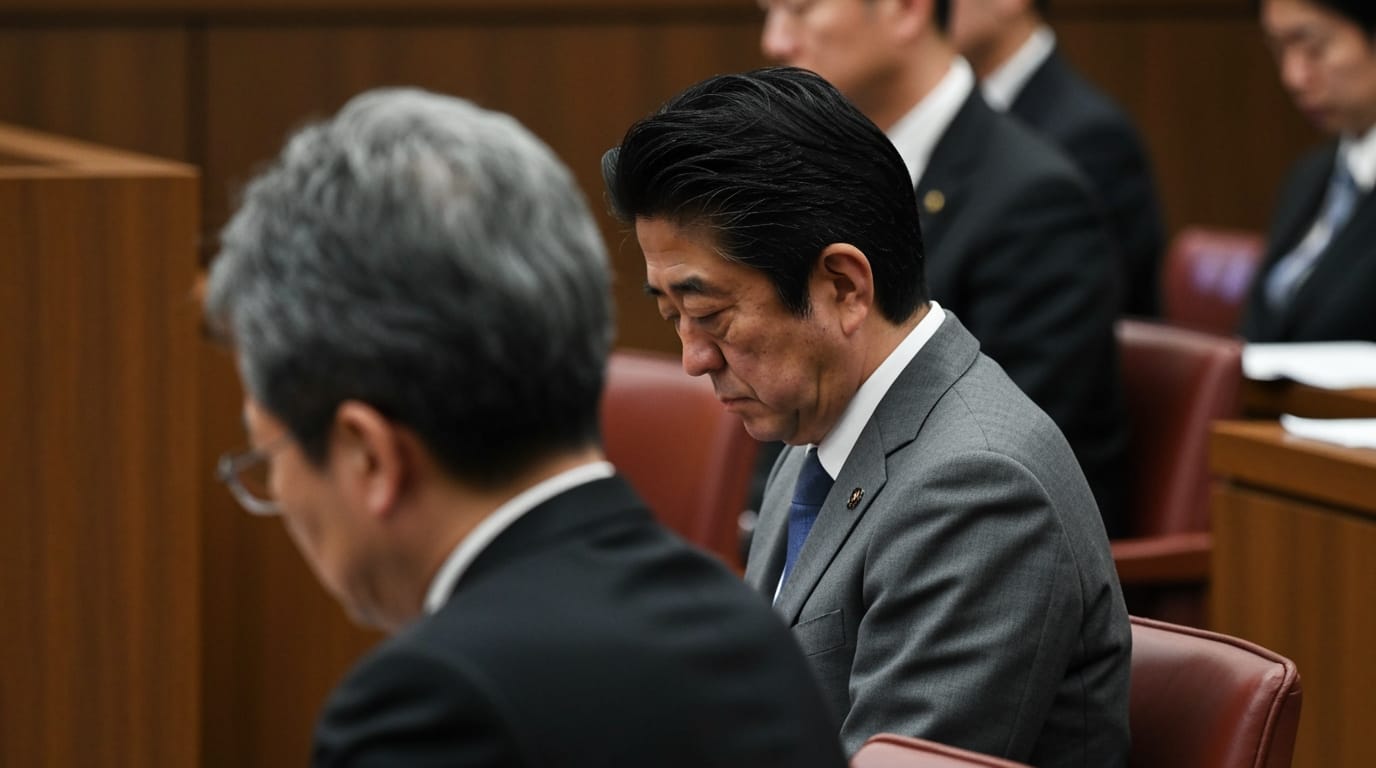
NARA, Japan – Tetsuya Yamagami, the man who assassinated former Prime Minister Shinzo Abe in a brazen 2022 attack that sent shockwaves through Japan and the international community, was sentenced to life imprisonment today, January 21, 2026. The Nara District Court delivered the verdict, bringing a formal conclusion to the legal proceedings surrounding one of Japan's most politically significant and emotionally charged crimes in decades. Yamagami, 45, had pleaded guilty to murder and multiple other charges, acknowledging his role in the fatal shooting that reshaped Japan's political landscape and ignited widespread debate over religious groups and their influence.
The Verdict and a Nation's Reflection
The sentencing of Tetsuya Yamagami followed a trial that commenced on October 28, 2025, in Nara. From the outset, Yamagami admitted to his actions, making the legal battle primarily a deliberation on the appropriate sentencing rather than a dispute over guilt. Prosecutors had vehemently argued for a life sentence, characterizing the assassination as an "unprecedented" act in post-war Japan with "extremely serious consequences" for society. While capital punishment is a legal penalty for aggravated murder in Japan, it is typically reserved for cases involving multiple victims. The defense team, acknowledging the gravity of the crime, sought a maximum sentence of 20 years, citing Yamagami's troubled upbringing and the profound impact of his mother's involvement with the Unification Church on his life. The court ultimately sided with the prosecution's demand, underscoring the severity of the act that claimed the life of Japan's longest-serving prime minister.
A Day of Unprecedented Violence
The assassination of Shinzo Abe occurred on July 8, 2022, in Nara City. Abe, 67, was delivering a campaign speech for a Liberal Democratic Party (LDP) candidate near Yamato-Saidaiji Station when Yamagami approached from behind and fired two shots from a homemade firearm. The former prime minister sustained injuries to his chest and neck, with significant damage to an artery under his collarbone, leading to massive blood loss. Despite immediate medical attention and extensive efforts, Abe was pronounced dead hours later at Nara Medical University Hospital. The incident shocked Japan, a nation renowned for its stringent gun control laws and exceedingly low rates of gun violence. Yamagami was apprehended at the scene, reportedly calm and making no attempt to escape.
The Assassin's Grievance: A Tragic Motive Unveiled
Tetsuya Yamagami, an unemployed former member of the Japan Maritime Self-Defense Force, was driven by a deep-seated personal grudge against the Unification Church, officially known as the Family Federation for World Peace and Unification. His mother, who joined the church in 1991, made exorbitant donations totaling over 100 million yen (approximately $720,000 USD), along with contributing family land and her home. This financial drain plunged Yamagami's family into bankruptcy in 2002 and caused immense personal hardship, including the suicide of his older brother. Yamagami told investigators that he initially planned to target the leader of the Unification Church but found it too difficult to get close to her. He then shifted his focus to Shinzo Abe, whom he believed had strong ties to the religious organization, a connection that stemmed partly from Abe's maternal grandfather, former Prime Minister Nobusuke Kishi, who had also maintained relations with the church. Yamagami's decision to target Abe was a culmination of years of resentment and a desire to expose and harm the church he blamed for his family's ruin.
The Lengthy Path to Justice
The judicial process for Yamagami was extensive, beginning with his arrest and an immediate charge of attempted murder, which was upgraded to murder following Abe's death. A crucial phase involved a nearly six-month psychiatric evaluation to determine his mental competency to stand trial, concluding that he was fit to face the charges. The formal indictment in January 2023 included murder and violations of gun control laws, weapon manufacturing laws, explosives control laws, and property damage. The trial itself, held in the Nara District Court, attracted significant public interest, with hundreds of citizens vying for the limited spectator seats, highlighting the profound impact of the case on Japanese society. Japan's criminal justice system, which incorporates lay judges for serious crimes, aims for a thorough examination of evidence, although the high conviction rate typically means prosecutors only pursue cases with strong evidence. The proceedings allowed Yamagami to detail his motivations, providing the court with a full picture of the personal tragedy that fueled his extreme act.
A Legacy Interrogated: Political and Societal Repercussions
Shinzo Abe's assassination triggered a national reckoning, exposing decades-long, often opaque, connections between the ruling Liberal Democratic Party and the Unification Church. Public outrage over the revelations led to significant political fallout, including a cabinet reshuffle by Prime Minister Fumio Kishida as LDP politicians faced increased scrutiny over their ties to the controversial religious group. The Japanese government responded by launching investigations into the Unification Church's practices, culminating in a request for its dissolution in 2023, which a court formally ordered in March 2025. This unprecedented move aimed to address concerns about the church's aggressive fundraising tactics and the financial and psychological exploitation of its followers. Beyond the Unification Church, the assassination reignited debates about gun control in Japan and spurred efforts to restrict malicious donation solicitations by religious and other organizations. Abe's death also left a significant vacuum within the LDP, impacting the dynamics of the party and his political legacy, which was marked by ambitious economic and foreign policy initiatives.
The life sentence for Tetsuya Yamagami marks the judicial closure of a singular event that profoundly disturbed Japan's sense of security and brought sensitive issues of religious influence in politics to the forefront. While the immediate legal questions have been resolved, the broader societal implications continue to resonate, prompting ongoing introspection within Japan about its political institutions, religious freedom, and the enduring legacy of a leader who defined an era.


