Sicily Rocked: Landslide Forces 1,500 Evacuations Amid Catastrophic Storm Aftermath
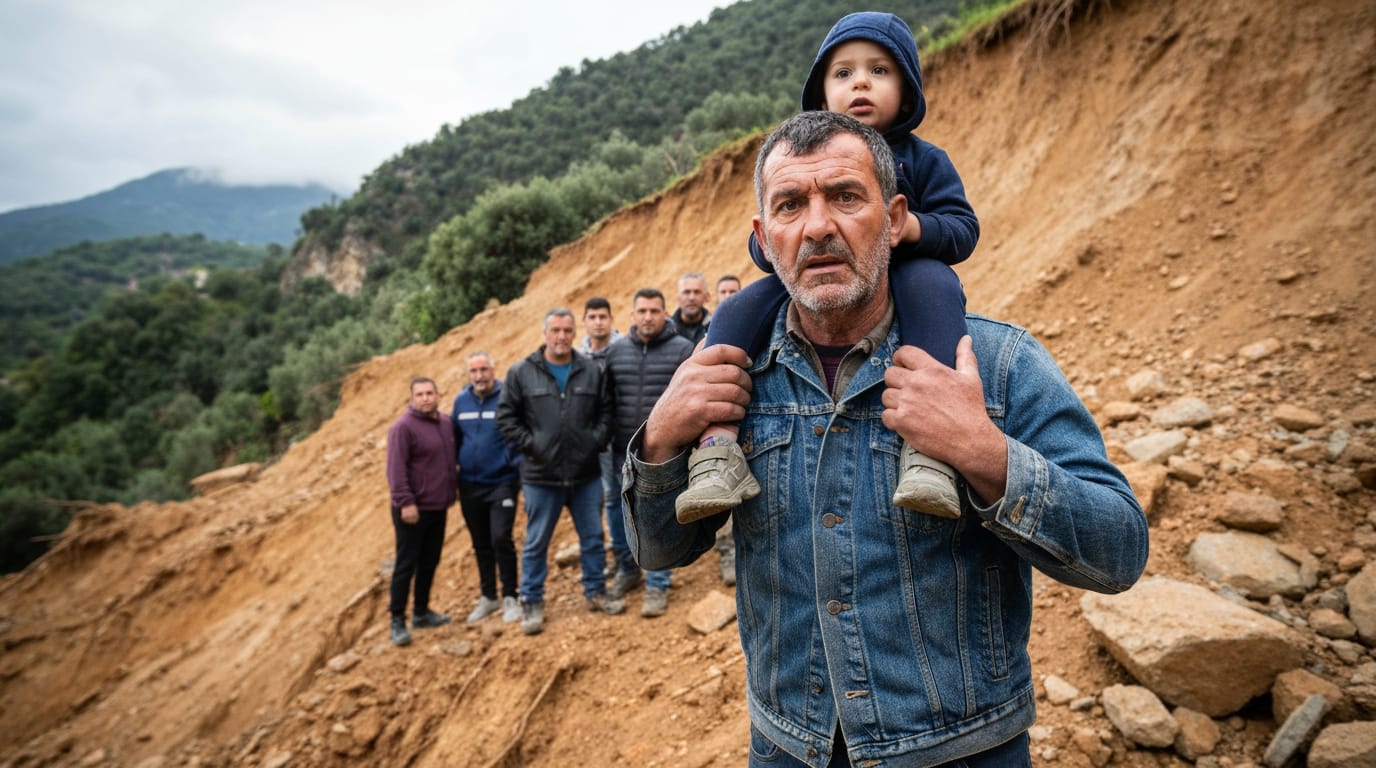
NISCEMI, Sicily – A massive landslide, triggered by relentless rainfall from Cyclone Harry, has cleaved a 4-kilometer (2.5-mile) section of earth in the southern Sicilian town of Niscemi, forcing the evacuation of over 1,500 residents and leaving homes precariously balanced on newly formed cliff edges. The disaster, which saw significant ground movement on January 16 and a more substantial reactivation of an old fault line on January 25, has reshaped the landscape, destroyed infrastructure, and prompted Italy to declare a state of emergency across three southern regions. The humanitarian and economic fallout continues to unfold as authorities grapple with an unstable terrain and the daunting task of permanent relocation for many families.
Niscemi's Perilous Descent
The picturesque town of Niscemi, nestled in the province of Caltanissetta, now bears the scars of an extraordinary natural event. Images from the disaster zone depict a scene of profound devastation: houses teetering on the brink of collapse, cars dangling precariously 20 meters (yards) off newly formed cliffs, and entire structures swallowed by the shifting earth. Civil protection crews have established a 150-meter wide "no-go zone" as the water-soaked ground continues to shift, rendering many areas uninhabitable and unsafe. The initial landslide on January 16 was followed by a larger movement on January 25, reactivating a dormant fault line and further compromising the stability of numerous buildings and essential services. Local road networks are severely disrupted, and schools in the affected areas have been suspended as authorities assess the safety of buildings and seek alternative educational solutions.
The immediate human toll, while thankfully without reported fatalities or injuries, is immense. Over 1,500 people were ordered to evacuate their homes, a sudden upheaval that has uprooted lives and shattered a sense of security. While most have found temporary shelter with family members, at least 20 individuals are currently housed in a reception center at the "Pio La Torre" sports hall. Fabio Ciciliano, Italy's head of Civil Protection, underscored the severity of the situation, stating that the landslide remains active and that permanent relocation would be necessary for those whose homes are now situated on the unstable edges.
Cyclone Harry's Destructive Fury
The catalyst for Niscemi's disaster was Cyclone Harry, a powerful weather system that unleashed relentless rain and brought coastal regions to their knees with waves reaching up to 9 meters (nearly 30 feet). The storm, also referred to as Storm Harry, dumped exceptional amounts of water across Sicily and other southern Italian regions, saturating the ground and critically weakening the soil's natural cohesion. This intense hydrological pressure proved too much for Niscemi's underlying geology, built upon layers of sand and clay that become particularly permeable and unstable when waterlogged.
The impact of Cyclone Harry extended far beyond Niscemi, wreaking havoc across Sicily, Calabria, and Sardinia. Widespread flooding, structural failures, and extensive damage to coastal defenses and infrastructure were reported. Firefighters conducted numerous rescues, utilizing inflatable boats to navigate submerged vehicles and flooded ground-floor buildings. The Sicilian city of Catania and the Calabrian city of Catanzaro experienced severe impacts, leading to the closure of schools and public offices. A record 16-meter wave was even measured in the Strait of Sicily, highlighting the unprecedented intensity of this "historic eastern storm."
A Precarious History, An Uncertain Future
Niscemi's vulnerability to landslides is not a new phenomenon. Geologists indicate that the town, perched on its unstable plateau, has experienced land movements before, notably a major landslide in 1997 that necessitated the evacuation of 400 people. This history has fueled frustration among some residents, who contend that past warnings and smaller land movements were not adequately addressed, contributing to the scale of the current catastrophe. The region's susceptibility to such events is multifaceted, stemming from a combination of natural geological factors and, in some instances, human-induced vulnerabilities like illegal construction in risky areas and inadequate land management.
Beyond Niscemi, Sicily as a whole faces a persistent threat from landslides. Scientific research highlights that heavy rainfall, seismic activity, and gradual fault movements are all common triggers for such geological instabilities across the island. The current disaster serves as a stark reminder of the urgent need for comprehensive land planning, robust infrastructure, and continuous monitoring in vulnerable areas. The ongoing instability of the Niscemi landslide front complicates immediate intervention efforts, as authorities cannot precisely define the treatment area while the ground continues to shift.
The Long Road to Recovery
In response to the widespread devastation, Italian Premier Giorgia Meloni visited Niscemi on January 28, undertaking an aerial tour of the affected area and meeting with local officials. The Italian government declared a state of emergency for Sicily, Sardinia, and Calabria on January 26, recognizing the scale of the disaster. An initial allocation of 100 million euros ($120 million) has been approved to address immediate needs such as food, shelter, and emergency repairs.
However, the financial burden of the landslide is projected to be far greater. Sicilian regional officials estimate the overall damage to Sicily could reach an staggering 2 billion euros, while other assessments for the directly affected areas hover between 1 billion and 1.5 billion euros, factoring in rebuilding costs, business losses, and infrastructure repairs. Premier Meloni has pledged further support, but the government's statement acknowledges the complexities of intervention while the landslide remains active.
Civil protection efforts are extensive, with firefighting teams and approximately 60 volunteers from various local organizations providing crucial logistical support and assistance to the displaced population. Law enforcement maintains security in the "red zone," enforcing access bans to protect lives and property. The University of Florence and the Italian Space Agency are poised to begin critical field surveys and enhance landslide monitoring, crucial steps in understanding and potentially mitigating future risks. For the evacuated families of Niscemi, the future remains uncertain, marked by the prospect of permanent relocation and the challenging process of rebuilding their lives away from homes now deemed irrevocably lost to the earth's relentless movement.
The landslide in Niscemi is more than a localized tragedy; it is a profound illustration of the increasing vulnerability of communities to extreme weather events and geological instabilities. While immediate humanitarian aid and financial commitments are crucial, the long-term recovery will necessitate sustained investment in resilient infrastructure, proactive environmental management, and robust early warning systems to protect Sicily's communities from the evolving threats posed by a changing climate and a geologically active landscape. The events of January 2026 serve as a stark and urgent call to action, emphasizing the critical need for a comprehensive strategy to safeguard lives and livelihoods across the island.