Ski Jumping Grapples with Integrity Crisis Amidst Equipment Scandals and Compensation System Doubts
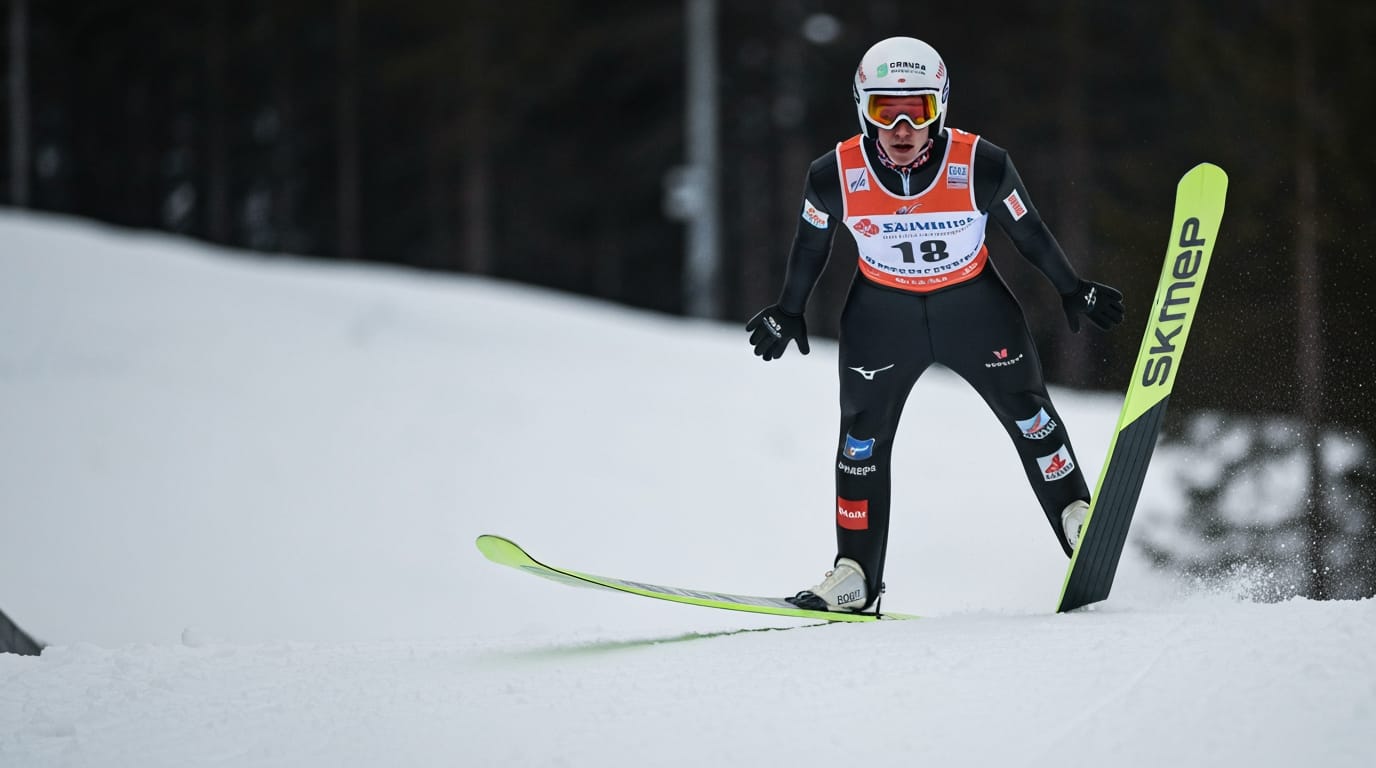
The rarefied air of competitive ski jumping, once defined by daring athletes and breathtaking feats of flight, is increasingly thick with questions of fairness and integrity. A flurry of recent controversies, ranging from intentional equipment manipulation to persistent doubts over the sport’s complex wind compensation systems, has cast a long shadow over the quest for Olympic gold, leaving athletes, officials, and fans alike wondering if some are indeed "trying to pull a fast one."
At the heart of the current unease is a series of equipment-related scandals that have intensified scrutiny on ski jumping's stringent rules. The delicate balance between aerodynamic innovation and unfair advantage has become a battleground, prompting the International Ski and Snowboard Federation (FIS) to implement some of its most rigorous measures yet. However, these efforts have also highlighted the inherent challenges in policing a sport where fractions of an inch or a subtle gust of wind can dictate victory or defeat.
The Fabric of Deception: Norway's Suit Scandal Rocks the Sport
The most jarring incident to date unfolded at the 2025 FIS Nordic World Ski Championships in Trondheim, Norway, where a major cheating scandal involving the host nation's ski jumping team sent shockwaves through the community. Investigations revealed that Norwegian athletes' ski suits were intentionally manipulated to gain an unfair aerodynamic edge, leading to a cascade of disqualifications and suspensions.
The controversy centered on the deliberate alteration of jumpsuits, which are designed under strict FIS regulations concerning material flexibility, fit, and seam integrity. Modifications to these suits can increase air resistance and lift, directly translating into greater jump distances. Following the shocking revelations, the Norwegian Ski Federation admitted to the manipulations. Head coach Magnus Brevik and equipment manager Adrian Livelten confessed to their roles in altering the suits and promptly resigned, with assistant coach Thomas Lobben also facing suspension. Evidence surfaced, including a leaked video, showing suits being deliberately modified on a sewing machine under Brevik's supervision, with reinforced threads and altered seams designed to enhance jumping capabilities.
The repercussions have been severe, extending to some of the sport's most decorated athletes. Olympic gold medalists Marius Lindvik and Johann André Forfang, along with three staff members of the Norwegian men's team, have been charged with ethics violations, jeopardizing Lindvik's gold medal from the Trondheim world championships and Norway's team bronze. This incident laid bare the lengths to which some are willing to go, challenging the very foundation of fair competition.
A Persistent Problem: Equipment Chaos and Tightened Controls
The 2025 scandal was not an isolated event but rather the most recent in a series of equipment-related issues that have plagued ski jumping. At the 2022 Beijing Olympics, multiple top female athletes from Germany, Japan, Austria, and Norway were disqualified from the mixed-team competition due to suit irregularities. While officials attributed these instances to confusion and inconsistency in inspections rather than intentional tampering, the controversies nonetheless damaged the sport's credibility and ignited debate over equipment control.
In response to these recurring challenges, the FIS has significantly tightened its regulatory framework for the 2025-26 season. New rules mandate that athletes are allowed only one suit per season, which must be kept by FIS officials until 30 minutes before training or competition. Furthermore, enhanced 3D body measurements, coupled with new metrics for arm length and foot size, are now used to validate suit compliance, ensuring a precise match between the suit and the athlete's actual dimensions. A new "yellow and red card" sanction system has also been introduced, with a second equipment violation leading to a suspension from the next event and a lost quota spot for the offending nation.
Despite these stricter controls, the initial events of the 2025-26 season have seen a continued wave of disqualifications, suggesting the complexity of adapting to the new regime. At the first Grand Prix event, six male ski jumpers were disqualified due to suit issues, such as waist size, and others were blocked from competing. FIS Race Director Sandro Pertile acknowledged the difficulties, stating that it is "perfectly normal for teams to need some time to adapt to the new situation after such comprehensive changes to the equipment regulations." Pertile, however, differentiated these new disqualifications from past intentional tampering, suggesting they were largely a result of "technical inadequacies" rather than "ill intent." Yet, other recent examples, such as Slovenia's Timi Zajc being twice disqualified for a suit that was too short, and Norway's Anna Odine Strøm penalized for a second sole in her sock, underscore the thin line athletes and teams tread. Adding to the eccentricities, discussions have even emerged around the speculative use of hyaluronic acid by some athletes to enlarge certain body parts for aerodynamic advantages, with the sport's 3D body scanners now measuring crotch dimensions to account for such possibilities.
The Invisible Hand: Debating Wind and Gate Compensation
Beyond equipment, another critical area where questions of fairness persistently arise is the sport's sophisticated yet often controversial wind and gate compensation system. Introduced by FIS in January 2010, the system aims to mitigate the impact of fluctuating wind conditions and variations in inrun length, thereby creating a more equitable playing field. However, the accuracy and impartiality of the compensation points generated by this system have been consistently questioned by athletes, spectators, and experts.
Numerous studies and computer simulations have critically analyzed the FIS system, suggesting that it often "malcompensates" for wind effects, leading to potentially unfair advantages or disadvantages. For instance, research indicates that a tailwind in the early phase of a jump can, counter-intuitively, increase jump length, while a headwind can decrease it – effects not adequately accounted for by the current compensation model. These findings challenge the foundational assumptions underlying the system, revealing that the awarded wind compensation points are frequently too low. Furthermore, studies have identified a trend for greater malcompensations on larger jumping hills, where the stakes and potential impact of wind are amplified. The scientific community has repeatedly called for a re-evaluation of the wind compensation formula and gate factors to ensure more systematically unbiased point awards across competitions.
The ongoing debate over the wind compensation system highlights the profound challenge of achieving objective fairness in an outdoor sport heavily influenced by natural elements. While the system was designed to enhance predictability and reduce the need for repeated rounds due to changing conditions, its imperfections raise uncomfortable questions about whether the outcomes truly reflect athletic prowess alone.
Upholding Integrity: The Future of Fair Play
The convergence of blatant cheating, persistent equipment controversies, and systemic doubts about compensation fairness places ski jumping at a critical juncture. The sport, renowned for its precision and daring, is in a continuous battle to uphold its integrity. The FIS's recent actions, including stricter equipment protocols and sanctioning mechanisms, demonstrate a clear intent to address these issues head-on. However, the recurring nature of the problems suggests that the path to complete transparency and unquestionable fairness remains arduous.
For ski jumping to maintain its public trust and secure its future, a multi-faceted approach is essential. This includes not only stringent enforcement of equipment rules but also continuous scientific review and refinement of the wind and gate compensation models. Greater athlete and coach education regarding complex regulations, alongside robust and consistent inspection processes, will be crucial. The goal must be to minimize any perception that results are swayed by anything other than pure athletic ability, courage, and flawless technique.
The ski jumping world is navigating a turbulent period, defined by the tension between the relentless pursuit of competitive advantage and the imperative to maintain a level playing field. As athletes prepare for upcoming major competitions, the demand for fair play echoes loudly. The question "Are they trying to pull a fast one on us?" underscores a profound yearning for clarity and certainty in a sport where the line between legitimate edge and illicit advantage has become dangerously blurred. The response from the governing bodies, teams, and athletes themselves in the coming seasons will determine whether ski jumping can reclaim its unblemished reputation as a testament to human flight.