South Africa Expels Top Israeli Diplomat Amid Deepening Crisis
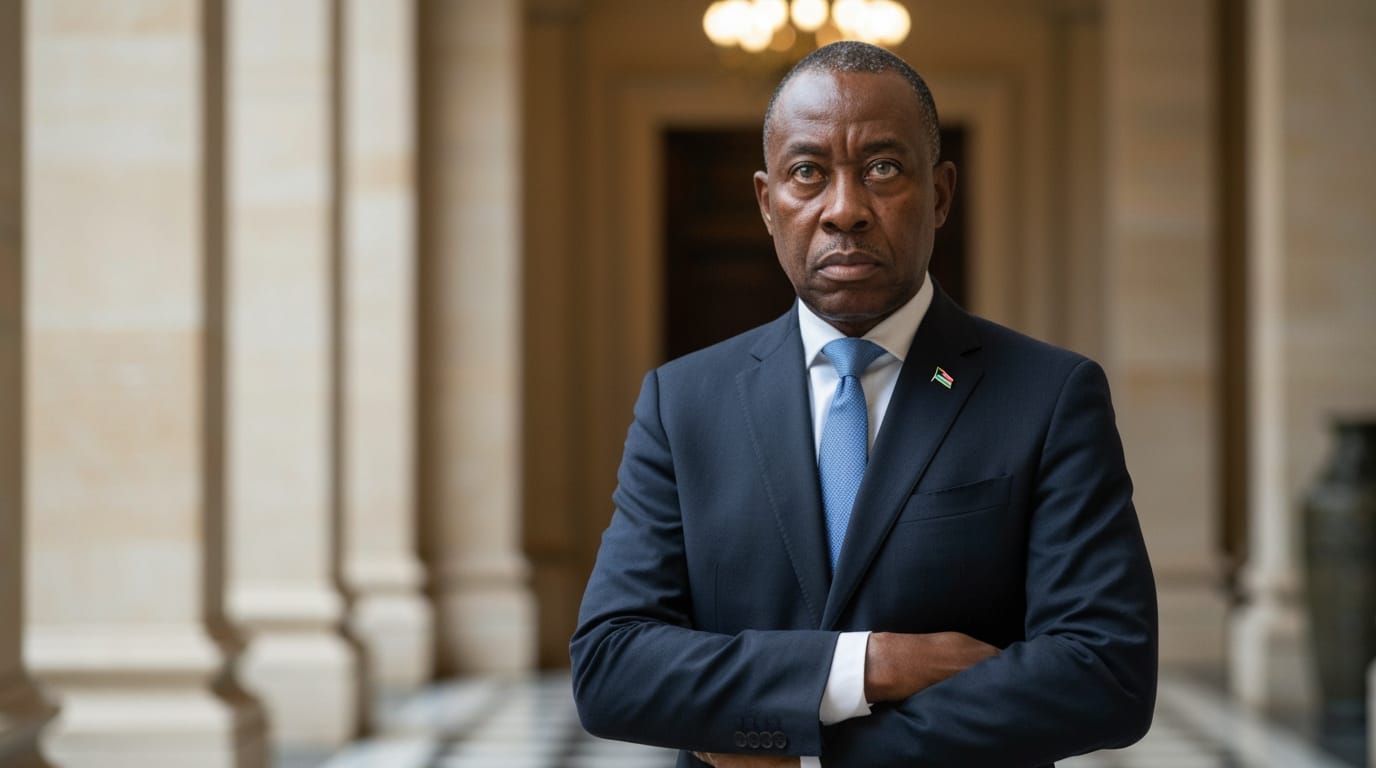
CAPE TOWN, South Africa – In a significant escalation of already fraught relations, South Africa has declared Israel's most senior diplomat in the country, Charge d'Affaires Ariel Seidman, persona non grata, ordering him to leave within 72 hours. The move, announced by the South African Foreign Ministry on Friday, January 30, 2026, marks a new low in diplomatic ties, coming amidst South Africa's ongoing legal challenge against Israel at the International Court of Justice (ICJ) concerning alleged genocidal acts in Gaza.
The expulsion stems from what Pretoria described as "unacceptable violations of diplomatic norms and practices," specifically citing repeated official Israeli social media posts that insulted South African President Cyril Ramaphosa, and a deliberate failure to inform South Africa of visits by Israeli officials. This decisive action underscores South Africa's hardening stance towards Israel, a relationship that has been deteriorating steadily since late 2023.
The Immediate Diplomatic Rupture
The South African Department of International Relations and Cooperation (DIRCO) confirmed the expulsion of Ariel Seidman, who has served as Israel's charge d'affaires since Israel recalled its ambassador, Eliav Belotserkovsky, in November 2023. The decision to declare Seidman persona non grata effectively strips him of his diplomatic immunity and his status as a valid representative of his home nation, requiring his swift departure from the country. Failure to comply could lead to the loss of diplomatic protection and potential arrest, although such instances are rare in international diplomacy. DIRCO spokesperson Chrispin Phiri stated that these actions by the Israeli diplomatic mission represented a "gross abuse of diplomatic privilege and a fundamental breach of the Vienna Convention."
Among the specific incidents cited were Israeli social media posts critical of President Ramaphosa, particularly following a statement by the President regarding the ineffectiveness of boycott politics. While Ramaphosa's original comments were directed at a potential boycott of South Africa's G20 Leaders Summit, an Israeli embassy post interpreted this as a "rare moment of wisdom and diplomatic clarity," a comment that the ruling African National Congress (ANC) deemed "undiplomatic and disrespectful." Furthermore, allegations surfaced earlier in the week from Eastern Cape Premier Oscar Mabuyane, criticizing unauthorized engagements between the Israeli embassy and provincial institutions, including donations accepted without proper governmental approval, which he viewed as undermining South Africa's sovereignty. These incidents collectively contributed to Pretoria's decision to sever its highest remaining direct diplomatic link with Israel.
A Deepening Diplomatic Freeze
This expulsion is the latest and arguably most severe move in a series of diplomatic actions initiated by South Africa in response to Israel's military operations in Gaza following the October 7, 2023, attacks by Hamas. South Africa has been a vocal critic of Israel's conduct, consistently characterizing its actions in Gaza as "genocidal."
In November 2023, South Africa recalled its entire diplomatic mission from Tel Aviv for consultations, citing the "genocidal airstrikes" and a lack of respect for international law by Israel. This was followed by the momentous decision to file a case against Israel at the International Court of Justice (ICJ) in December 2023, accusing the nation of committing genocide against Palestinians in violation of the 1948 United Nations Genocide Convention. Israel has vehemently denied these allegations, criticizing South Africa for what it views as acting as the "legal arm" of Hamas. The ICJ case has drawn global attention and further strained Israel's relations with several nations, but none as intensely as with South Africa.
South Africa's firm stance is deeply rooted in its own history of fighting apartheid, with the African National Congress (ANC) and various human rights organizations drawing parallels between the Israeli-Palestinian conflict and the struggle against racial segregation in South Africa. This perspective has shaped its foreign policy, leading to a long-standing position of solidarity with the Palestinian people.
Historical Roots of a Complex Relationship
The diplomatic relationship between South Africa and Israel has been characterized by complex and often contradictory phases. Historically, South Africa voted in favor of the UN Partition Plan in 1947, which led to the creation of Israel. In its early years, Israel was critical of South Africa's apartheid policies. However, this dynamic shifted significantly after 1967, when Israel began to deepen its ties with the apartheid regime.
During the 1970s and 1980s, Israel and apartheid South Africa developed a robust, though often clandestine, military and economic alliance. This cooperation included joint military ventures, arms trade, and even collaboration on nuclear weapons technology. This period saw Israel assisting the apartheid government in evading UN arms embargoes and updating its military capabilities, with high-level visits exchanged between leaders. The ANC, at the time, condemned this cooperation. This alliance, which some analysts have linked to a shared "pariah state" status and mutual security interests, continued until international pressure, particularly from the United States, forced Israel to impose sanctions on South Africa in 1987.
Following the end of apartheid in 1994, relations began to deteriorate. Nelson Mandela, a revered figure globally, was openly critical of Israel's treatment of Palestinians, setting the tone for post-apartheid South Africa's foreign policy towards the region. Over the past two decades, South Africa has consistently advocated for Palestinian self-determination, and instances of violence in the Israeli-Palestinian conflict have frequently triggered strong condemnations and diplomatic repercussions from Pretoria, including the downgrading of relations in 2019.
Implications and Future Outlook
The expulsion of Ariel Seidman further solidifies South Africa's position as one of Israel's staunchest critics on the global stage. It signals that Pretoria is prepared to take concrete and drastic diplomatic measures to underscore its condemnation of Israel's actions in the Palestinian territories. This move effectively reduces official diplomatic interaction between the two nations to a bare minimum, possibly to the level of consular services if any remain.
The decision is likely to provoke strong reactions from Israel and its allies, including the United States, which has previously accused South Africa of having an "anti-American foreign policy" over its stance on the conflict. For South Africa, however, the expulsion aligns with its long-held foreign policy principles and its deep-seated support for the Palestinian cause, which resonates strongly with its own history of liberation.
The future of South Africa-Israel relations appears bleak, with little prospect for immediate reconciliation. As the ICJ case continues and the conflict in Gaza persists, South Africa's diplomatic posture is expected to remain unwavering. The expulsion of Seidman represents not just a symbolic gesture, but a tangible manifestation of a profound and widening chasm between two nations, highlighting the international repercussions and deep divisions sparked by the ongoing conflict.
In essence, South Africa's expulsion of the top Israeli diplomat is a powerful statement, cementing its role as a leading voice in the international community advocating for Palestinian rights and challenging Israel's actions, further isolating Israel diplomatically in Africa. The move underscores the interconnectedness of global politics and the far-reaching impact of the conflict in the Middle East.


