South Sudan Peace Deal on the Brink as Vice President Placed Under House Arrest
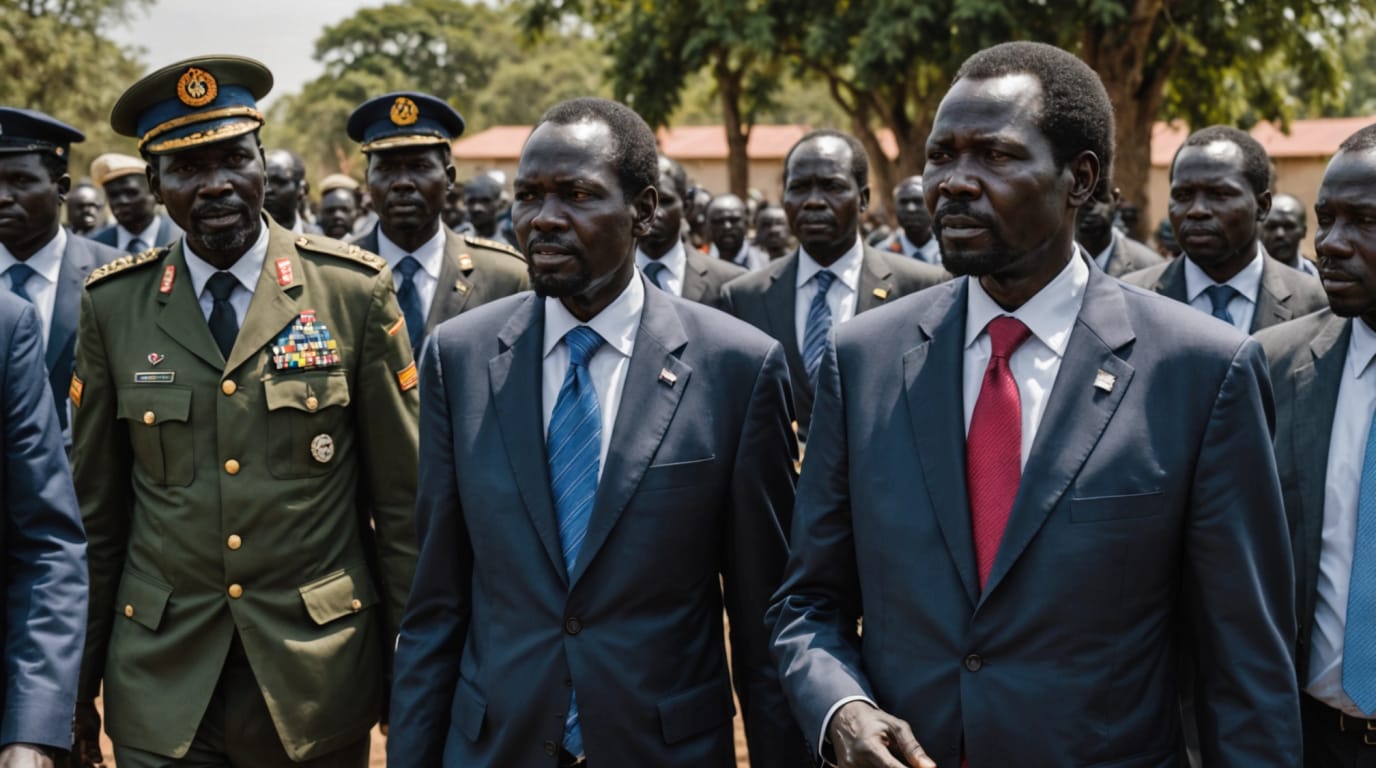
JUBA, South Sudan – South Sudan's already fragile peace agreement is in danger of collapsing after First Vice President Riek Machar was placed under house arrest Wednesday night. The move has sparked international condemnation and raised fears of a return to widespread conflict in the world's youngest nation, which has struggled for stability since gaining independence in 2011.
The arrest of Machar, a longtime rival of President Salva Kiir, follows weeks of escalating tensions and clashes between forces loyal to the two leaders. An armed convoy, reportedly led by top security officials, entered Machar's residence in the capital city of Juba and disarmed his bodyguards before placing him under house arrest. Machar is accused of supporting the White Army militia, which recently clashed with the South Sudan People's Defense Forces (SSPDF) in Nasir, Upper Nile State. Machar's party, the SPLM-IO, denies any ongoing links with the White Army.
International Condemnation and Calls for Restraint
The United Nations, the African Union, and various international governments have swiftly condemned Machar's arrest and called for restraint. The UN Commission on Human Rights in South Sudan warned that the arrest signals a severe unraveling of the peace process and poses a direct threat to millions of lives. Yasmin Sooka, chair of the commission, stated that the deliberate targeting of opposition leaders and civilians represents a reckless disregard for international law and the country's future. The United States Bureau of African Affairs urged Kiir to release Machar and called on South Sudan's leaders to demonstrate sincerity in their stated commitments to peace. Neighboring Kenya and the Intergovernmental Authority on Development (IGAD) regional economic bloc have also joined the calls for de-escalation.
The UN peacekeeping mission in South Sudan (UNMISS) has issued a stark warning that the country stands on the brink of relapsing into widespread conflict, which would not only devastate South Sudan but also affect the entire region. UNMISS chief Nicholas Haysom urged both parties to exercise restraint, emphasizing that a renewed war would undo the hard-won gains of the past seven years.
The Unraveling of the Revitalized Peace Agreement
The current crisis threatens the Revitalized Agreement on the Resolution of the Conflict in the Republic of South Sudan (R-ARCSS), signed in 2018 to end a brutal five-year civil war. The agreement established a power-sharing arrangement between Kiir and Machar, with Machar serving as First Vice President in a coalition government. However, the implementation of key provisions of the peace agreement, including national elections and the unification of their two forces into one army, has been slow and fraught with challenges.
Oyet Nathaniel Pierino, deputy chair of Machar's SPLM-IO party, stated that Machar's detention effectively collapses the peace deal, putting the prospect for peace and stability in South Sudan in serious jeopardy. The Reconstituted Joint Monitoring Evaluation Commission (RJMEC), a body monitoring the implementation of the peace agreement, said that the arrest breached the R-ARCSS and called on all parties to de-escalate tensions immediately.
A History of Conflict and Distrust
The rivalry between Kiir and Machar has been a central feature of South Sudan's political landscape for years, often erupting into violent conflict. The civil war, which claimed hundreds of thousands of lives and displaced millions, was largely fought along ethnic lines, pitting Kiir's Dinka ethnic group against Machar's Nuer. Despite the 2018 peace agreement, deep-seated distrust and competition for power and resources have continued to undermine stability.
Analysts suggest that the current tensions may be linked to President Kiir's efforts to consolidate power and sideline Machar politically, particularly as Kiir, who is 73 years old, considers his succession. Recent cabinet reshuffles and the detention of Machar's allies have fueled these concerns. More than 20 of Machar's allies have been detained, heightening fears of further unrest.
Humanitarian Crisis and Regional Implications
The escalating political crisis is exacerbating an already dire humanitarian situation in South Sudan. Throughout March 2025, violence has intensified in multiple regions, including Upper Nile State, where aerial assaults have displaced over 60,000 people. The UN Commission on Human Rights in South Sudan has warned that failure to uphold the protections enshrined in the Peace Agreement, including freedom of movement, political participation, and the cessation of hostilities, will lead to a catastrophic return to war.
The deployment of Ugandan troops and their battle tanks into South Sudan, following a request by President Kiir, has further raised concerns. The situation threatens to destabilize the entire region, potentially drawing in neighboring countries and exacerbating existing conflicts. The United States, United Kingdom, and other European nations have reduced diplomatic staff in Juba, urging their citizens to evacuate due to safety concerns.
A Precarious Future
South Sudan stands at a critical juncture. The arrest of Vice President Machar has thrown the peace process into turmoil, raising the specter of renewed civil war and further suffering for the South Sudanese people. The international community is urging dialogue and a recommitment to the 2018 peace agreement as the only way to prevent a catastrophic relapse into conflict. The coming days and weeks will be crucial in determining whether South Sudan can pull back from the brink and salvage its fragile peace.


