South Sudan Teeters on the Brink as Peace Efforts Falter Amidst Deepening Crises
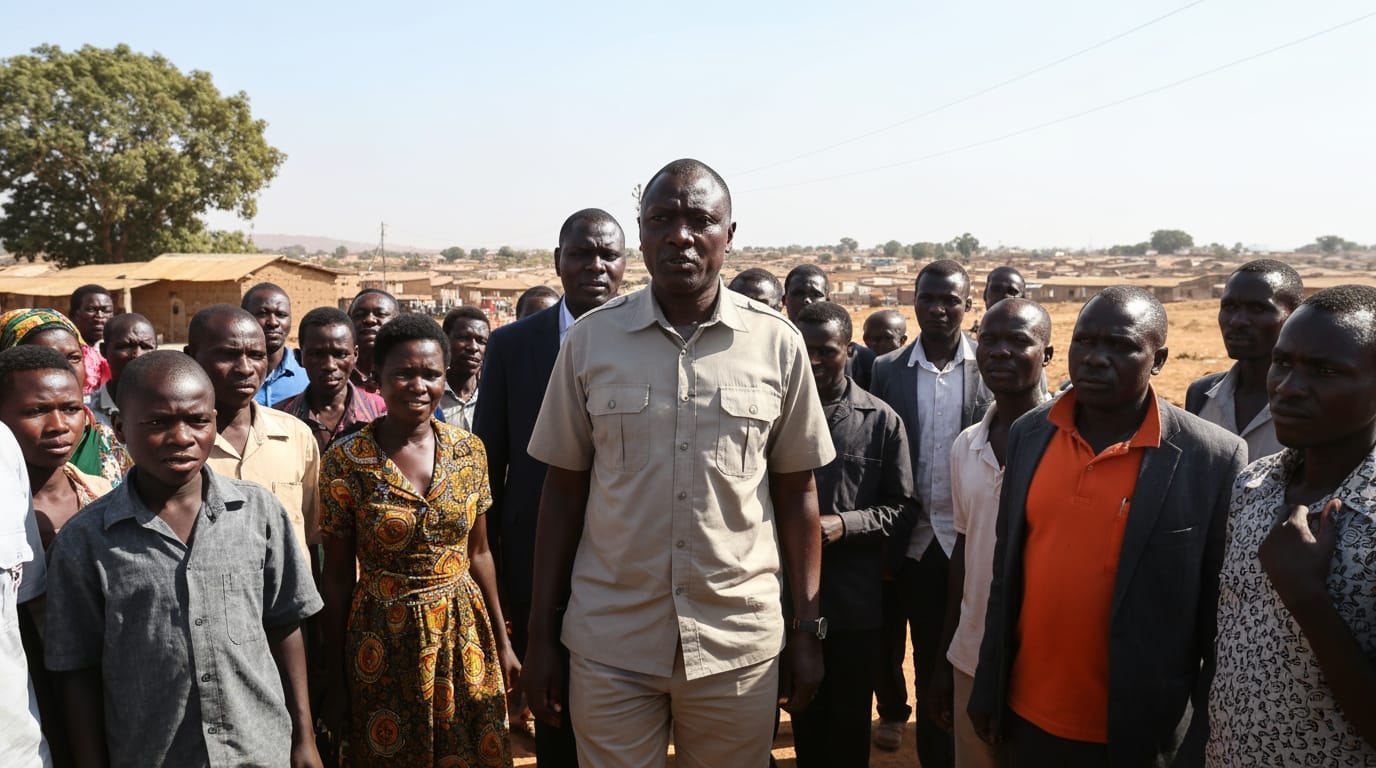
Juba, South Sudan – Over a decade since its jubilant independence, South Sudan, the world's youngest nation, faces a profoundly precarious future as efforts to stabilize the country under President Salva Kiir's leadership contend with persistent political infighting, a stalled peace process, rampant corruption, and a deepening humanitarian catastrophe. Despite repeated international interventions and peace agreements, the foundational challenges of ethnic division, weak governance, and economic mismanagement continue to undermine any substantive progress towards lasting stability, pushing the nation to the brink of renewed widespread conflict.
South Sudan's journey has been marred by turmoil since its separation from Sudan in 2011. The optimism of independence quickly gave way to a devastating civil war that erupted in December 2013, primarily pitting forces loyal to President Salva Kiir (a Dinka) against those backing his then-Vice President Riek Machar (a Nuer). This conflict, rooted in deep political, ethnic, and personal rivalries, resulted in hundreds of thousands of deaths and a massive humanitarian crisis. Though a Revitalized Agreement on the Resolution of the Conflict in South Sudan (R-ARCSS) was signed in September 2018, establishing a unity government and a transitional period, its implementation has been painstakingly slow and fraught with setbacks, leaving the peace process in a fragile state. The transitional period, initially intended to culminate in elections in 2024, has been extended multiple times, now to December 2026, amidst concerns of insufficient preparedness and a lack of political will. Recent assessments by international bodies, including the African Union Peace and Security Council, highlight that the comprehensive implementation of the agreement remains hindered by persistent political disagreements and security challenges.
One of the cornerstones of the R-ARCSS was the unification of rival armed factions into a single national army, a critical step for establishing state authority and reducing internal hostilities. While a first batch of unified forces was graduated in August 2022, marking a symbolic milestone, tangible progress in their full unification and deployment has since stalled. Reports from the Reconstituted Joint Monitoring and Evaluation Commission (RJMEC) indicate that gains made in force unification between August 2022 and January 2023 have been "eroded by the ongoing fighting," with graduated forces still largely confined to training centers and lacking essential logistical support. Further complicating matters, ongoing violations of the permanent ceasefire by key signatory parties, including the South Sudan People's Defence Forces (SSPDF) and the Sudan People's Liberation Army – In Opposition (SPLA-IO), threaten to destabilize the fragile peace. Recent military offensives and clashes, particularly in areas like Nasir in early 2025, have exacerbated these tensions and caused significant displacement. The international community has consistently called for an immediate and unconditional ceasefire and the expedition of the unification of forces, recognizing its central role in achieving lasting peace.
Parallel to the security sector reforms, the process of drafting a permanent constitution, crucial for establishing a stable legal and political framework, has also faced considerable delays. The Constitution Making Process Act 2022 was enacted in 2021, laying out a framework for a popular and inclusive process. However, the actual drafting and consultation have been slow, with concerns about "elite capture" and the need for a truly democratic mandate for the constitution's ratification. The National Constitutional Review Commission (NCRC) has been formed, yet other vital mechanisms for the constitution-making process remain unimplemented. Critics argue that postponing this critical process risks perpetuating instability and failing to address the fundamental issues of governance and power-sharing that fuel conflict. The current unity government, formed under the R-ARCSS, lacks a democratic mandate, underscoring the urgency of establishing a legitimate constitutional framework through a truly representative process.
Beneath the political and security instability lies a dire economic crisis, exacerbated by systemic corruption that has siphoned billions from the nation's oil wealth. South Sudan's economy is overwhelmingly dependent on oil, which accounts for over 90% of government revenue. However, a series of United Nations reports have documented widespread and "systemic government corruption" and "brazen predation" by political elites, diverting substantial oil revenues away from public services and into private hands. A striking example is the "Oil for Roads" program, intended to build crucial infrastructure, from which an estimated $2.2 billion was misallocated between 2021 and 2024, with more than 90% of planned projects never completed. This staggering corruption is directly linked to the country's severe humanitarian crisis, driving hunger, collapsing health systems, and fueling conflict over resources. The economic indicators paint a grim picture: inflation reached approximately 105% in 2024, with projections of 65.7% for 2025. Poverty is rampant, with 76% of the population living below the national poverty line in 2022, and this figure is projected to rise to 92% for monetary poverty in 2025. Disruptions to oil exports due to the ongoing conflict in neighboring Sudan have further strained an already fragile economy, leaving the government struggling to control its political and security allies and maintain a patronage system that has historically sustained governance. President Kiir has recently shuffled his finance ministers in an attempt to address the ongoing cash shortages and corruption, highlighting the depth of the challenge.
The cumulative effect of these challenges is a profound humanitarian crisis, one of the worst globally. Driven by relentless violence, climate shocks (including severe floods affecting 1.4 million people and prolonged droughts), disease outbreaks, and the struggling economy, an estimated 10 million people—two-thirds of the population—are projected to require humanitarian assistance in 2026. Acute food insecurity is critical, affecting 7.7 million people, with concerns of famine in some areas. The conflict in neighboring Sudan has exacerbated the situation, leading to an influx of nearly 850,000 refugees and South Sudanese returnees by October 2024, further stretching already limited resources and increasing tensions within host communities. The International Committee of the Red Cross (ICRC) reported that escalating conflict and violence in 2025 forced over 540,000 people to flee their homes. While President Kiir has recently assured the United Nations of his government's commitment to granting unimpeded humanitarian access, the underlying issues persist. The international community has repeatedly stressed that humanitarian aid alone cannot solve South Sudan's problems, placing the ultimate responsibility for stability on the government.
In conclusion, South Sudan stands at a critical juncture, facing immense pressure to avert a relapse into full-scale civil war and deliver on the promises of independence. While President Salva Kiir has publicly reaffirmed his commitment to peace and stability, the persistent delays in implementing the R-ARCSS, coupled with widespread corruption, ethnic fractionalization, and a deepening humanitarian crisis, present formidable obstacles. The rivalry between President Kiir and First Vice President Machar remains a potent source of political and military instability, directly impacting the viability of the peace agreement. For genuine stabilization to occur, there must be a fundamental shift towards transparent governance, accountability for corruption, equitable distribution of resources, and a renewed, sincere commitment from all political actors to fully implement the peace agreement's provisions, including the unification of forces and a truly inclusive constitution-making process. Without such decisive action, South Sudan risks remaining trapped in a cycle of violence and despair, with devastating consequences for its people and the wider region.


