Southern France Engulfed by Wildfires in Wake of Brutal Heatwave
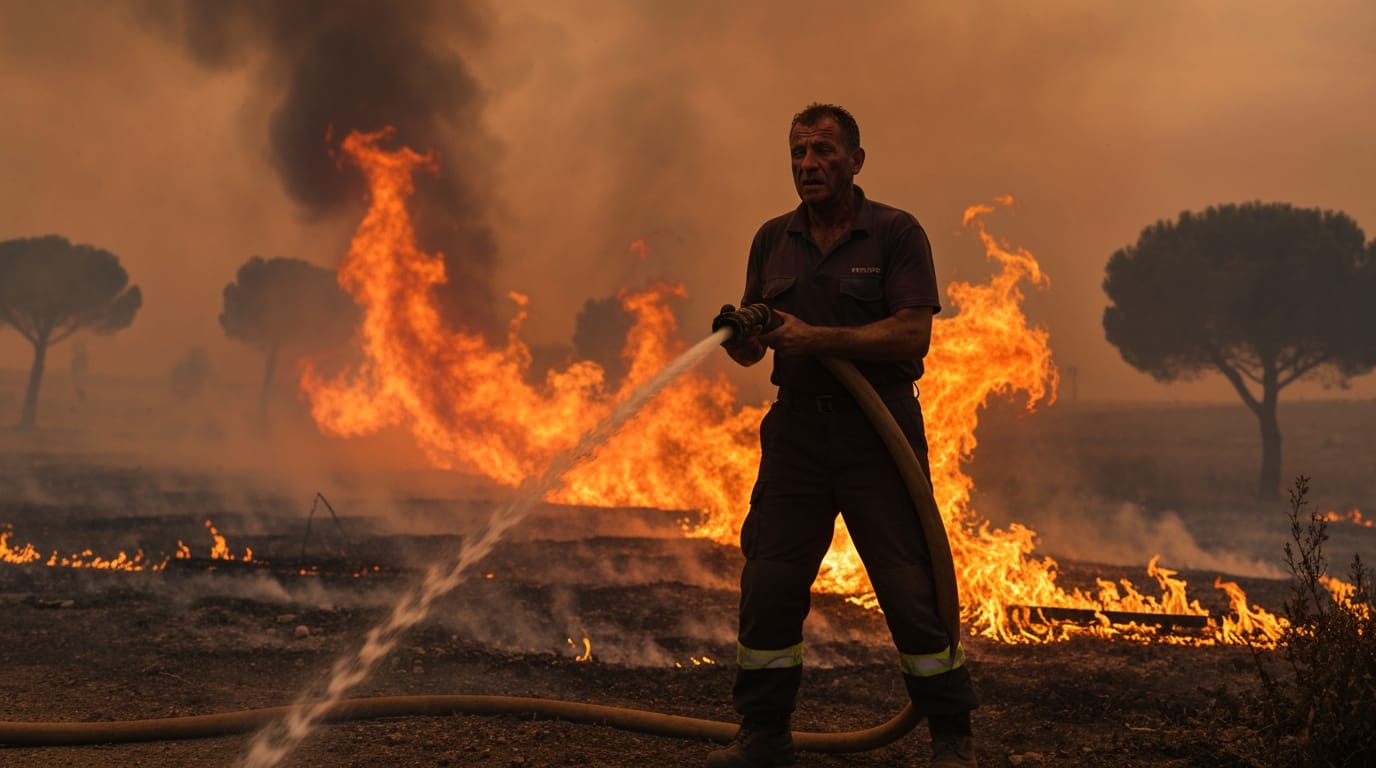
MARSEILLE, FRANCE – Swathes of southern France are ablaze, ravaged by multiple wildfires that have scorched over 1,200 hectares of land, forcing thousands to evacuate just days after a deadly heatwave gripped Western Europe. Strong winds, coupled with tinder-dry conditions and record-breaking temperatures, have fueled the rapidly spreading blazes, stretching emergency services to their limits across several Mediterranean departments now under a "red alert" for wildfire risk. While authorities report no casualties from the current infernos, the widespread destruction highlights the escalating vulnerability of the region to the intensifying impacts of climate change.
The Inferno Spreads Across Arid Landscapes
The most significant blaze has torn through the Aude administrative department, situated near the Spanish border, where approximately 900 hectares have been incinerated. This area, alongside parts of the Herault department, has borne the brunt of the largest fire, which started in Beaufort before extending its destructive path. Elsewhere, the situation near Marseille remains critical, with two major fires brought under control but not fully extinguished, and another consuming around 260 hectares in Lancon-Provence. A smaller, additional fire is also being tackled near Rognac, close to Marseille airport.
The immediate danger necessitated swift action, leading to the evacuation of approximately 200 people from the communes of Pouzols-Minervois and Mailhac in the Herault and Aude departments. Further east, near the resort town of Fréjus in the Var department, more than 2,000 people were evacuated from six campsites on Wednesday as a forest fire threatened the area, though that particular blaze has since been contained. In another instance, 1,500 individuals were forced to flee three campsites in the seaside resort of Canet-en-Roussillon. The sheer scale of the events underscores the perilous conditions gripping Southern France. French Prime Minister Sebastien Lecornu noted that nearly 7,000 fires have erupted since the beginning of the summer season, with approximately 8,700 hectares already burned, including 1,200 hectares on Wednesday alone.
A Heat-Scorched Tinderbox: The Climate Catalyst
The current wave of destruction follows a period of intense heat and drought that has left the region exceptionally vulnerable. Weeks of dry weather and record temperatures across France created a tinderbox, primed for ignition. Europe's recent heatwave, which caused over 1,300 excess deaths across Western Europe, significantly exacerbated the risk of wildfires due to prolonged high temperatures, low humidity, and parched vegetation. Health authorities in France estimate the previous heatwave alone may have resulted in around 1,000 excess deaths in the country.
Compounding the arid conditions are powerful Mistral and Tramontane winds, which have been sweeping through the Mediterranean region with gusts reaching up to 85 to 90 kilometers per hour. These strong winds act as a relentless accelerant, fanning the flames and driving fire fronts rapidly across vast distances, making containment exceedingly difficult. Plants and vegetation, under severe water stress from the prolonged dry spell, offer ample fuel for the expanding blazes. Scientists and meteorological organizations, including the World Meteorological Organization, had previously warned that such record temperatures would worsen wildfire risks. This tragic predictability is increasingly linked to climate change, which is seen as driving more intense heat and dryness across Europe, now considered the world's fastest-warming continent.
The Arduous Battle on Multiple Fronts
The firefighting effort in Southern France is a monumental undertaking, with hundreds of firefighters mobilized to confront the blazes. In the Aude and Herault regions alone, up to 800 firefighters, supported by 150 vehicles, are battling the main inferno. Their ground efforts are significantly augmented by water-bomber aircraft, including Canadair planes, with four deployed specifically in the Aude region.
However, the challenges are formidable. The rugged, hilly terrain often lacks accessible routes, hindering ground crews and making aerial support critical. The persistent high winds, which have been a major factor in the rapid spread of the fires, also complicate aerial operations and increase the risk for firefighters. Alain Bucquet, the Aude prefect, emphasized the urgency, stating, "The idea is to bring the fire under control quickly because temperatures are rising and the wind is growing stronger." Interior Minister Laurent Nunez confirmed three blazes, two originating on the western edge of Marseille, had collectively consumed 1,210 hectares. Prime Minister Sebastien Lecornu convened a crisis meeting in Marseille, underscoring the severity of the situation and the national effort involved, with 2,000 firefighters mobilized nationwide since the summer season began.
Human Impact and Widespread Disruption
The wildfires have not only threatened natural landscapes but also caused significant disruption to daily life and posed risks to human populations. While no casualties have been reported from the immediate fire zones, the evacuations have uprooted thousands. Besides the 200 people evacuated in Aude and Herault, and the 2,000 from campsites near Fréjus, residents in other threatened areas have been confined to their homes as a precautionary measure. The wildfires have also affected infrastructure, with regional TER rail services between Marseille and Miramas suspended due to flames approaching railway tracks. Roads, such as the D10, have been closed, further isolating affected communities and impeding emergency access.
The air quality across the region has also been impacted, with a distinct smell of smoke even reaching Marseille airport, prompting reassurances from pilots to landing passengers that the scent was not emanating from their aircraft. The combination of fire, smoke, and heat has created a tense atmosphere for both residents and emergency personnel. The Aude region, which was the site of France's largest wildfire in decades last year, is unfortunately no stranger to such devastating events.
A Looming Threat and Long-Term Implications
The immediate future offers little respite, with no rain forecast and France's weather office warning of yet another spell of extreme heat expected next week. This grim outlook signals a prolonged and arduous battle for firefighters and communities. The repeated and increasingly severe wildfire seasons underscore a deeper environmental crisis. These fires add urgency to discussions about the future of France's forests, which are vital carbon sinks crucial for the country's carbon neutrality goals by 2050.
However, these forests are now threatened by rising temperatures, drought, disease, and pests, alongside the more frequent and intense fires. Forest firefighters' spokesperson Eric Brocardi noted that wildfires are now occurring increasingly earlier in the year, a stark indication of shifting climate patterns. As Europe grapples with the reality of becoming the world's fastest-warming continent, the events unfolding in Southern France serve as a potent reminder of the escalating environmental challenges and the critical need for adaptation and mitigation strategies to protect both natural ecosystems and human lives.


