Spain Levies Record €64 Million Fine on Airbnb Amid Intensifying Housing Crisis
MADRID, Spain – In a significant escalation of its battle against soaring housing costs and the impact of mass tourism, Spain has imposed a substantial €64 million fine on short-term rental giant Airbnb. The penalty, issued by the Ministry of Consumer Affairs, targets the platform for allegedly advertising over 65,000 unlicensed tourist apartments across the country, marking a pivotal moment in Spain’s ongoing efforts to regulate the booming vacation rental market and safeguard housing affordability for its citizens. This landmark fine underscores the government's resolve to prioritize residents' housing rights over unregulated tourism growth, sending a clear message to digital platforms operating within its borders.
Unlicensed Listings Trigger Unprecedented Penalty
The hefty €64 million fine, equivalent to approximately $75 million USD, was levied against Airbnb for what Spanish authorities termed "unfair commercial practices." The Ministry of Consumer Affairs cited the widespread advertisement of 65,122 apartments lacking the legally required licenses, a violation that authorities claim persisted despite prior warnings. Specific infractions included listings published without valid registration or license numbers, instances of incorrect or false license information, and a lack of transparency regarding whether the host was a private individual or a professional operator.
Officials emphasized that the fine's magnitude reflects six times the illegal profits Airbnb is estimated to have generated from these non-compliant listings between the initial warning and their eventual removal. Consumer Rights Minister Pablo Bustinduy asserted the government's firm stance, stating that "no company, no matter how big or powerful, should be above the law," particularly when it impacts fundamental rights like access to housing. Following an administrative process, Airbnb's appeal against the sanction was rejected, rendering the penalty legally binding. The company has also been ordered to promptly delete all identified irregular advertisements from its platform.
Spain's Housing Squeeze: A Nation on Edge
The stringent measures against Airbnb are deeply rooted in Spain's deepening housing crisis, a multifaceted issue exacerbated by the unchecked proliferation of short-term tourist rentals. Across major cities and popular tourist destinations such as Barcelona, Madrid, Mallorca, and the Canary Islands, residents grapple with dwindling long-term rental options and escalating housing costs. Spain currently faces an estimated shortfall of 450,000 homes, with short-term rentals widely identified as a significant contributor to this imbalance by converting residential units into tourist accommodations.
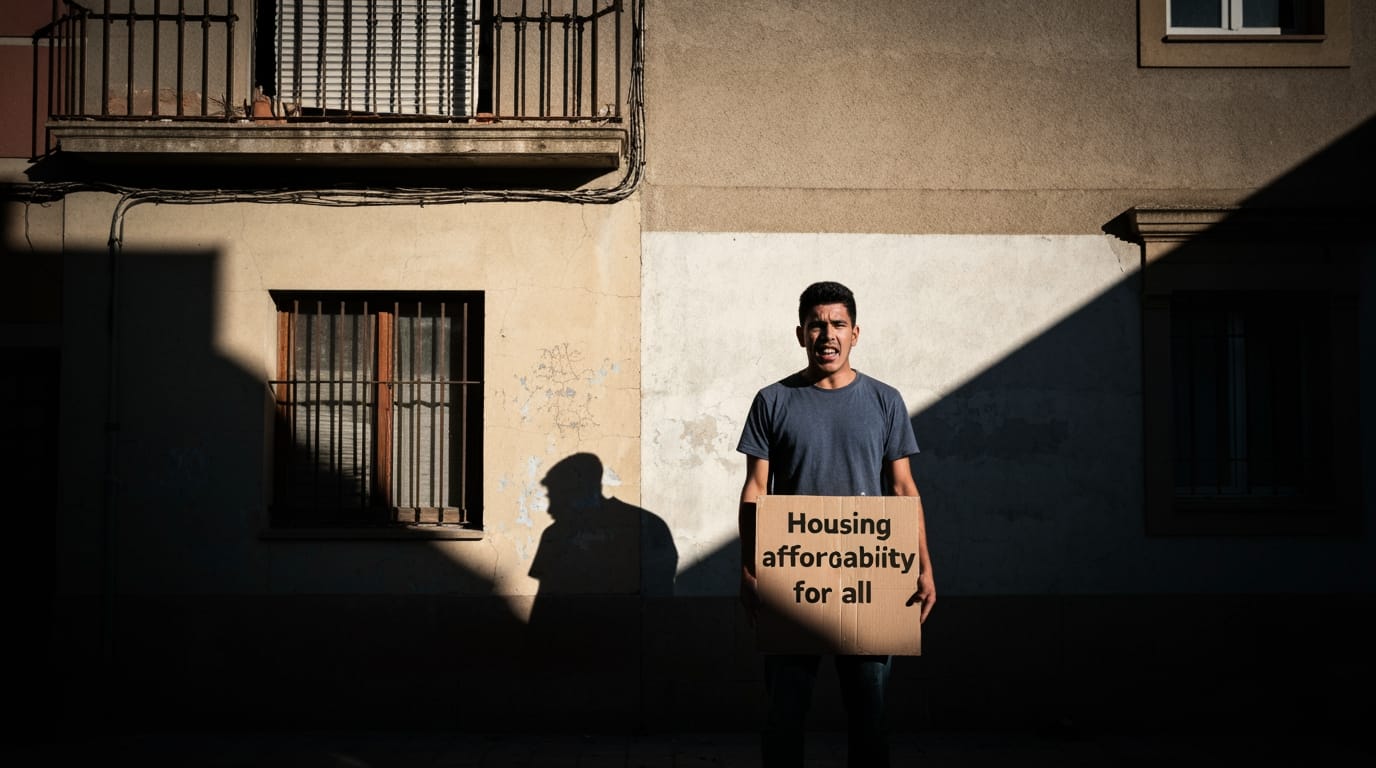
The economic pressure on locals is palpable. In Barcelona, short-term rentals have been linked to an average rent increase of 1.9%, with some tourist-dense areas experiencing spikes of up to 7%. Over the past decade, Barcelona has seen rents surge by 70% and home prices by 60%, even as the number of Airbnb listings in the city has reportedly decreased. This phenomenon, coupled with "overtourism" — where an excessive volume of visitors strains local infrastructure and erodes community life — has led to widespread public discontent. Protests have erupted in various locations, with banners often proclaiming "More neighbors, fewer tourists" and "Our city is not for sale," reflecting a growing sentiment that tourism benefits are coming at the expense of residents' quality of life. With Spain welcoming 94 million foreign tourists in 2024, a 13% increase from the previous year, the challenges of balancing tourism's economic benefits with the housing needs of its population continue to intensify.
A Web of Regulations: Local and National Efforts
The €64 million fine is the latest in a series of regulatory actions and legislative overhauls aimed at controlling the short-term rental market in Spain. The country operates under a complex framework where national housing laws intersect with regional tourism laws, leading to varied regulations across its autonomous communities. However, a concerted effort is underway to establish more unified and rigorous compliance standards.
A significant development in 2025 has been the implementation of new national requirements: as of July 1, all tourist and seasonal rental properties must obtain a national registration number to be legally advertised on platforms like Airbnb. Furthermore, new tourist-use rentals in apartment buildings established after April 3, 2025, now require explicit approval from homeowners' associations. Non-compliance with these regulations can lead to properties being removed from booking platforms and potentially incur fines up to €60,000.
Several cities and regions have already enacted their own stringent rules. Barcelona, for instance, has gained international attention for its plan to eliminate all 10,000 licensed tourist apartment licenses by 2028, a measure recently upheld by Spain's top court. Andalucía introduced stricter licensing requirements and mandated community approval for short-term rentals, while Madrid courts have previously ordered the removal of thousands of illegal listings. These actions demonstrate a growing trend among Spanish authorities to assert control over the short-term rental sector, including previous orders for Airbnb to remove approximately 65,000 listings in May, prior to this latest fine. Spain also fined Booking.com €413 million in 2024 for anti-competitive practices, signaling a broader regulatory scrutiny of large online travel platforms.
Airbnb's Stance and the Enduring Debate
In response to the fine, Airbnb has announced its intention to appeal the decision, contending that the ministry's actions are "contrary to applicable regulations in Spain." The company maintains it is actively collaborating with Spain's Ministry of Housing to implement a new national registration system, reporting that more than 70,000 listings on its platform have added a registration number since January.
Airbnb's core argument often centers on the premise that the true cause of Spain's housing challenges is an insufficient housing supply, rather than the existence of short-term rentals. The platform also suggests it provides an essential income stream for local families grappling with rising living costs. However, these claims are met with skepticism by many urban planners and housing advocates. While Airbnb acknowledges working with governments globally for responsible tourism, an analysis by the company itself suggested that Barcelona's decade-long clampdown on short-term rentals, initiated in 2014, has not eased housing or overtourism challenges, with local rents and house prices continuing their upward trajectory. This complex interplay highlights the global debate surrounding the balance between the benefits of a sharing economy and the preservation of urban residential character and affordability. Cities like Lisbon and Amsterdam have seen some success with their restrictions, such as reduced rent growth in Lisbon and stabilized housing prices in Amsterdam following rental caps, but the effectiveness of such measures remains a subject of ongoing study and discussion.
Conclusion: An Unfolding Narrative for Spain's Cities
The significant fine imposed on Airbnb by the Spanish government represents a definitive step in the nation's determined effort to recalibrate the relationship between its vital tourism industry and the fundamental housing needs of its populace. This action, coupled with an evolving regulatory landscape and escalating public pressure, signals a shift in Spain's approach to managing its urban centers. The conflict between the economic allure of short-term rentals and the imperative to maintain affordable, livable communities is far from resolved. As Spain continues to navigate this intricate challenge, the decisions made today will undoubtedly shape the future of its cities, impacting not only residents and hosts but also the very nature of tourism in one of the world's most visited countries.


