Spain Reels from Dual Rail Disasters as Investigations Begin
Spain has been plunged into a period of national mourning following two devastating train accidents within days, claiming dozens of lives and injuring scores more. The nation's advanced rail network, long a source of pride, has been shaken by the catastrophic collision of two high-speed trains in southern Spain and a separate commuter train crash near Barcelona.
The more severe incident occurred Sunday evening, January 18, 2026, when a high-speed passenger train derailed and collided with another oncoming train near Adamuz, in the Córdoba province of Andalusia. This collision, which authorities have described as "extremely strange," has resulted in at least 40 fatalities and left over 120 people injured, many critically. Among the deceased was the driver of one of the trains involved. Just two days later, a commuter train near Barcelona crashed after hitting a collapsed retaining wall, killing its driver and injuring dozens of passengers.
Catastrophic Collision Tears Through Andalusia
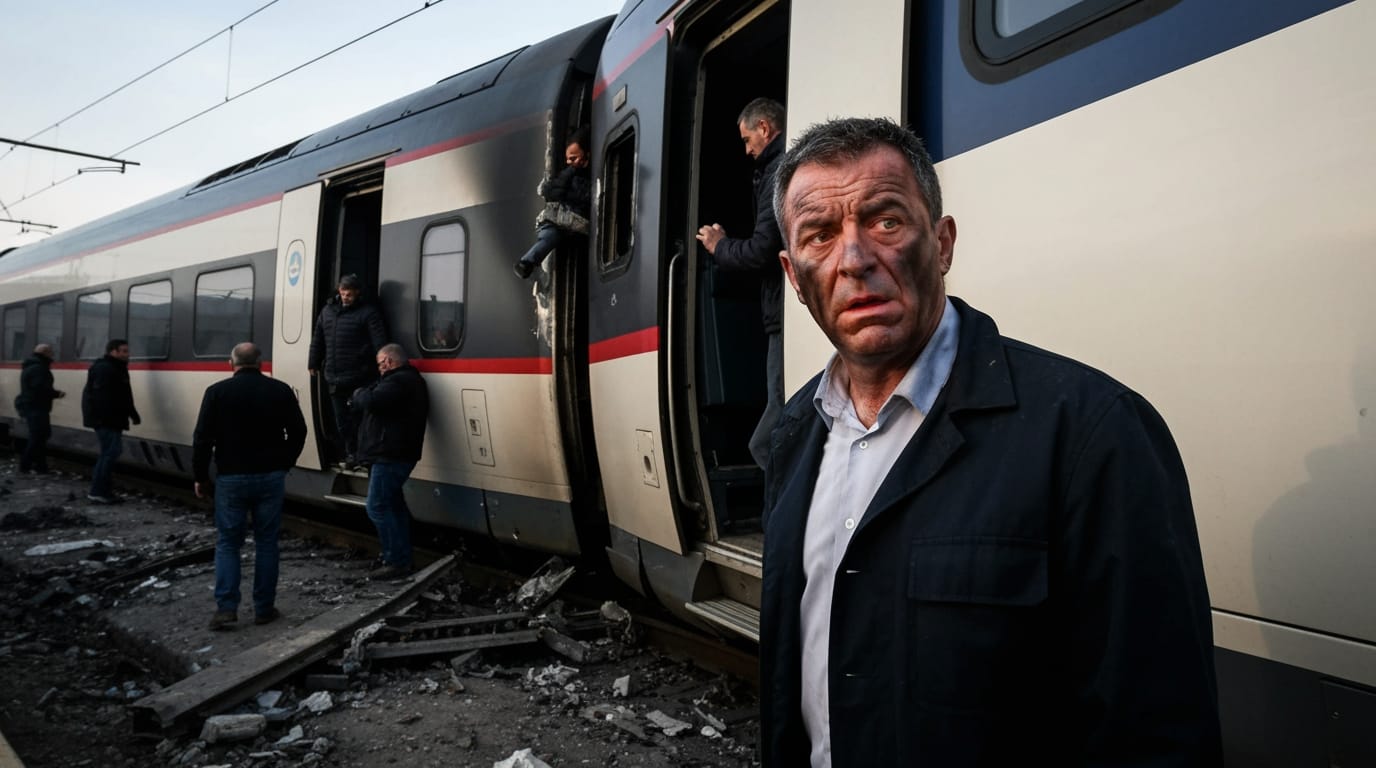
The tranquility of Sunday evening, around 7:45 PM local time, was shattered for nearly 500 passengers aboard two high-speed trains in southern Spain. The incident began when the tail end of an Iryo train, carrying an estimated 289 to 300 passengers from Málaga to Madrid, derailed near Adamuz. The compromised carriages veered onto an adjacent track, directly into the path of an oncoming Renfe train, operated by the state rail company, which was transporting nearly 200 passengers from Madrid to Huelva.
The impact was immediate and brutal. Passengers described the experience as akin to an earthquake, followed by darkness and screams as luggage flew through the air and objects tumbled to the floor. The force of the collision was so immense that it knocked the first two carriages of the southbound Renfe train off the track, sending them plummeting down a 4-meter (13-foot) slope. Emergency services, including local police, civil guard, and Red Cross, rapidly converged on the scene, illuminating the twisted wreckage with flashlights through the night. Rescue workers faced immense challenges, with reports indicating that some bodies were found hundreds of meters from the crash site due to the violence of the impact, necessitating the use of heavy machinery to sift through the debris. The mayor of Adamuz, Rafael Ángel Moreno, was alerted to the disaster, and local police chief Antonio Ruiz quickly organized a help center in the nearby town.
Rising Death Toll and Perplexing Circumstances
The immediate aftermath saw conflicting reports on casualties, but as recovery efforts continued into Monday, the death toll steadily climbed. By Monday evening, official figures indicated at least 40 fatalities, with some sources reporting 41 or 42, making it Spain's deadliest rail accident in over a decade. In addition to the tragic loss of life, over 120 individuals sustained injuries, with 48 initially requiring hospitalization. Of these, 12 were in intensive care units, highlighting the severity of their conditions. The driver of the train traveling from Madrid to Huelva was confirmed to be among those killed.
Spanish Transport Minister Óscar Puente characterized the accident as "extremely strange," a sentiment echoed by other officials. Initial investigations have ruled out sabotage and human error as causes for the high-speed collision. What makes the incident particularly puzzling is that it occurred on a straight section of track, which had undergone renovation as recently as May of the previous year. The Iryo train involved, manufactured in 2022, had also reportedly undergone an inspection just days before the crash, on January 15. While the specific cause remains under rigorous investigation, Minister Puente acknowledged finding a broken section of track, but cautioned that definitive conclusions could take weeks. This complexity suggests a potentially systemic or technical failure that experts are now racing to uncover.
A Nation Grieves Amidst Lingering Questions
In the wake of the tragedy, Prime Minister Pedro Sánchez declared three days of national mourning, expressing "deep pain for our country". Across Spain, families anxiously awaited news of their loved ones, some frantically filing missing person reports for passengers who had been on the trains. The collision has deeply impacted a nation that prides itself on its state-of-the-art rail network, which boasts the largest high-speed railway in Europe and the second largest globally after China.
The scale of the disaster inevitably drew comparisons to the 2013 Santiago de Compostela derailment, which killed 80 people and injured 140 when a train entered a curve at more than twice the posted speed limit. While the circumstances of the Córdoba collision appear markedly different, the shared experience of such profound loss has reignited national conversations about rail safety and infrastructure.
Second Tragedy Strikes Near Barcelona
As the nation grappled with the aftermath of the Córdoba disaster, another tragedy unfolded just two days later, on Tuesday, January 20, 2026, near Barcelona. A commuter train on the R4 suburban line, operating near Gelida on the outskirts of Barcelona, crashed after a retaining wall collapsed onto the tracks. The driver of the train was killed in the incident, and at least 37 others were injured, with four reported to be in critical condition.
Preliminary assessments suggest that heavy rainfall in the Catalonia region, caused by Storm Harry sweeping across the Mediterranean, likely led to the collapse of the retaining wall. This second accident, while less severe in terms of casualties, compounded the sense of shock and sorrow across Spain. It also underscored a different facet of Spain's rail system; while the high-speed network is generally lauded, commuter services, particularly in regions like Catalonia, have faced long-standing issues with underfunding and reliability, although fatal incidents are rare.
Moving Forward Amidst Grief and Scrutiny
The twin tragedies have cast a pall over Spain, prompting profound questions about rail safety, infrastructure maintenance, and emergency response. As investigations into both incidents commence, authorities have pledged complete transparency to determine the causes and prevent future occurrences. The focus will undoubtedly be on the meticulous examination of track conditions, train performance data, and environmental factors in Córdoba, and the impact of extreme weather on infrastructure resilience near Barcelona. The coming weeks and months will be crucial as Spain seeks to understand these devastating events, honor the victims, and work to restore public confidence in its national railways.