States Challenge Trump Administration's Tariff Policies in Court
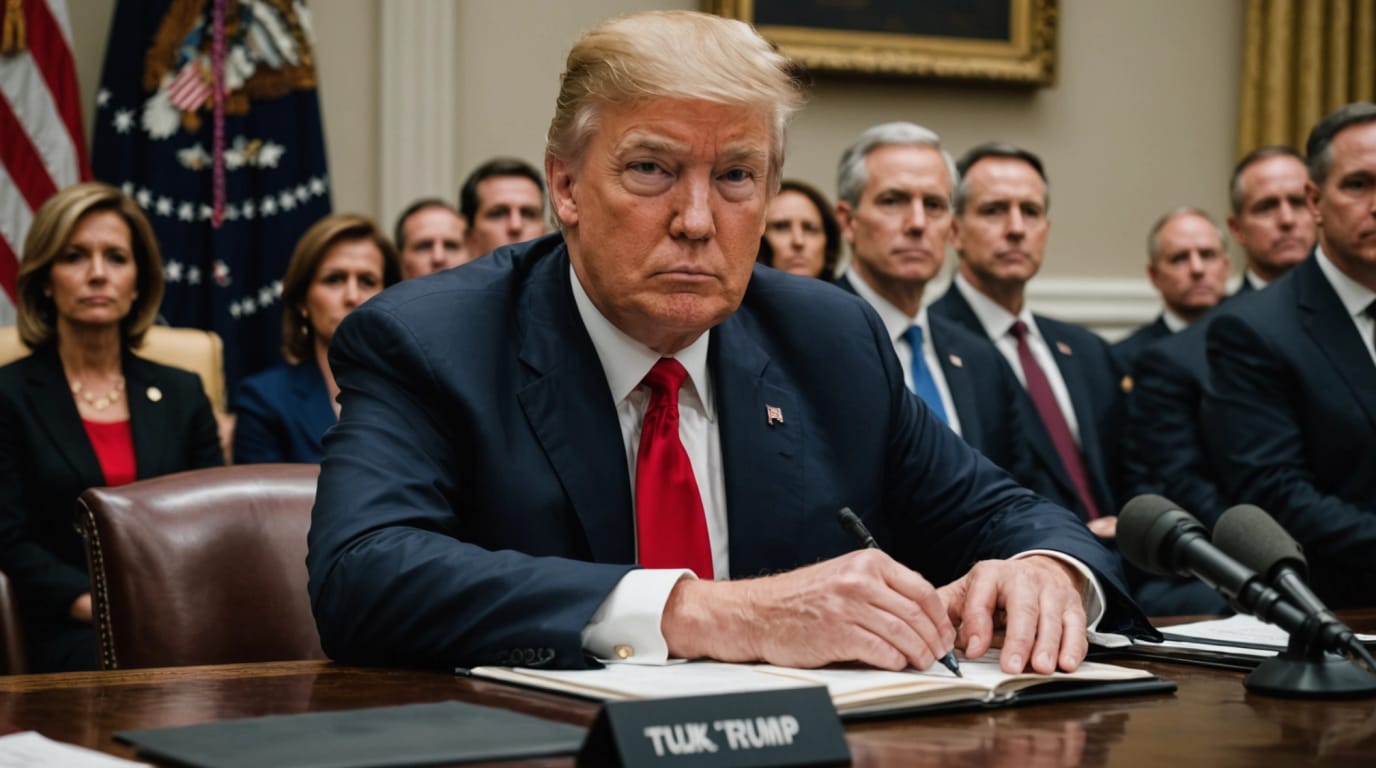
A coalition of states is mounting a legal challenge against the Trump administration's recently imposed tariff policies, arguing that they are unlawful and detrimental to the American economy. The lawsuits, filed in the U.S. Court of International Trade, contend that the President has overstepped his authority in imposing these tariffs, which are already sending ripples of uncertainty through markets and threatening to raise costs for consumers.
Legal Grounds for the Challenge
The core of the states' legal argument rests on the assertion that President Trump's tariffs violate the Constitution by exceeding the powers granted to the executive branch. Specifically, the lawsuits challenge the administration's reliance on the International Emergency Economic Powers Act (IEEPA) of 1977 as justification for the tariffs. This act allows the president to regulate financial transactions during a national emergency, but the suing states argue that it does not grant the authority to impose sweeping tariffs.
New York Attorney General Letitia James stated, "The president does not have the power to raise taxes on a whim, but that's exactly what President Trump has been doing with these tariffs." This sentiment is echoed by other attorneys general involved in the suits, who argue that the power to impose tariffs resides solely with Congress.
The lawsuits further contend that the Trump administration has not demonstrated a legitimate national emergency that warrants the use of IEEPA. While the administration has cited issues such as the opioid crisis, illegal immigration, and trade deficits as justifications, the states argue that these do not constitute the "unusual and extraordinary threat" required to invoke the act.
Economic Impact on States
The states involved in the lawsuits have emphasized the potential for significant economic harm resulting from the tariffs. Oregon, a state heavily reliant on international trade, is particularly vulnerable. In 2024, companies in Oregon imported over $28 billion in parts and finished products and exported over $34 billion. Economists warn that widespread tariffs could severely obstruct Oregon's economy and negatively impact its manufacturing sector. The semiconductor industry, which employs over 30,000 Oregonians, is especially at risk.
California, the fifth-largest economy in the world, has also voiced strong concerns. Governor Gavin Newsom has warned that the state could lose billions of dollars due to its trade-reliant industries. The lawsuit filed by California argues that the tariffs would have significant impacts on the state's economy, residents, and small businesses.
Across the country, experts estimate that the tariffs will raise the cost of living for the average family by thousands of dollars per year. This increase in expenses could disproportionately affect low-income families, who spend a larger percentage of their income on essential goods like food and energy.
Broader Economic Implications
Beyond the direct impact on individual states, the lawsuits highlight the potential for broader economic consequences. Economists have warned that the tariffs could lead to slower economic growth, higher inflation, and increased unemployment. The tariffs are expected to raise prices for a wide range of goods, from groceries to automobiles, as companies pass on the increased costs to consumers.
The tariffs could also harm American businesses by making them less competitive in the global market. Many U.S. manufacturers rely on imported materials and components, and the tariffs would increase their operating costs. Additionally, the retaliatory tariffs imposed by other countries could reduce demand for American exports, further damaging the U.S. economy.
A study by the Peterson Institute for International Economics suggests that a 15 percentage point increase in universal U.S. tariffs would generate $3.9 trillion in federal government revenue over a decade, before accounting for its impact on the U.S. economy and assuming no foreign retaliation. However, after accounting for the economic effects and potential foreign retaliation, the net revenue gain could shrink significantly.
The Trump Administration's Defense
The Trump administration defends the tariffs as necessary to protect American industries from unfair foreign competition and to address national security concerns. The administration argues that the IEEPA grants the president broad authority to impose tariffs in response to national emergencies.
The administration also contends that the tariffs will encourage companies to move manufacturing back to the United States, creating jobs and boosting the economy. However, critics argue that the tariffs are more likely to harm American businesses and consumers than to create new jobs.
The Justice Department has not yet issued a formal response to the lawsuits, but it is expected to argue that the president has the authority to impose the tariffs under the IEEPA and that the tariffs are necessary to protect the national interest.
Legal Precedents and Potential Outcomes
The legal challenges to the Trump administration's tariffs raise complex questions about the separation of powers and the scope of presidential authority. The courts will need to consider whether the IEEPA authorizes the president to impose tariffs and whether the administration has demonstrated a legitimate national emergency.
Some legal scholars believe that the states have a strong case, arguing that the Trump administration's use of the IEEPA is an overreach of executive power. Others argue that the courts should defer to the president's judgment on matters of national security and foreign policy.
The lawsuits could take months, if not years, to resolve. If the courts rule against the Trump administration, the tariffs could be struck down, potentially leading to a rollback of the administration's trade policies. However, even if the administration loses in court, it could attempt to reimpose the tariffs under a different legal authority.
Conclusion
The legal challenges to the Trump administration's tariff policies represent a significant effort to push back against what the suing states see as an abuse of power and a threat to the American economy. The outcome of these lawsuits could have far-reaching implications for international trade, the balance of power between the executive and legislative branches, and the wallets of American consumers. As the legal battle unfolds, businesses, consumers, and policymakers will be closely watching to see how the courts will weigh in on this critical issue.


