Strait of Hormuz Blockade Tests Global Energy Security, China's Restraint Amid Escalating Iran Tensions
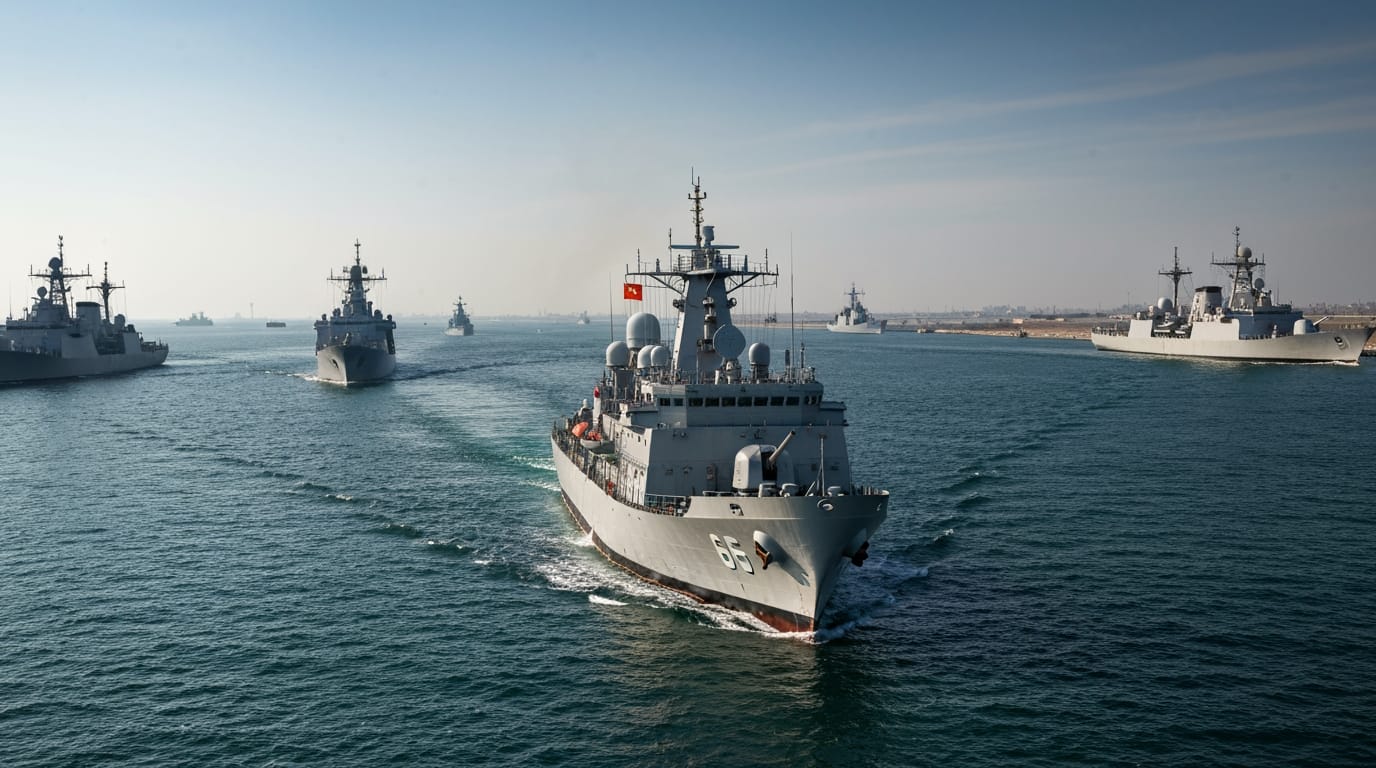
The world watches with bated breath as the Strait of Hormuz, a critical artery for global energy supplies, becomes the epicenter of heightened geopolitical tension. Following the collapse of peace talks, a U.S. blockade of Iranian ports has drawn sharp condemnation from Beijing, underscoring the immense stakes for international trade and the delicate balance of power in the Middle East.
The decision by the United States to implement a full maritime blockade of Iranian ports on April 14, 2026, represents a significant escalation in the ongoing regional conflict. This move, enacted after weekend negotiations in Islamabad failed to yield a breakthrough, aims to cripple Iran's economy by cutting off its access to global shipping lanes. However, the blockade's implications stretch far beyond the immediate adversaries, directly challenging the energy security of major global economies, most notably China, which relies heavily on the Strait for its vital oil imports.
The World's Vital Oil Artery Under Siege
The Strait of Hormuz, a narrow sea passage separating Iran and Oman, serves as the sole maritime gateway between the Persian Gulf and the open seas. At its narrowest, the strait is only 29 nautical miles wide, with two 2-mile-wide shipping channels for inbound and outbound traffic. This geographical chokepoint is arguably the most critical oil transit route in the world. In 2025, an average of 20 million barrels per day (mb/d) of crude oil and oil products, representing approximately 25% of the world's seaborne oil trade, transited through the Strait. Beyond crude, roughly one-fifth of global liquefied natural gas (LNG) trade also passes through this indispensable waterway.
The strategic significance of the Strait has historically made it a flashpoint for regional and international conflicts. The Iran-Iraq "Tanker War" in the 1980s saw both sides attack oil tankers, leading to shipping disruptions and significant oil price volatility. The United States even engaged in naval operations, such as Operation Praying Mantis in 1988, in response to Iranian mining. More recently, 2019 witnessed multiple tanker attacks attributed to Iran and various ship seizures, highlighting the persistent threats to maritime security. Iran has frequently threatened to close the Strait in response to sanctions and tensions, though it has historically stopped short of a complete closure. The current US blockade, however, introduces a new dynamic, directly challenging Iran's maritime access and control.
US Blockade and Iran's Defiance
The U.S. Central Command confirmed the implementation of a blockade on "all maritime traffic entering and exiting Iranian ports" starting Monday, April 14, 2026, at 10 a.m. EDT. The stated objective is to exert economic pressure on Tehran, particularly by disrupting its oil revenues, after peace negotiations between the U.S. and Iran collapsed. The U.S. military has clarified that the blockade will not impede freedom of navigation for vessels transiting the Strait of Hormuz to and from non-Iranian ports. To enforce this, the U.S. Navy has deployed a significant presence in the region, including an aircraft carrier and approximately 15 warships. Reports also indicate that U.S. forces have commenced mine-clearing operations following allegations of Iranian naval mines in the Strait.
Iran has swiftly condemned the U.S. action, with Iranian defense officials warning that any foreign military intervention in the Strait "would escalate the crisis and instability in global energy security." Tehran has vowed strong retaliation if its ports are threatened, asserting that if the security of Iranian ports is jeopardized, "no port in the Persian Gulf and the Gulf of Oman will be safe." The Islamic Revolutionary Guard Corps (IRGC) has reportedly issued warnings forbidding passage through the strait and has allegedly laid sea mines, significantly disrupting commercial shipping. Iran's asymmetric naval capabilities, comprising small, fast attack boats, mines, drones, and coastal anti-ship missile systems, allow it to credibly disrupt traffic through the Strait without necessarily engaging in a full-scale naval confrontation. There have also been reports of Iran establishing its own shipping channel, charging tolls for passage. This complex interplay of overt naval power and asymmetric tactics has created an extremely volatile environment, with shipping traffic plummeting and major firms suspending operations.
China's Energy Lifeline and Economic Stakes
For China, the U.S. blockade in the Strait of Hormuz poses an immediate and profound challenge to its energy security and broader economic stability. China is the world's largest importer of crude oil, bringing in approximately 11 million barrels per day to fuel its vast economy. A substantial portion of this supply originates from the Middle East; in 2024, over half of China's crude oil imports came from the region. Crucially, between 40% and 50% of China's crude oil imports, and nearly one-third of its liquefied natural gas imports, typically transit the Strait of Hormuz. In the first quarter of 2025 alone, 5.4 million barrels per day of oil passing through Hormuz were destined for China.
This heavy reliance on the Strait makes China acutely vulnerable to any disruption. A prolonged closure or severe impediment to traffic would not only lead to significant price shocks but also threaten the operational stability of China's energy-intensive industries, which are central to its manufacturing and export-driven economy. However, China is not entirely without recourse. Beijing has strategically built up substantial oil stockpiles, estimated between 1.2 to 1.4 billion barrels, which could cover up to 130 days of net imports, providing a buffer against short-term disruptions. Furthermore, China has actively pursued diversification of its energy suppliers, with Russia now serving as its largest crude supplier, followed by Saudi Arabia and Iran. China has also invested in infrastructure projects, such as pipelines, that can partially bypass the Strait of Hormuz, further mitigating immediate risks.
Moreover, China remains a critical trading partner for Iran. Estimates suggest that about 90% of Iran's crude oil exports find their way to China, often via "dark fleet" operations that circumvent sanctions. During the current crisis, Iran has reportedly granted special passage to selected Chinese vessels, underscoring the deep economic ties that bind the two nations.
Geopolitical Tightrope: China's Restraint and Global Implications
China's response to the U.S. blockade reflects its complex geopolitical position and its overarching strategic goals. Beijing has publicly criticized the U.S. action as "dangerous and irresponsible," urging all parties to exercise restraint and return to the negotiating table. Chinese Foreign Ministry spokesperson Guo Jiakun emphasized that maintaining the safety, stability, and openness of the Strait of Hormuz serves the common interests of the international community.
However, China's actions go beyond mere rhetoric. Its strategic engagement in the Middle East is fundamentally driven by a need for energy security and economic integration, positioning itself as a neutral arbiter while expanding its influence through initiatives like the Belt and Road. While China seeks to avoid direct military entanglement in regional conflicts, a full blockade could force it into a more active role to safeguard its economic interests.
The broader implications of continued instability in the Strait of Hormuz are profoundly global. The crisis has already triggered significant spikes in oil prices, impacting economies worldwide. A prolonged disruption threatens not only energy markets but also global supply chains for essential commodities like fertilizers, helium, and sulfur. Asian economies, due to their geographical proximity and reliance on Middle Eastern energy, are particularly exposed to these disruptions. China, while possessing some short-term resilience, faces the risk that a sustained global economic slowdown, driven by higher energy costs and supply chain shocks, would severely impact its export-dependent economy.
The unfolding situation in the Strait of Hormuz underscores the intricate web of global dependencies. The U.S. blockade tests Iran's resolve and economic endurance, but it simultaneously tests China's ability to navigate a volatile geopolitical landscape while protecting its vital national interests.
Conclusion
The Strait of Hormuz remains a central stage for international power dynamics, a critical chokepoint whose stability directly impacts global economic health. The recent U.S. blockade of Iranian ports, a move aimed at pressuring Tehran, has undeniably elevated tensions and disrupted global shipping. While Iran defiantly asserts its control and vows retaliation, China, a primary consumer of oil traversing the Strait, finds itself in a precarious position. Beijing's measured yet firm criticism of the blockade reflects its deep economic vulnerabilities, even as its strategic reserves and diversified supply lines offer some near-term protection. The world now watches to see if diplomatic efforts can defuse this latest escalation or if the geopolitical tightrope walk in the Strait of Hormuz will lead to further instability, with far-reaching consequences for global energy markets and the international order.


