Strait of Hormuz Standoff Casts Long Shadow Over Fragile Iran Ceasefire
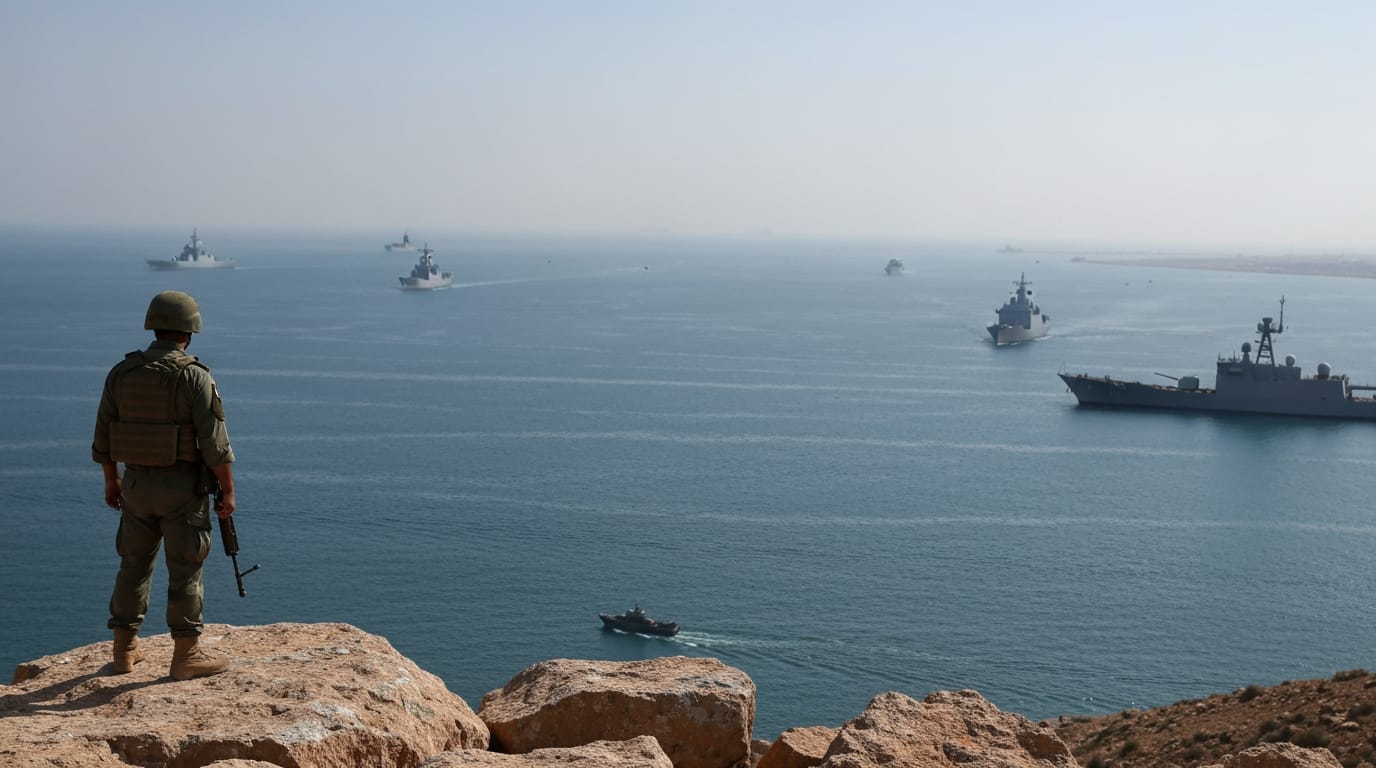
ISLAMABAD, Pakistan – A perilous standoff in the Strait of Hormuz, the world's most critical oil transit chokepoint, is increasingly jeopardizing a fragile ceasefire between the United States and Iran, leaving crucial peace talks deadlocked and sending ripple effects through the global economy. As diplomatic efforts falter, the continued closure of the strategic waterway threatens to prolong a crisis that has already sent energy prices soaring and disrupted international supply chains. The volatile situation underscores the immense challenges in achieving a lasting resolution to the escalating tensions between Tehran and Washington.
The Chokepoint's Grip on Global Commerce
The Strait of Hormuz, a narrow passage connecting the Persian Gulf with the Gulf of Oman and the Arabian Sea, holds immense strategic and economic importance. Approximately 20% to 25% of the world's seaborne oil and liquefied natural gas (LNG) trade typically transits through this waterway, making it indispensable for global energy security. In 2022, oil flows averaged 21 million barrels per day, accounting for roughly 21% of global petroleum liquids consumption. The strait serves as the primary route for petroleum exports from major producers like Iran, Iraq, Kuwait, Qatar, and the United Arab Emirates, with a significant portion destined for Asian markets.
Since February 28, 2026, Iran has effectively closed the strait, escalating a crisis triggered by US-Israeli strikes. This closure has led to a dramatic reduction in maritime traffic, with tanker movements dropping sharply and hundreds of vessels anchoring outside the strait to avoid risks. The inability of oil and gas to transit this chokepoint has created substantial supply delays, increased shipping costs, and contributed to a significant increase in world energy prices. International Energy Agency chief Fatih Birol warned that the disruption is no longer just a regional security problem but a structural energy risk that could reshape global trade patterns and investment decisions for years.
Escalation and Retaliation at Sea
The current maritime crisis in the Strait of Hormuz is characterized by a dangerous cycle of actions and reactions. Iran's Islamic Revolutionary Guard Corps (IRGC) initially issued warnings against passage and has been implicated in numerous incidents. On April 22, 2026, hours after the United States extended a ceasefire, the IRGC Navy announced it had seized two vessels, the MSC Francesca and Epaminodes, directing them toward Iranian shores. Iran accused these vessels of violating maritime regulations and endangering navigation by manipulating their tracking systems. This came amidst reports from the United Kingdom Maritime Trade Operations (UKMTO) of a cargo vessel being fired upon and another container ship sustaining heavy damage after being targeted by an armed vessel.
In response to Iran's effective closure, the United States imposed its own naval blockade on Iranian ports, a move Tehran views as a "flagrant breach" of the ceasefire. This dual blockade strategy has turned maritime control into a fundamental negotiation tool for both sides. Iran's Parliament Speaker, Mohammad Bagher Ghalibaf, stated unequivocally that reopening the Strait of Hormuz would be "impossible" as long as the US naval blockade remained in place. US officials initially stated the blockade applied to ships of all nations traveling to or from Iranian ports, later broadening its scope to include vessels suspected of carrying contraband linked to Iran, regardless of location. This complex situation has effectively stranded about one-fifth of the world's oil and gas supplies.
Diplomatic Deadlock and Stalled Talks
A fragile two-week ceasefire, which commenced on April 8, 2026, was extended indefinitely by US President Donald Trump on April 22, 2026, in an attempt to provide Iran with more time to present a "unified proposal" for negotiations. However, the prospects for a breakthrough in peace talks, largely mediated by Pakistan in Islamabad, remain dim. Iran has not committed to attending a new round of negotiations, citing "unacceptable actions" by the US, with the ongoing naval blockade in the Strait of Hormuz being a primary point of contention.
Iranian Foreign Ministry spokesman Esmail Baghaei indicated that no final decision had been made regarding participation in further talks. Iranian President Masoud Pezeshkian affirmed Tehran's openness to dialogue but accused the US of obstructing progress through "bad faith, siege, and threats." The Iranian parliament speaker, Mohammad Bagher Ghalibaf, emphasized that Iran would not accept negotiations "under the shadow of threats" and suggested that Tehran was prepared to "reveal new cards on the battlefield." The US, for its part, demands that Iran abandon its nuclear weapon ambitions and surrender enriched uranium stockpiles, while Iran maintains its nuclear program is for peaceful purposes. This fundamental disagreement, coupled with the maritime standoff, has created a significant impasse, leaving the peace process in a state of prolonged uncertainty.
Global Repercussions and Human Cost
The prolonged standoff in the Strait of Hormuz carries severe economic consequences for the world. Global oil prices have experienced unprecedented volatility, with Brent crude surpassing $100 per barrel in March 2026, marking the largest monthly increase in history. This surge in energy costs fuels inflation worldwide and creates serious difficulties for both developed and developing economies. Importing nations, particularly in Asia, heavily reliant on Gulf oil, are facing shortages of fuel and raw materials, leading to significant economic strain.
Beyond the economic toll, the human cost of the maritime crisis is significant. The head of the UN maritime agency has voiced grave concerns for the estimated 20,000 seafarers currently stranded in the Gulf, with around 2,000 ships also held up. Accounts from the region describe seafarers enduring the "constant stress of missiles overhead" and ongoing uncertainty, highlighting the precarious conditions for those working in the affected waters. The crisis has triggered fundamental geopolitical realignments, forcing nations to consider alternative energy routes and strategic reserves, acknowledging the Strait of Hormuz as a persistent point of vulnerability.
An Uncertain Path Forward
The standoff at the Strait of Hormuz has transformed into a critical bargaining chip for Iran, perceived by some as a "non-nuclear weapon" that grants Tehran significant leverage in negotiations. The current situation presents a paradoxical equilibrium, with Iran disrupting global energy flows and the US responding by blocking traffic to and from Iranian ports. While President Trump has publicly stated there is "no time pressure" surrounding the ceasefire or future talks, the continued economic agony and humanitarian concerns amplify the urgency for a resolution.
The international community, including mediators like Pakistan, continues to push for renewed dialogue, yet both Washington and Tehran appear unwilling to concede their primary demands. The critical juncture demands a careful navigation of diplomatic complexities to avert further escalation, stabilize global energy markets, and ultimately secure a lasting peace in a region fraught with historical tensions.


