Stuttgart 21 Project Faces Yet Another Indefinite Delay, Costs Continue to Soar
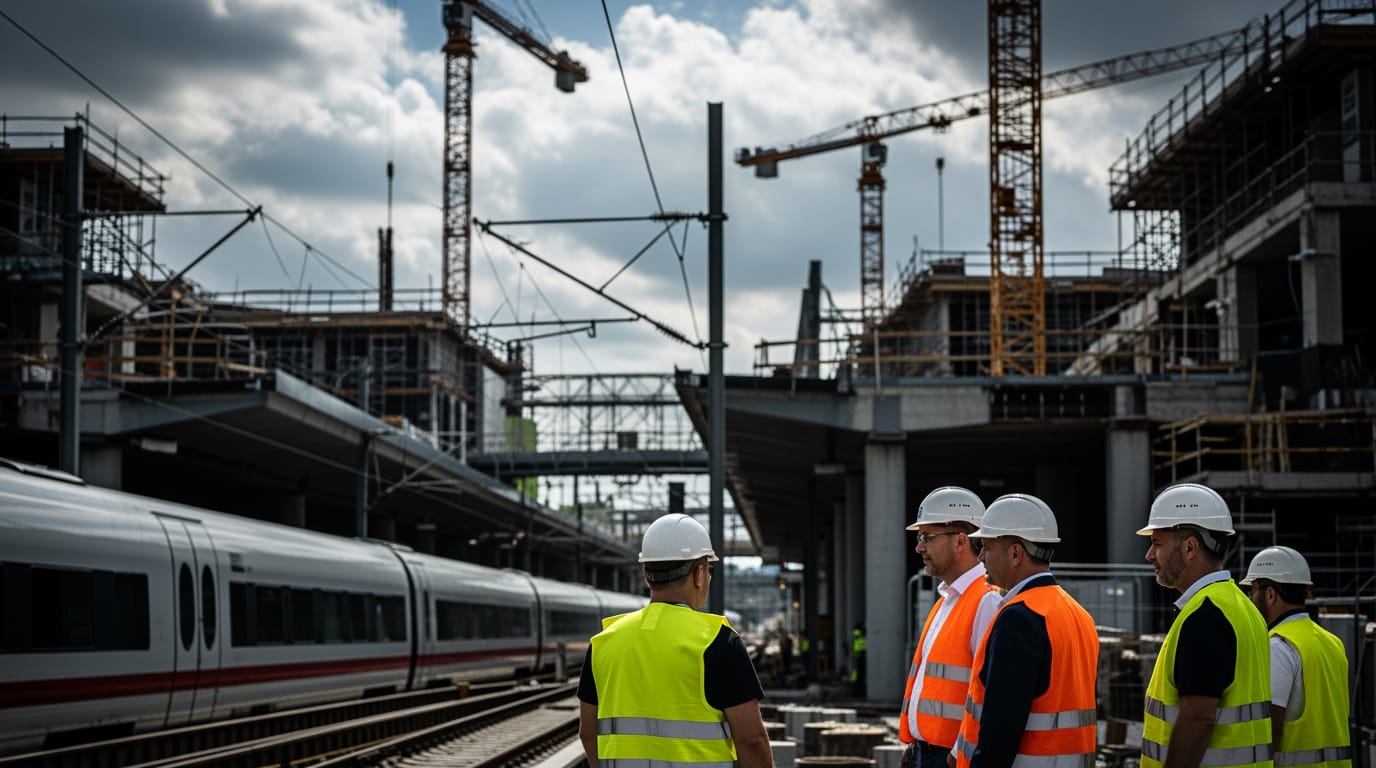
Stuttgart, Germany – Germany's ambitious and long-troubled Stuttgart 21 rail project, a sprawling undertaking to modernize the city's main railway hub, has encountered another significant setback, pushing its completion beyond the previously announced target of late 2026. Deutsche Bahn (DB) has reportedly informed project partners of a further indefinite delay, attributing the postponement primarily to unresolved technical issues with the new signaling system and complexities within the "Digital Node Stuttgart" project. This latest announcement casts a fresh shadow of uncertainty over one of Europe's largest and most expensive infrastructure ventures, a project already notorious for its ballooning budget and protracted timeline.
The news has drawn sharp criticism from local and regional officials, who expressed frustration over the lack of a new definitive opening date and questioned the reliability of previous assurances from the state-owned railway company. Stuttgart 21, conceived decades ago, has become a symbol of both Germany's engineering ambition and the intricate challenges inherent in megaprojects, grappling with technical hurdles, financial controversies, and persistent public opposition.
Latest Setback Undermines Credibility
The most recent delay marks a critical blow to the project's already fragile credibility. Originally scheduled to open in 2019, the target date has been repeatedly pushed back, first to 2025, then to December 2026. The current postponement, however, lacks a revised completion date, plunging the timeline into an unprecedented state of uncertainty. Stuttgart's Mayor, Frank Nopper, conveyed "calamitous news" from Deutsche Bahn regarding the service delay, while Baden-Württemberg's Transport Minister Winfried Hermann described the indefinite postponement as "disastrous" for the region, the city, and passengers, alleging that "the last bit of trust in the rail company" was being squandered.
Deutsche Bahn has cited the sheer complexity of integrating sophisticated digital systems, including signaling, communication, and control technologies, as a primary reason for the hold-up. The "Digital Node Stuttgart" project, a crucial component for the new infrastructure's operation, has presented unexpected complications in its development and approval phases. Deutsche Bahn stated that schedule risks, which had been previously identified, have now "materialized to an extent previously unforeseeable," necessitating further evaluation. Officials are now demanding immediate transparency and a special steering committee meeting to gain clear and reliable information from Deutsche Bahn.
A Troubled History of Escalating Costs and Missed Deadlines
The saga of Stuttgart 21 is a narrative steeped in financial overruns and calendar slippages. When construction officially began in 2010, the project was estimated to cost around €3 billion to €4.5 billion. Today, the projected costs have ballooned to approximately €11 billion, with some reports suggesting they could climb to €12 billion or more. This represents an increase of over 200% from initial estimates, making it one of the most expensive infrastructure projects in Europe.
A significant legal development in August 2025 further intensified the financial burden on Deutsche Bahn. A final court decision ruled that DB must bear the cost overruns alone, dismissing its appeal to force regional partners – the state of Baden-Württemberg, the city of Stuttgart, and others – to contribute to the escalating expenses. The court upheld the 2009 funding agreement, which capped the state's contribution at €4.526 billion, leaving Deutsche Bahn to cover the surge beyond that figure. This ruling underscores the profound financial consequences of the project's delays and mounting expenses for the railway operator.
Engineering Complexities and Enduring Public Opposition
At its core, Stuttgart 21 aims to convert Stuttgart Hauptbahnhof, currently a terminal station, into an underground through station. This transformation involves constructing a new main station, 57 kilometers of new railway lines, including 30 kilometers of tunnels, and 25 kilometers of high-speed tracks, as part of the broader Stuttgart-Augsburg railway and the Trans-European Networks. The goal is to eliminate the need for trains to reverse, thereby enhancing efficiency, increasing capacity, and providing faster connections across Germany and beyond.
However, the ambitious design has presented significant engineering challenges. Building an underground station in a city like Stuttgart involves complex geological conditions, including the management of groundwater and mineral water resources. Critics have also raised concerns about the steep track gradient of 1.51% in the underground section, which significantly exceeds the typical regulatory maximum of 0.25%, prompting safety questions regarding train control and compliance with EU rail safety directives.
Beyond the technical difficulties, Stuttgart 21 has faced fierce and sustained public opposition since its inception in the 1990s. Environmentalists and local residents have protested for over a decade against the project's impact, citing concerns over the destruction of the historic Schlossgarten park, the loss of open land, and potential adverse effects on the city's vital mineral water sources. The protests have occasionally led to clashes with police, marking some of the largest demonstrations in recent German history. Despite a public referendum where approximately 59% of participants voted to continue the project, the controversy has never truly subsided.
Economic Promises and Persistent Political Perils
Proponents of Stuttgart 21 highlight the project's potential to revolutionize rail travel in the region. Deutsche Bahn asserts that the new hub will offer "significantly more and many faster connections," benefiting up to 75% of citizens in Baden-Württemberg with more direct and quicker routes. The project is also touted for its urban development potential, promising to free up 100 hectares of prime inner-city land currently occupied by overground tracks, which could be redeveloped into parks, walkable neighborhoods, and climate-conscious buildings. Economic stimuli, including job creation during construction and supply chain benefits for local firms, have also been emphasized.
However, these promised benefits are increasingly weighed against the colossal financial outlay and the prolonged inconvenience of construction. The ongoing delays and cost escalations have fueled a public discourse questioning the efficacy of such large-scale infrastructure projects and the transparency of their planning and execution. The project has become a politically charged symbol, with ongoing debates concerning its real costs versus its actual benefits, as well as the balance between enhancing connectivity and preserving local environment and community interests.
Conclusion: A Megaproject in Limbo
The latest indefinite delay for Stuttgart 21 underscores the profound complexities and inherent risks associated with modern megaprojects. What began as an ambitious vision to modernize Germany's rail infrastructure has evolved into a protracted struggle against technical hurdles, financial pressures, and deeply entrenched public distrust. With no new opening date in sight, stakeholders are left to grapple with the uncertainty of when this multi-billion-euro endeavor will finally serve its intended purpose. The project's future success will hinge not only on overcoming its formidable engineering and digital challenges but also on restoring confidence among the public and political partners who have borne the brunt of its turbulent journey. The ongoing saga of Stuttgart 21 continues to be a cautionary tale for large-scale urban development and infrastructure planning worldwide.