Sudan's Silent Catastrophe: The World's Most Neglected Crisis of 2025
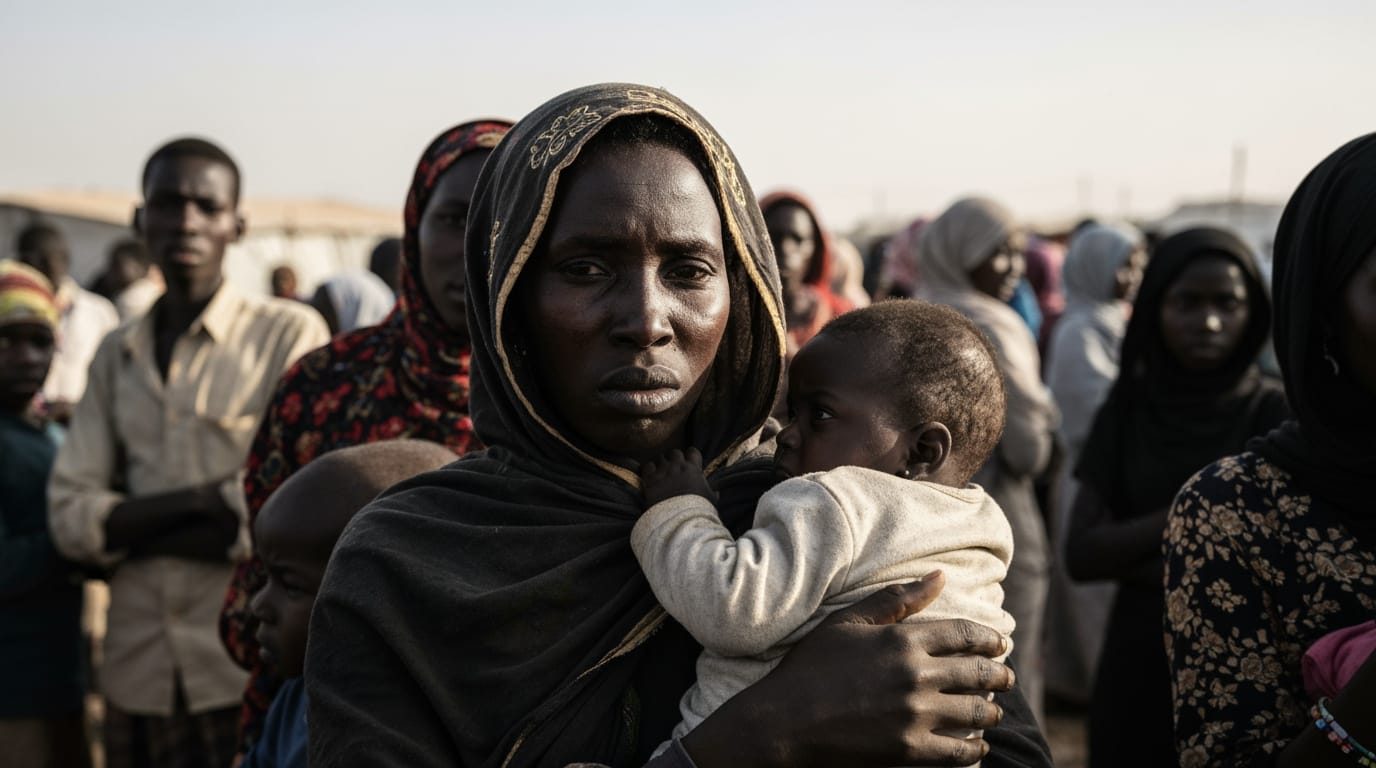
Khartoum, Sudan – As 2025 draws to a close, Sudan stands engulfed in what humanitarian organizations describe as the world's most severe and neglected crisis, with millions facing famine, displacement, and widespread atrocities. The conflict, now in its third year, has plunged over half of the nation's population into a desperate struggle for survival, yet global attention and funding remain critically insufficient. Over 30 million Sudanese people, including more than 15 million children, are in urgent need of humanitarian assistance, making this an unprecedented catastrophe unfolding largely out of the global spotlight.
An Unprecedented Humanitarian Catastrophe
The scale of human suffering in Sudan in 2025 is immense and multifaceted. The nation is experiencing the world's largest displacement crisis, with an estimated 12 to 14 million people forced to flee their homes. More than 11 million individuals are internally displaced, while nearly 4.3 million have sought refuge in neighboring countries such as Chad, South Sudan, Egypt, and Ethiopia. These staggering figures represent a quarter of Sudan's population, with children making up a significant portion of those displaced.
Famine conditions have been confirmed in several critical areas, including parts of Darfur, specifically El Fasher, Zamzam camp, Al Salam, and Abu Shouk, as well as in Kordofan, encompassing Kadugli, Dilling, and the Western Nuba Mountains. Humanitarian analysis indicates that around 375,000 people nationwide are facing "catastrophic" levels of hunger, defined as being on the brink of starvation. Overall, more than 21 million people across Sudan are contending with high levels of acute food insecurity, the largest such crisis globally. The agricultural sector has been devastated, with two consecutive farming seasons under-utilized due to the conflict, leading to destroyed farmlands, disrupted supply routes, and looted equipment.
Beyond hunger, Sudan's collapsing infrastructure and ongoing conflict have triggered a severe health crisis. The spread of diseases such as cholera, which has seen over 100,000 suspected cases since December 2024, dengue, and malaria, is exacerbated by soaring malnutrition rates. Hospitals and schools have been destroyed or occupied, severely limiting access to essential services. The World Health Organization has documented 65 attacks on healthcare facilities, resulting in more than 1,600 deaths and 276 injuries among healthcare personnel.
The conflict is also characterized by widespread and appalling human rights violations. Reports detail child cruelty, rape, sexual violence, forced conscription, and ethnically motivated killings. In January 2025, the U.S. Department of State determined that the Rapid Support Forces (RSF) committed genocide through acts like ethnic killings, systematic rape, and obstruction of aid. A particularly horrific episode unfolded in October 2025 with a genocidal massacre in El Fasher, North Darfur, where tens of thousands of civilians were reportedly executed or murdered by the RSF after the city's capture. This event, targeting non-Arab ethnic groups, is considered by humanitarian experts as the worst war crime of the Sudanese civil war.
The Roots of a Relentless Conflict
The current civil war erupted on April 15, 2023, following a brutal power struggle between the Sudanese Armed Forces (SAF), led by General Abdel Fattah al-Burhan, and the paramilitary Rapid Support Forces (RSF), commanded by Mohamed Hamdan Dagalo (Hemedti). This conflict emerged from the unstable political landscape that followed the overthrow of long-time dictator Omar al-Bashir in 2019.
The roots of the conflict run deeper, intertwined with Sudan's complex history. Colonial policies, such as the British "Closed District Policy," exacerbated existing ethnic and religious divisions. The RSF itself evolved from the Janjaweed militias, notorious for their role in the 2003 Darfur genocide, a history that continues to manifest in targeted violence against non-Arab populations in Darfur today.
Throughout 2024 and 2025, the conflict saw significant shifts. Initially, the RSF gained military superiority, but the SAF launched a multi-front counter-offensive in September 2024. This led to the recapture of the capital, Khartoum, by the SAF in March 2025, a major turning point after a nearly two-year hiatus. However, the RSF achieved its own significant victory by capturing El Fasher, a key city in Darfur, in October 2025 after an 18-month siege. Adding to the complexity, there is increasingly evident foreign interference, with reports suggesting Egypt supports the SAF while the United Arab Emirates backs the RSF.
A Desperate Plea: The Struggle for Humanitarian Access and Funding
Despite the overwhelming needs, humanitarian operations in Sudan face severe challenges, most notably systematic obstruction of aid. Essential supplies are frequently blocked or looted by warring parties, making it incredibly difficult to reach affected populations. Sudan has become the third most dangerous country globally for aid workers in 2025, accounting for 12% of all attacks against them worldwide. Attacks on UN peacekeepers and logistics bases, including a drone strike in South Kordofan that killed six peacekeepers in December 2025, further underscore the perilous environment.
A critical factor exacerbating the crisis is the severe underfunding of humanitarian appeals. The United Nations appealed for $4.16 billion for Sudan's 2025 Humanitarian Response Plan, but by the end of the year, it was barely a third funded, reaching only 35.7% of its target. This funding shortfall is part of a broader trend of large-scale withdrawals of humanitarian and development funding by Western donors to poorer nations throughout 2025.
The consequences of this underfunding are dire. Aid agencies are being forced to scale back or even close crucial programs, impacting millions. The World Food Programme (WFP), for instance, has had to reduce food rations: 70% for communities facing famine and 50% for those at risk. Despite these immense obstacles, humanitarian organizations have made efforts to assist. Over 13.5 million people were reached in 2025. UNICEF, for example, is actively ramping up support for children, working to restore access to safe water, aiding disease outbreak responses, and providing integrated health and nutrition services, often amidst severe access constraints.
Regional Fallout and an Uncertain Future
The crisis in Sudan is not contained within its borders; it has significant regional ramifications. Millions of Sudanese citizens have fled to neighboring countries such as Chad, South Sudan, Egypt, Ethiopia, the Central African Republic, Libya, and Uganda, straining the already limited resources of these host nations. The influx of refugees creates immense pressure and carries the risk of destabilizing the wider region, potentially leading to renewed proxy conflicts, as seen with rising tensions between the Sudanese army and neighboring Chad and South Sudan.
The long-term impact on Sudan's population is particularly grim, especially for its youth. Over 90% of the country's 19 million school-aged children—an estimated 10 million children—have been deprived of formal education. This widespread disruption of schooling, coupled with the ongoing conflict and lack of essential services, threatens to create a "generational catastrophe," eroding the coping capacities and future prospects of an entire generation.
While localized improvements in food security have been observed in areas where violence has subsided and humanitarian access improved, these gains are fragile and highly localized. The overall outlook remains bleak, with hunger expected to worsen significantly from February 2026 as food stocks diminish and fighting persists. International calls continue for an immediate end to hostilities, safe and unimpeded humanitarian access, and sustained funding to prevent further loss of life and protect livelihoods.
Conclusion
Sudan's humanitarian crisis in 2025 is a stark testament to the devastating consequences of protracted conflict and inadequate global response. With millions displaced, facing famine, and enduring rampant human rights abuses, the situation demands urgent, concerted international action. The pervasive violence, systematic obstruction of aid, and critical funding shortfalls have combined to create a catastrophe that, despite its overwhelming scale, remains largely overlooked by the world. Without a drastic shift in attention, a sustained cessation of hostilities, and robust humanitarian intervention, the tragic trajectory of Sudan's crisis is set to continue, deepening the suffering and destabilizing an already fragile region.


