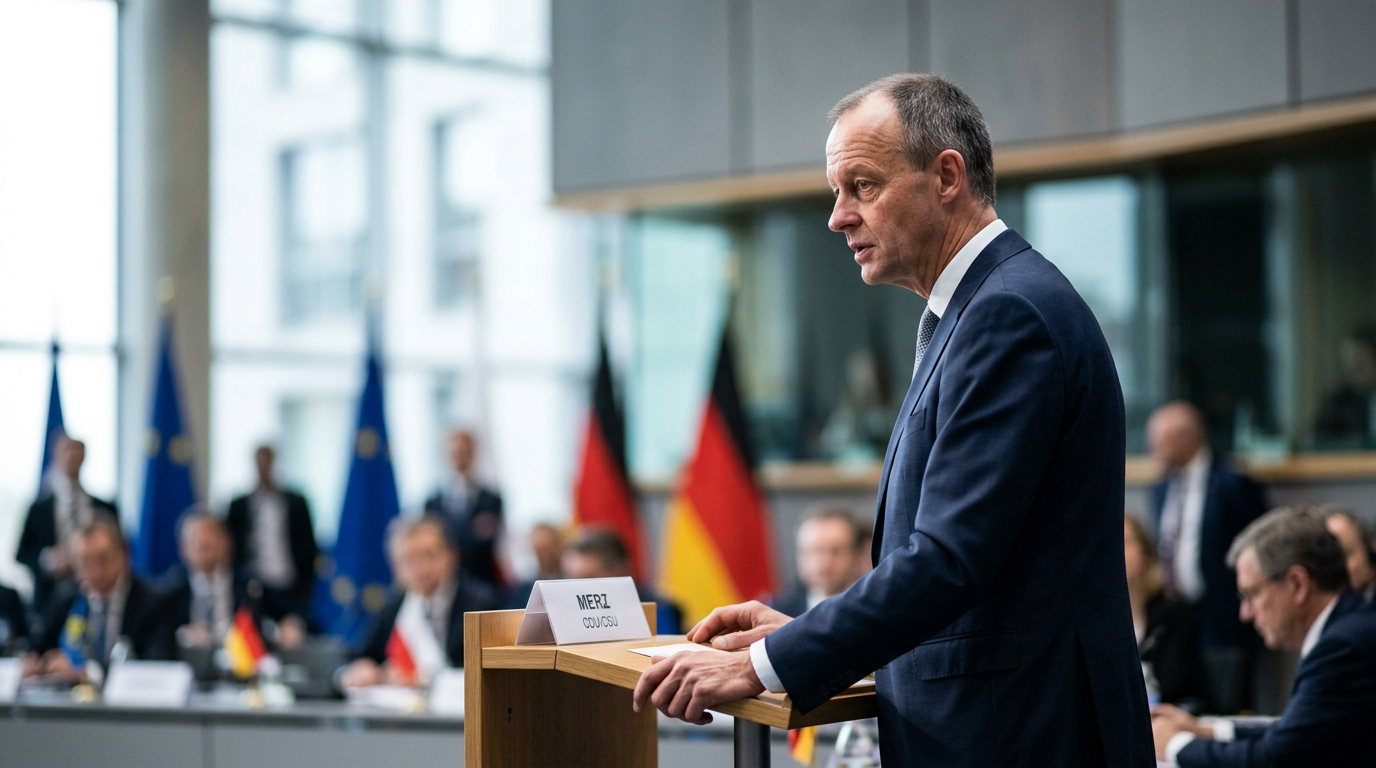
Sumy Strike Condemned as 'War Crime' by Germany's Merz Amidst Rising International Outcry
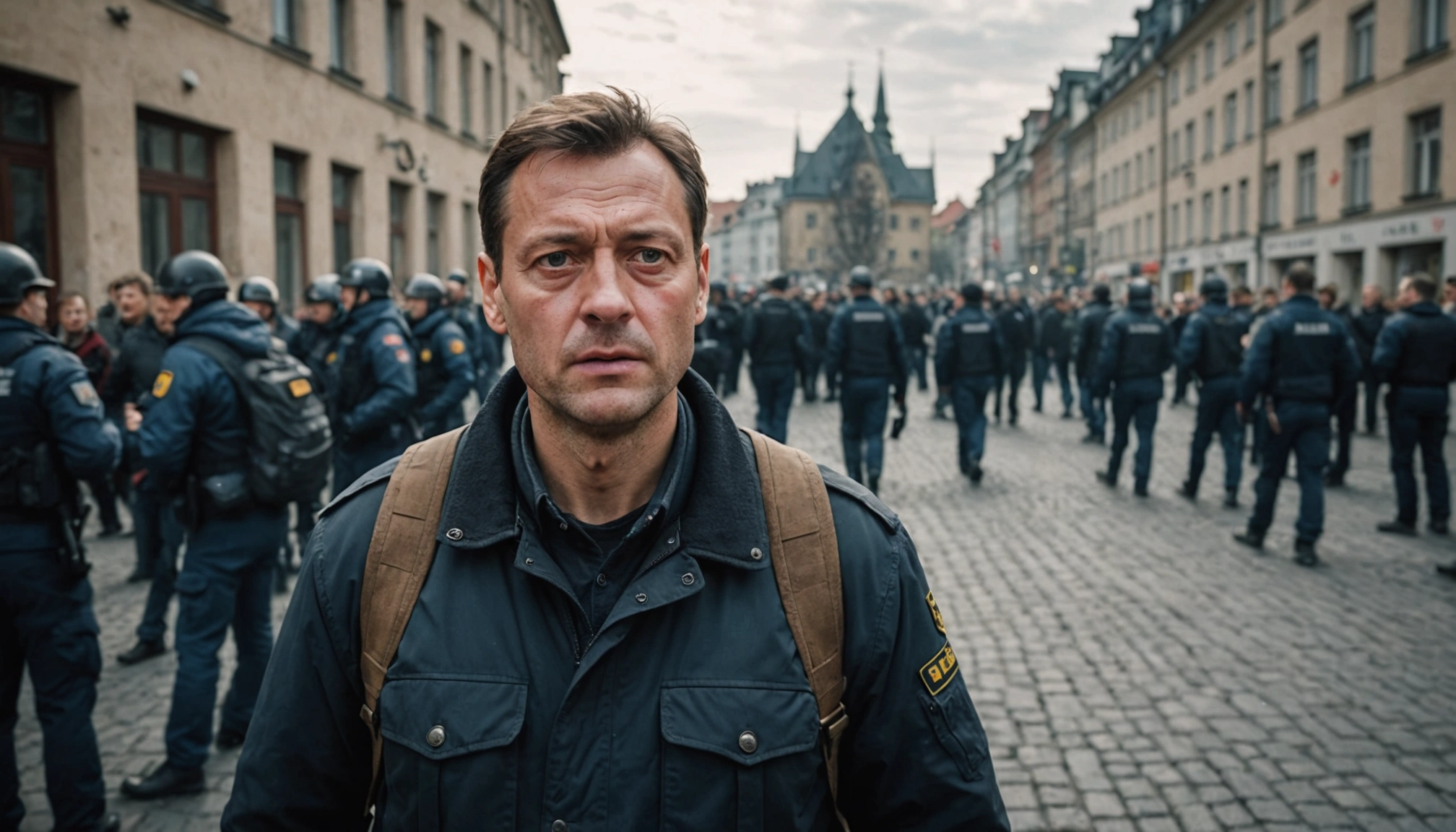
A Russian ballistic missile attack on the northeastern Ukrainian city of Sumy has drawn widespread condemnation, with Germany's incoming Chancellor Friedrich Merz labeling the strike a "serious war crime." The attack, which occurred on Palm Sunday, killed at least 34 people, including two children, and wounded over a hundred, according to Ukrainian officials. The incident has intensified calls for a ceasefire and increased pressure on Russia to end the ongoing conflict.
Ballistic Missile Attack Devastates Sumy
On April 13, 2025, two Russian missiles struck the heart of Sumy at approximately 10:15 a.m. local time (07:15 GMT). The attack occurred as residents gathered to observe Palm Sunday, a significant day in the Christian Holy Week. Videos and images from the scene depicted bodies scattered amidst debris and smoke in the city center, highlighting the devastating impact on the civilian population. Ukrainian President Volodymyr Zelenskyy condemned the "horrific" attack and emphasized the need for a strong global response. He stated that dozens were wounded and receiving medical treatment, with at least 68 people hospitalized.
Merz Accuses Russia of War Crime
Friedrich Merz, Germany's expected new chancellor, strongly condemned the attack, calling it a "perfidious act" and a "serious war crime, deliberate and intended." His comments, made to broadcaster ARD, reflect a growing international sentiment that Russia's actions in Ukraine are violating international law and norms of warfare. Merz further added that the attack was Russian President Vladimir Putin's response "to those who talk with him of a ceasefire."
International Condemnation and Calls for Ceasefire
The Sumy strike has triggered a wave of condemnation from leaders around the world. British Prime Minister Keir Starmer expressed his horror at Russia's attacks on civilians in Sumy and called for an immediate ceasefire without conditions. Italian Prime Minister Giorgia Meloni described the attack as "horrible and cowardly," lamenting the loss of innocent civilian lives, including children, on Palm Sunday.
French President Emmanuel Macron asserted that "it is Russia alone that wants this war," accusing the country of showing "scorn for human life, international law and diplomatic efforts." The attack occurred amidst intensified efforts by the United States, under President Donald Trump, to broker a ceasefire in the conflict, which has been ongoing for over three years since Russia's full-scale invasion of Ukraine.
US Efforts for Ceasefire
Trump's special envoy to Ukraine, retired lieutenant general Keith Kellogg, condemned the Russian attack on civilian targets as crossing "any line of decency." He stated, "As a former military leader, I understand targeting and this is wrong," highlighting the violation of basic principles of warfare. While Ukraine has endorsed a broader US ceasefire proposal, Russia has imposed conditions that have effectively stalled the agreement, leading to accusations from European governments that Putin is deliberately prolonging the conflict.
Sumy's Mayor Describes "Terrible Tragedy"
Sumy's acting Mayor Artem Kobzar described the attack as a "terrible tragedy" for the community on Palm Sunday. The missile strike damaged at least 20 buildings in the city, exacerbating the already dire humanitarian situation. Emergency services are continuing their efforts to clear debris and provide assistance to the victims and their families. The death toll is expected to rise as rescue operations continue.
Implications and Future Outlook
The Sumy attack and the strong international condemnation that followed underscore the urgent need for a resolution to the conflict in Ukraine. The accusations of war crimes against Russia are likely to further isolate the country on the global stage and could lead to additional sanctions and diplomatic pressure. The intensified efforts by the United States to broker a ceasefire, coupled with the growing international outcry, may create an opportunity for renewed negotiations. However, Russia's preconditions and continued military actions remain a significant obstacle to achieving a lasting peace. The international community faces the challenge of holding Russia accountable for its actions while simultaneously working towards a diplomatic solution that protects the sovereignty and security of Ukraine.
Related Articles

Ratko Mladić, "Butcher of Bosnia" and Convicted War Criminal, Dies at 84
THE HAGUE, Netherlands – Ratko Mladić, the former Bosnian Serb military commander known as the "Butcher of Bosnia" and convicted of genocide, war crimes, and crimes against humanity, has died at the age of 84. Serbian...

Long-Awaited 9/11 Mastermind Trial Set for 2028, Decades After Attacks
GUANTANAMO BAY, Cuba – Nearly a quarter-century after the devastating terror attacks of September 11, 2001, a military judge has finally set a trial date for Khalid Sheikh Mohammed, the alleged mastermind behind the...