Supreme Court Blocks Trump's National Guard Deployment in Chicago, Citing Lack of Authority
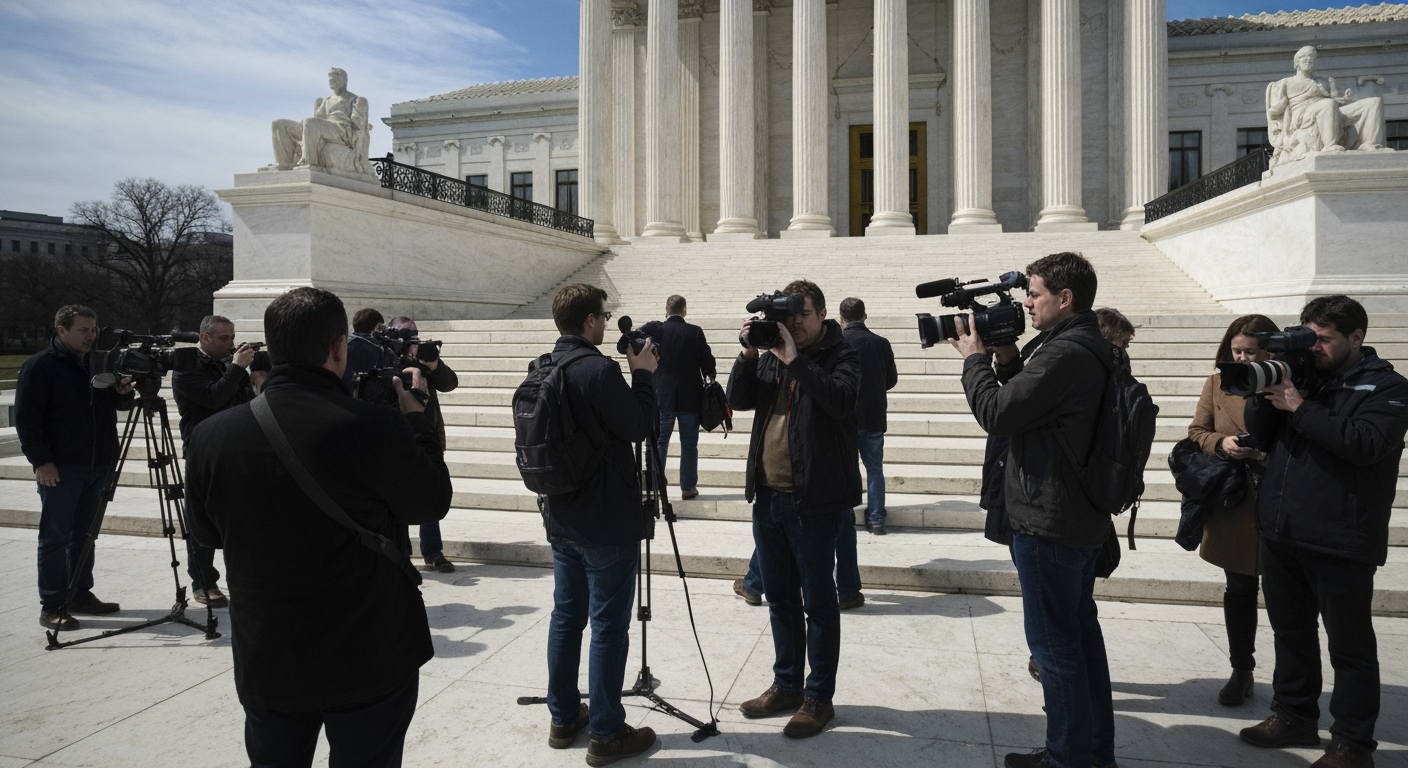
WASHINGTON D.C. — In a significant rebuff to the Trump administration, the U.S. Supreme Court on Tuesday, December 23, 2025, halted the deployment of National Guard troops to Chicago, upholding lower court rulings that deemed the federalization and dispatch of forces unlawful. The 6-3 decision marks a rare setback for the administration at the nation's highest court and reinforces the constitutional boundaries of presidential authority over state-controlled military assets for domestic law enforcement.
The unsigned order from the Supreme Court effectively leaves in place a temporary restraining order issued by a federal district judge, preventing federalized National Guard members from engaging in operations within Illinois. The high court's decision hinged on the administration's failure "to identify a source of authority that would allow the military to execute the laws in Illinois" at this preliminary stage of the litigation. This ruling underscores the exceptional nature of military involvement in domestic law enforcement and has wide-ranging implications for federal-state relations and the executive's power to deploy troops without clear statutory or constitutional justification.
The High Court's Decisive Order
The Supreme Court's ruling on Tuesday, December 23, 2025, delivered a critical blow to the Trump administration's efforts to utilize the National Guard for federal law enforcement purposes in Chicago. The 6-3 vote saw Justices Samuel Alito, Clarence Thomas, and Neil Gorsuch dissent, while Justice Brett Kavanaugh filed a separate concurrence. The majority's unsigned order affirmed the decisions of lower courts, which had consistently blocked the deployment, emphasizing that the government had not presented adequate legal grounds for its action.
The Court's decision, while made at a "preliminary stage" of the legal battle, carries substantial weight by maintaining the injunction against deployment while the underlying litigation continues. This immediate impact prevents federalized National Guard troops from being actively used in Chicago, a direct challenge to the President's assertion of broad authority. The core of the Court's reasoning was succinctly stated: "At this preliminary stage, the Government has failed to identify a source of authority that would allow the military to execute the laws in Illinois." This statement reflects a cautious approach to the use of military forces domestically and a reinforcement of the principle that such actions require explicit legal backing. The outcome stands out as an unusual defeat for the Trump administration before a conservative-leaning Supreme Court, which has often favored its executive actions in other emergency appeals.
Administration's Justification and Broad Strategy
The Trump administration's push to deploy the National Guard in Chicago was part of a broader strategy to send federal forces into Democratic-led cities, including Los Angeles, Washington D.C., Memphis, and Portland, citing various justifications such as combating crime, managing civil unrest, and protecting federal property and personnel. In Chicago, the primary stated reason was to protect federal law enforcement officers, particularly U.S. Immigration and Customs Enforcement (ICE) agents, from what the administration described as "violent resistance" during protests against immigration policies. The Justice Department argued that the situation in the Chicago area amounted to "a rebellion against federal authority," necessitating the deployment of the National Guard to enable federal agents to "operate in a climate of constant fear for their lives and safety, which significantly impedes their enforcement of the law."
To justify the federalization, the administration invoked a federal law that allows the President to call up the National Guard if he is "unable with the regular forces to execute the laws of the United States" or if there is "a rebellion or danger of a rebellion." Critically, the administration interpreted "regular forces" to include civilian law enforcement agencies like ICE, rather than solely the U.S. military. This interpretation was central to its argument that without the National Guard, federal laws could not be adequately enforced. The deployment plan involved federalizing approximately 300 members of the Illinois National Guard and 200 members of the Texas National Guard, totaling 500 troops, with some already having been sent to the Chicago area before the court injunctions.
Legal Roadblocks and Lower Court Affirmations
The Trump administration's plan for Chicago faced immediate legal opposition from Illinois state officials and the City of Chicago, who filed a lawsuit in early October 2025, labeling the proposed deployment as "unlawful and dangerous." They contended that the President was abusing his power for political purposes and that the deployment would exacerbate tensions, undermine local law enforcement, and harm community relations.
U.S. District Judge April Perry issued a temporary restraining order on October 9, blocking the federalization and deployment of the National Guard in Illinois. Judge Perry found "no credible evidence that there is a danger of rebellion" in the state, directly contradicting the administration's claims of widespread unrest justifying military intervention. This initial ruling was largely upheld by the U.S. Court of Appeals for the 7th Circuit. The appellate court agreed with Judge Perry, stating that "spirited, sustained, and occasionally violent actions of demonstrators in protest of the federal government's immigration policies and actions, without more, does not give rise to a danger of rebellion against the government's authority." The 7th Circuit also found insufficient evidence that protest activity in Illinois had significantly impeded federal officers' ability to execute federal immigration laws.
Central to the legal challenge was the interpretation of the 1903 Militia Act, specifically the phrase "unable with the regular forces to execute the laws of the United States." While the Trump administration argued this referred to civilian law enforcement, Illinois and Chicago attorneys, supported by the ACLU of Illinois, successfully argued that "regular forces" likely refers to the U.S. military. The courts concluded that to federalize the Guard under this provision, the President must first demonstrate an inability to perform the function with the regular U.S. military, a standard the administration failed to meet. Furthermore, legal challenges highlighted the Posse Comitatus Act, which generally prohibits the use of the military for domestic law enforcement, asserting that the administration had not identified a statute providing an exception. The ACLU of Illinois characterized the administration's justification for deployment as "pure fantasy."
Implications for Federalism and Executive Power
The Supreme Court's decision carries significant implications for the balance of power between the federal government and individual states, particularly concerning the deployment of military forces within state borders. The ruling serves as a powerful affirmation of state sovereignty and places clear limits on the President's ability to unilaterally deploy the National Guard over the objections of state and local leaders.
Illinois Governor J.B. Pritzker hailed the ruling as a "big win for Illinois and American democracy," emphasizing its importance in curbing what he described as the Trump administration's "consistent abuse of power and slowing Trump's march toward authoritarianism." This sentiment highlights the political tensions that surrounded the deployment attempts, perceived by many as an overreach of federal authority into local governance. The Supreme Court's insistence on a clear source of authority for such deployments reinforces the constitutional framework governing the use of military assets for domestic purposes, distinguishing between federal military action and state-controlled National Guard duties.
While the ruling is not a final judgment on the merits of the case, it creates a precedent that could influence ongoing and future legal challenges against similar federalized National Guard deployments in other cities. The decision strengthens the legal arguments available to states and municipalities seeking to block federal military interventions they deem unwarranted or politically motivated. Although some 300 federalized National Guard troops remain activated in the Chicago area, they are currently not permitted to engage in operations, underscoring the immediate practical effect of the Court's order. The ruling serves as a powerful reminder that even in times of perceived crisis or unrest, presidential power is subject to judicial review and constitutional constraints, particularly when it encroaches upon state authority and civil liberties.
Related Articles

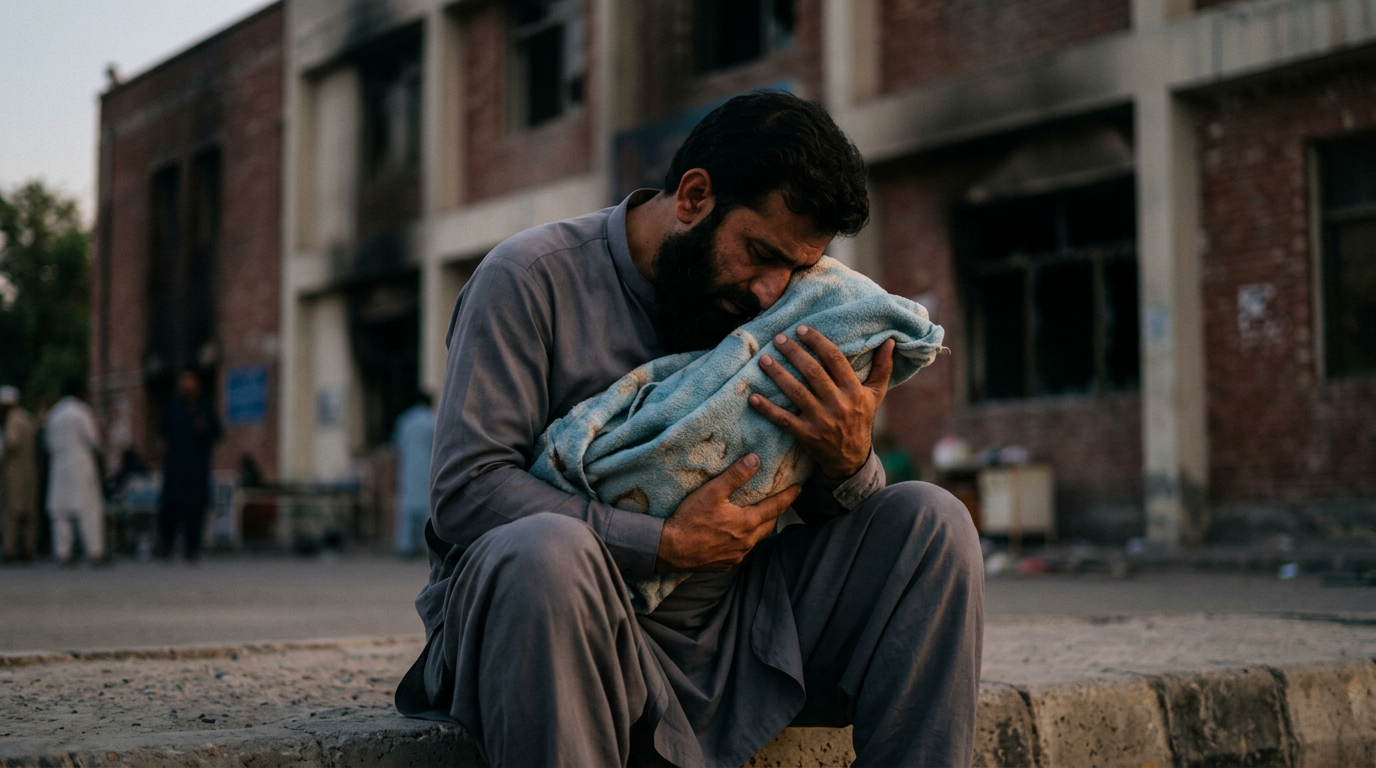
Tragedy Strikes Islamabad: Hospital Fire Claims Lives of 14 Newborns
ISLAMABAD, Pakistan – A devastating fire ripped through a neonatal ward at the Pakistan Institute of Medical Sciences (PIMS), a prominent public hospital in the capital, early Wednesday morning, resulting in the tragic...


US Military Strike in Caribbean Kills Four, Intensifying Controversial Anti-Drug Campaign
The United States military conducted a "lethal kinetic strike" on a suspected drug trafficking vessel in the Caribbean Sea on Tuesday, resulting in the deaths of four individuals. The operation marks a continued...


Dissident Artist Jailed for Satirical Mao Sculptures, Raising Global Concerns Over Free Expression
A prominent Chinese artist, Gao Zhen, known internationally for his satirical sculptures depicting former leader Mao Zedong, has been sentenced to three years in prison, a verdict that has drawn widespread condemnation...