Supreme Court Grapples with Fate of Hundreds of Thousands of Haitian and Syrian Immigrants
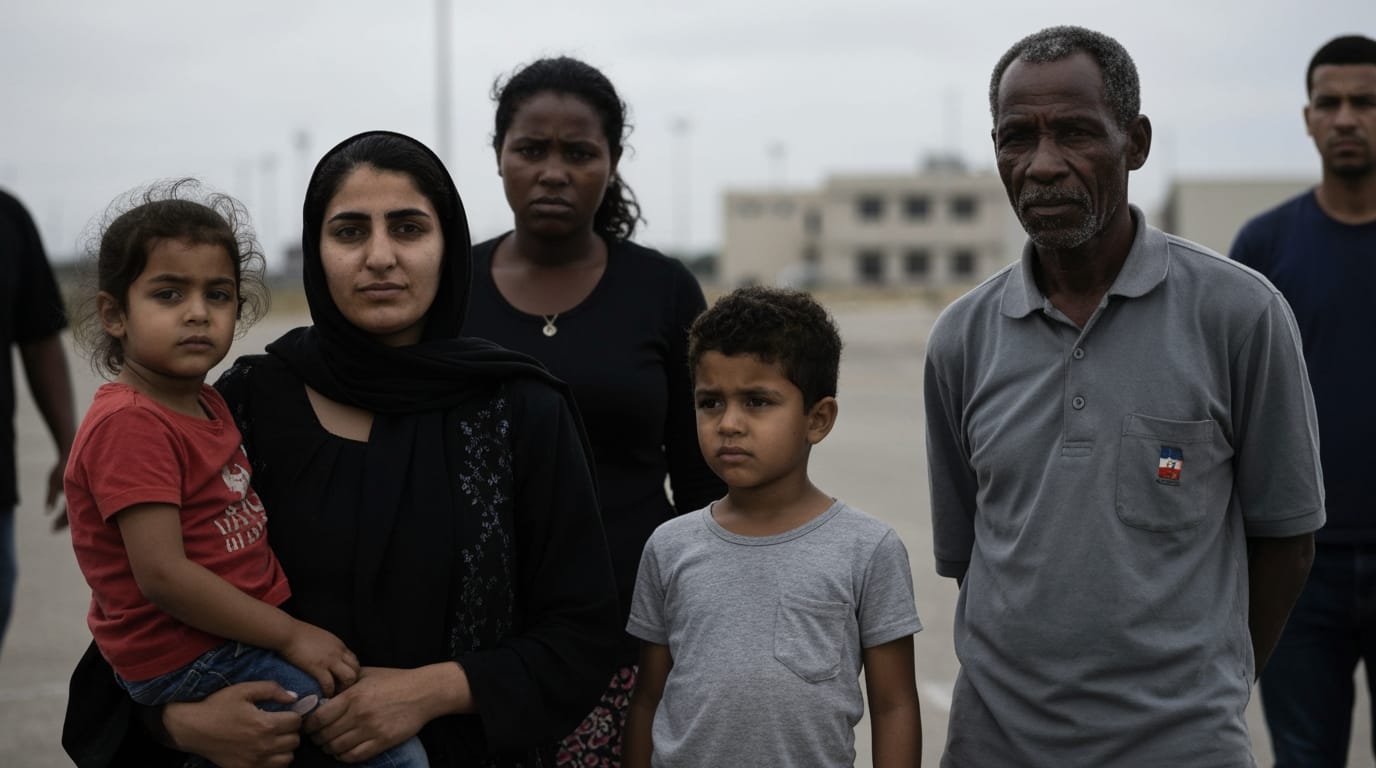
WASHINGTON – The U.S. Supreme Court is currently deliberating a pivotal legal challenge that could determine the residency status of hundreds of thousands of Haitian and Syrian immigrants living under Temporary Protected Status (TPS) in the United States. The cases, Mullin v. Doe and Trump v. Miot, stem from the Trump administration's efforts to rescind these protections, a move that has ignited a complex legal and humanitarian debate over executive authority versus judicial oversight in immigration policy. The high court's decision, expected in the coming months, carries profound implications not only for the approximately 350,000 Haitians and 6,000 Syrians directly affected but also for the future of the three-decade-old TPS program itself. For now, lower court orders have kept the protections in place, ensuring that these individuals are not immediately subject to deportation while the Supreme Court considers the merits of the case.
The Origins of Temporary Protected Status
Temporary Protected Status was established by Congress in 1990 as a humanitarian measure, designed to offer a safe haven for foreign nationals unable to return to their home countries due to armed conflict, natural disasters, or other extraordinary and temporary conditions. The program allows eligible individuals to live and work legally in the U.S., provided they meet specific criteria, including continuous residency since their country's designation and passing rigorous vetting processes, which involve biometrics and background checks.
Haiti first received TPS designation in 2010 following a catastrophic earthquake that devastated the nation, killing over 300,000 people and leaving widespread destruction. The dire conditions in Haiti, marked by persistent violence, political instability, and limited healthcare, led to multiple extensions of its TPS status, including by the Biden administration. Similarly, Syria was designated for TPS in 2012 by the Obama administration amid the escalating civil war and severe humanitarian crisis. Syrian TPS holders often represent established members of American communities, working as healthcare professionals, students, teachers, journalists, and entrepreneurs.
The Trump administration, however, initiated efforts to terminate TPS for approximately 1 million immigrants from 13 countries, arguing that the program, by its temporary nature, was not intended to be a permanent form of amnesty. Kristi Noem, then-Secretary of Homeland Security, concluded that conditions in both Haiti and Syria no longer met the statutory requirements for TPS, despite ongoing instability and warnings from the U.S. State Department against travel to these nations.
The Battle Over Judicial Review
Central to the Supreme Court's consideration is the scope of judicial review regarding the executive branch's decisions on TPS terminations. The Justice Department, representing the government, asserts that the Homeland Security secretary holds ultimate authority in determining TPS designations and terminations, and that the law explicitly bars judicial review of these decisions. Government lawyers contend that such determinations are inherently "foreign policy-laden judgments" best left to the political branches of government, where courts are ill-equipped to interfere.
Conversely, attorneys for the Haitian and Syrian plaintiffs argue that while the ultimate decision on country conditions might be executive prerogative, courts retain the right to scrutinize the process by which these decisions are made. They claim that the Trump administration's terminations were "arbitrary and capricious," exceeded statutory authority, and were "contrary to law," violating procedural dictates of the Administrative Procedure Act. They point to the State Department's current Level 4 travel advisories for both Haiti and Syria, warning U.S. citizens against travel due to risks like kidnapping, terrorist activity, civil unrest, and ongoing conflict, as evidence contradicting the administration's assessment of safety.
Lower federal courts in New York and Washington, D.C., previously blocked the Trump administration's efforts to end TPS for these countries. In particular, a U.S. District Judge found that "hostility to nonwhite immigrants" likely influenced the decision to terminate TPS for Haitians, highlighting a contentious element of the legal challenge.
Profound Human Implications
The outcome of this Supreme Court case carries immense human consequences for hundreds of thousands of individuals who have built lives, families, and careers in the United States, in many cases for over a decade. Should the Trump administration's position prevail, these individuals face the potential loss of legal status, work authorization, and the looming threat of deportation to countries that, according to the State Department, remain perilous.
For Haitians, returning to their homeland could mean facing widespread gang violence, severe humanitarian crises, and a highly unstable political landscape. For Syrians, the prospect of deportation involves returning to a nation still grappling with the aftermath of a protracted civil war, characterized by ongoing conflict, humanitarian emergencies, and significant risks such as sexual and gender-based violence, landmines, and terrorist activity. Many have established deep roots in American communities, and the termination of their status would not only disrupt their lives but also create widespread economic harm. The story of Balthazar, a Haitian immigrant who fears homelessness if her TPS is rescinded, exemplifies the profound personal stakes involved for these individuals.
Broader Context and Political Undercurrents
The cases before the Supreme Court are seen by many as a continuation of the Trump administration's broader immigration agenda, which has historically prioritized mass deportations and sought to limit legal immigration pathways. Allegations of racial animus have surfaced throughout the litigation, with judicial findings suggesting that hostility toward nonwhite immigrants may have influenced the decisions to terminate TPS for Haiti. Past remarks by former President Trump regarding "shithole countries" and unsubstantiated claims about Haitian immigrants have been cited by challengers as evidence of discriminatory intent, although the administration has denied any racial bias.
The Supreme Court, which holds a 6-3 conservative majority, has previously sided with the Trump administration in allowing the termination of TPS for hundreds of thousands of Venezuelans without hearing full arguments. However, the Haiti and Syria cases present a notable distinction, as lower courts have identified a "factual record showing that the Trump administration completely failed to do what is required by the law; actually consider the country conditions." This distinction could prove crucial in the high court's final determination.
A Precedent-Setting Decision
The Supreme Court's ruling will not only decide the immediate fate of hundreds of thousands of Haitian and Syrian immigrants but also set a significant precedent for the exercise of executive power in immigration matters and the extent of judicial oversight. The central question of whether courts can review the government's process in terminating humanitarian protections, or if such decisions are entirely insulated from judicial scrutiny, will shape future immigration policy. As the justices deliberate, the humanitarian implications and the principle of governmental accountability weigh heavily on the balance. The final decision is anticipated to have far-reaching effects on the lives of immigrants and the legal framework governing humanitarian relief in the United States.