Supreme Court Halts Deportation of Venezuelan Migrants
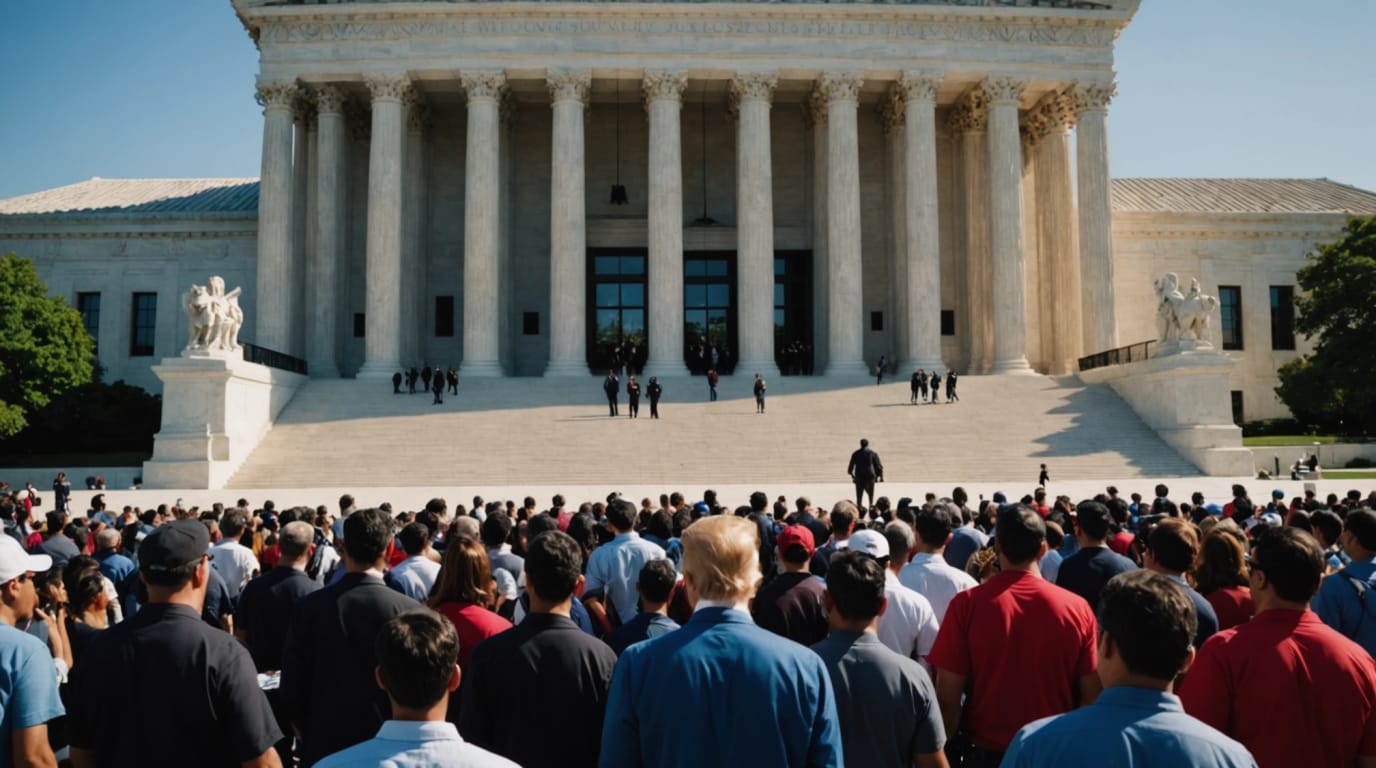
In a late-night order, the U.S. Supreme Court has temporarily blocked the Trump administration from deporting Venezuelan migrants held in immigration custody. The decision came after lawyers argued that the men were at imminent risk of being removed from the country without the judicial review previously mandated by the court. The ruling provides a temporary reprieve for the migrants, raising questions about the administration's adherence to legal procedures and potentially averting a constitutional clash between the executive and judicial branches.
The order, issued early Saturday morning, directs the government to refrain from deporting any member of the group of detainees "until further order of this Court." Justices Clarence Thomas and Samuel Alito dissented from the unsigned decision. The case centers around a group of Venezuelans detained at the Bluebonnet Detention Facility in Anson, Texas.
Lawyers from the American Civil Liberties Union (ACLU) filed urgent requests in multiple courts, including the Supreme Court, after receiving reports that some of the men had already been loaded onto buses and informed of their impending deportation. The ACLU argued that the rapid developments did not afford the men a realistic opportunity to contest their removal, as previously required by the Supreme Court.
The legal battle revolves around the administration's use of the 1798 Alien Enemies Act, a law historically invoked during wartime. The Trump administration has recently employed the act to target Venezuelan migrants accused of gang affiliation, specifically with the Tren de Aragua gang, with plans to deport them to a maximum-security prison in El Salvador. This move has drawn criticism from legal experts and human rights advocates, who argue that it circumvents due process and violates international law.
The Supreme Court's intervention follows unsuccessful attempts by the ACLU to obtain immediate relief from lower courts. Filings were made before U.S. District Judge James Hendrix in Abilene, Texas, and the Fifth U.S. Circuit Court of Appeals in New Orleans, seeking to block the deportations. The Supreme Court's decision to grant a stay suggests that at least some of the justices have serious concerns about the legality and fairness of the administration's actions.
The case highlights the ongoing tensions between the executive and judicial branches over immigration policy. The Trump administration has faced numerous legal challenges to its immigration policies, with courts frequently serving as a check on presidential power. This latest episode underscores the importance of judicial review in safeguarding individual rights and ensuring that government actions comply with the law.
The immediate impact of the Supreme Court's order is that the deportation of the Venezuelan migrants is temporarily halted. The government must now await further instructions from the court. The justices could decide to hear the case on its merits, which would involve full briefing and oral arguments. Alternatively, they could lift the stay, allowing the deportations to proceed.
The longer-term implications of the case are significant. A ruling against the administration could limit its ability to use the Alien Enemies Act to deport migrants without providing them with adequate due process. It could also send a broader message about the importance of respecting judicial precedent and adhering to legal norms in the context of immigration enforcement. Conversely, a ruling in favor of the administration could embolden it to pursue more aggressive immigration policies, potentially leading to further legal challenges and increased scrutiny from human rights organizations.
The situation in Venezuela remains a key factor in this legal and political drama. The country has been grappling with a severe economic and political crisis for years, leading millions of Venezuelans to flee in search of safety and opportunity. Many have sought asylum in the United States, arguing that they face persecution and violence in their home country. The Trump administration, however, has taken a hard line on immigration, seeking to limit access to asylum and increase deportations.
The Supreme Court's decision to pause the deportations reflects the complex legal and humanitarian considerations at stake. While the administration argues that it is acting within its authority to protect national security, critics contend that its policies are inhumane and violate fundamental principles of justice. The courts are now tasked with resolving these competing claims, with potentially far-reaching consequences for the future of immigration law and policy in the United States.
The White House has not yet issued a formal response to the Supreme Court's order. The Justice Department, which is responsible for defending the administration's immigration policies in court, is likely to argue that the deportations are lawful and necessary to protect public safety. However, the Supreme Court's decision suggests that the justices are not entirely convinced by this argument.
The coming weeks and months will be crucial as the legal battle unfolds. The Supreme Court's ultimate decision in this case will have a significant impact on the lives of the Venezuelan migrants involved, as well as on the broader debate over immigration policy in the United States. The case serves as a reminder of the importance of an independent judiciary in safeguarding individual rights and holding the government accountable.


