Suvendu Adhikari Sworn In as West Bengal's First BJP Chief Minister, Signaling Historic Political Shift
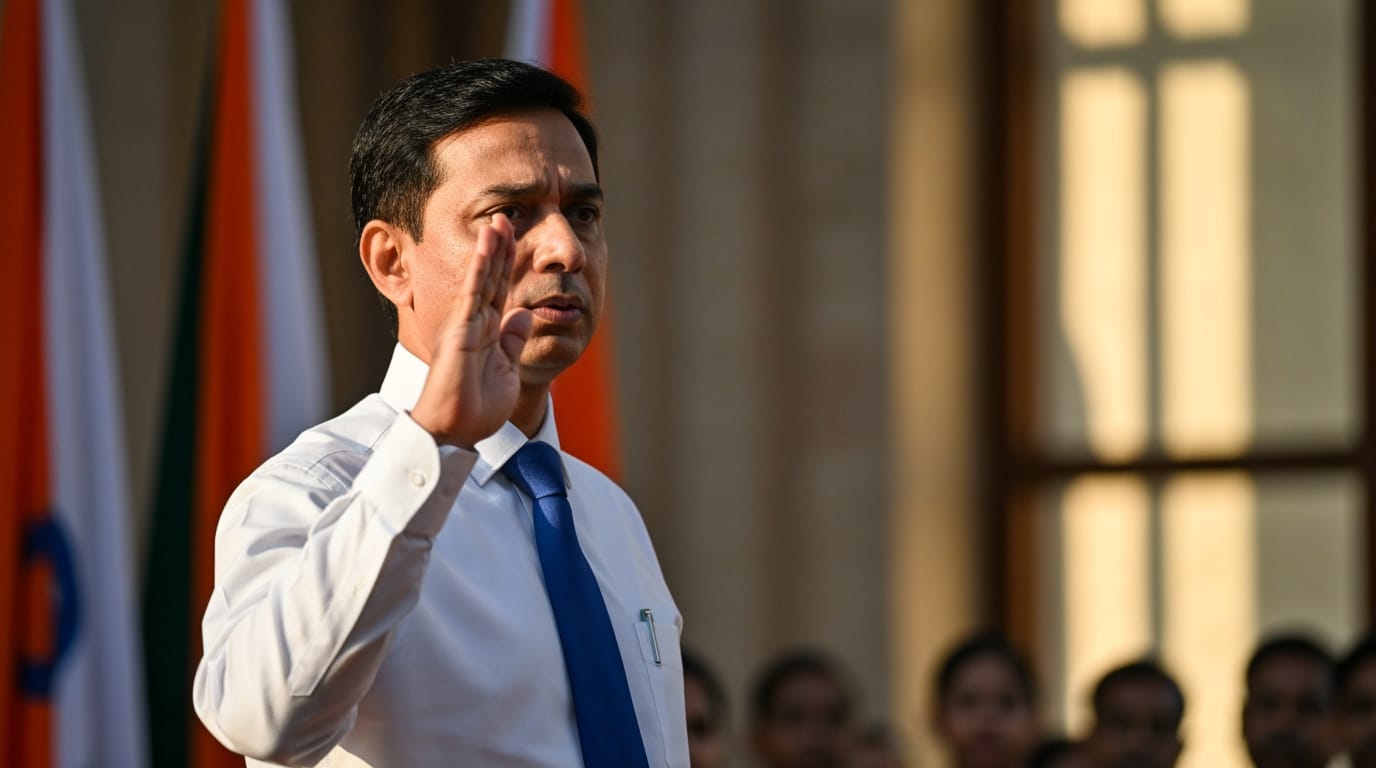
Kolkata, India – May 9, 2026 – In a momentous political earthquake that has reshaped India's electoral map, Suvendu Adhikari was sworn in today as the first Chief Minister from the Bharatiya Janata Party (BJP) in West Bengal. The oath-taking ceremony marks an unprecedented chapter in the state's history, bringing an end to over a decade of Trinamool Congress (TMC) rule and solidifying the BJP's nationwide dominance. Adhikari's ascent to the top executive post follows a resounding victory for the BJP in the recent assembly elections, which saw the party secure a commanding two-thirds majority and dismantle one of the last major bastions of opposition in the country.
The transition of power underscores a dramatic realignment of political forces in West Bengal, a state historically known for its strong regional parties and intellectual dissent. The BJP's triumph, which garnered 207 out of 294 assembly seats, not only represents a significant electoral milestone but also positions the party to govern 21 states and Union Territories, encompassing approximately 72% of India’s vast population. This expansion solidifies Prime Minister Narendra Modi's national agenda and marks a pivotal moment for federal relations and governance across the diverse Indian subcontinent.
The Saffron Surge: How BJP Conquered Bengal
The BJP's victory in West Bengal is the culmination of a decade-long strategic effort to penetrate a state where it once held negligible influence. In the 2011 assembly elections, the party secured a mere 4.06% of the vote and won no seats. By 2021, its vote share had dramatically increased to nearly 38%, translating into 77 seats and establishing it as the principal opposition. The 2026 elections witnessed a further, decisive surge, with the BJP flipping an extraordinary 129 constituencies, many in traditionally TMC strongholds in South Bengal.
This remarkable expansion was fueled by a multifaceted approach that capitalized on anti-incumbency sentiments against the TMC and aggressively campaigned on issues such as alleged border infiltration, citizenship concerns, and perceived communal tensions. The BJP’s "double-engine" government slogan, promising synchronized development through cooperation between the state and central administrations, resonated with voters seeking progress and stability. Campaign narratives also focused on "fear versus trust," emphasizing security, stability, and public confidence, alongside women-centric welfare schemes and job creation.
The electoral battle saw the incumbent Trinamool Congress, led by Mamata Banerjee, reduced to just 80 seats from its previous 215. A symbolic blow to the former Chief Minister was delivered in the Bhabanipur constituency, where Suvendu Adhikari defeated her by a margin of over 15,000 votes, further solidifying his position as a dominant political force. This came after Adhikari's earlier victory over Banerjee in Nandigram in the 2021 assembly elections.
Adhikari's Journey: From TMC Stalwart to BJP Architect
Suvendu Adhikari, born into a politically prominent family in Purba Medinipur, has had a dynamic and often controversial political career. He began his political journey with the Indian National Congress in 1995, before joining the Trinamool Congress (TMC) upon its formation in 1998. His organizational skills and grassroots connections quickly made him a key figure within the TMC, particularly during the seminal Nandigram anti-land acquisition movement in 2007. This movement played a crucial role in dislodging the 34-year Left Front government and propelling the TMC to power in 2011.
Adhikari served as a Member of Parliament and later held significant portfolios as a Minister in Mamata Banerjee’s cabinet, including Transport, Irrigation, and Environment. However, growing ideological differences and the perceived increasing influence of Mamata Banerjee's nephew, Abhishek Banerjee, led to his dramatic defection to the BJP in December 2020. This move was a game-changer for the BJP in West Bengal, providing them with an influential leader deeply familiar with the TMC's internal machinery and a strong regional base.
Post-defection, Adhikari emerged as the BJP's most aggressive voice against the TMC government, earning the moniker of "giant killer" after his 2021 victory against Mamata Banerjee in Nandigram. His continued prominence as Leader of the Opposition and his subsequent victory against Banerjee in Bhabanipur in the 2026 elections solidified his stature, ultimately paving the way for his unanimous election as the BJP Legislative Party leader on May 8, 2026, and his subsequent oath as Chief Minister.
Policy Priorities and The Road Ahead
As Chief Minister, Suvendu Adhikari faces the formidable task of governing a state with complex socio-economic and political dynamics. The BJP's "Sankalp Patra" (manifesto) outlines ambitious policy priorities, including the implementation of the 7th Pay Commission for state government employees and pensioners, the clearance of Dearness Allowance (DA) arrears, and the creation of one crore jobs over five years. A highly anticipated and potentially contentious promise is the implementation of a Uniform Civil Code (UCC) within six months of forming the government, a move that could significantly alter the social fabric of the state.
The new administration has pledged a strict crackdown on "syndicate culture" – an alleged system of organized extortion and corruption – and an end to mafia rule in sectors like coal, sand, and stone. Economic development is a core focus, with plans to boost industry, tourism (including coastal, forest, and tea tourism), and fisheries, aiming to transform West Bengal into a hub for both industry and central welfare schemes. The government is also expected to accelerate the implementation of central government schemes like Ayushman Bharat, which had previously faced resistance.
The BJP's victory also has significant implications for West Bengal’s regional relations, particularly with Bangladesh. The TMC government often acted as an intermediary, occasionally delaying or renegotiating bilateral issues such as water sharing and border management. A "double-engine" government is expected to accelerate India’s eastern agenda, potentially leading to quicker resolutions on long-stalled agreements, but could also raise concerns about accommodating Bangladeshi interests under a more centralized approach.
Challenges and Opposition's Resilience
Despite the BJP's sweeping victory, the path ahead for Chief Minister Adhikari is fraught with challenges. The implementation of ambitious manifesto promises, especially those requiring significant financial outlay and administrative overhaul, will be closely scrutinized. The Uniform Civil Code, if implemented, is likely to be met with strong reactions and demands careful navigation to maintain social cohesion.
The electoral process itself was not without controversy, with a "Special Intensive Revision (SIR)" exercise removing approximately 2.7 million voters from the rolls, disproportionately affecting Muslim communities, who traditionally do not support the BJP. Reports of post-poll violence have also surfaced, highlighting the intense political polarization within the state. Adhikari's government will need to prioritize law and order and ensure equitable governance for all communities.
The Trinamool Congress, though relegated to the opposition benches, remains a formidable political entity. The BJP will need to contend with a strong opposition voice in the Assembly, and Adhikari will need to demonstrate his ability to unite a diverse state while delivering on the promise of "Sonar Bangla" (Golden Bengal).
The swearing-in of Suvendu Adhikari as West Bengal's first BJP Chief Minister marks a watershed moment in Indian politics. It ushers in an era of unprecedented political alignment between the state and the central government, with significant ramifications for governance, development, and regional dynamics. As West Bengal embarks on this new political journey, the focus will now shift to how the Adhikari government translates its mandate into tangible progress and navigates the inherent complexities of leading a state with such a rich and often turbulent political past.


