Sweden Turns to Giant Underground 'Thermos' to Heat Homes
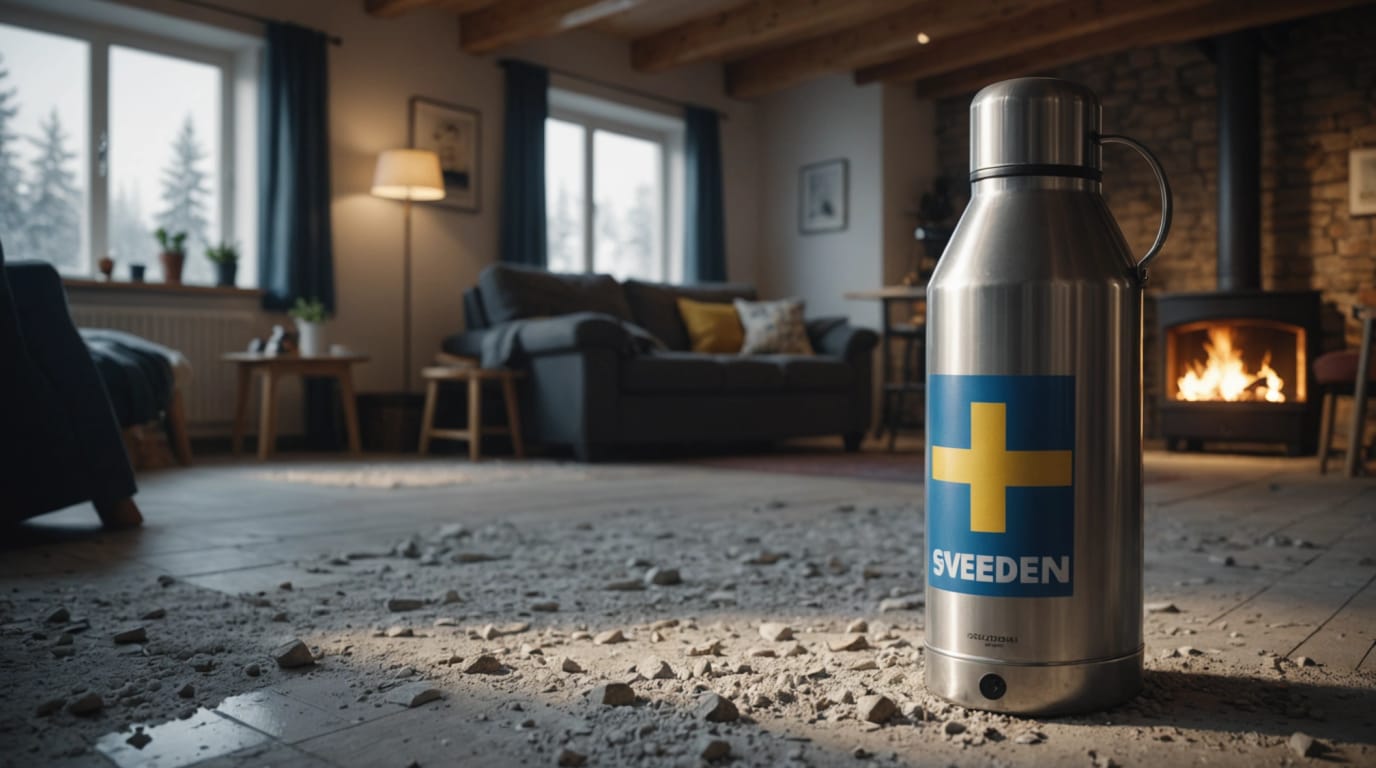
VÄSTERÅS, Sweden – In a move that could revolutionize urban heating, the Swedish city of Västerås is repurposing a massive, abandoned oil depot into a giant underground "thermos." The innovative project aims to store excess heat and distribute it to the city's district heating network, reducing reliance on fossil fuels and providing a more sustainable energy solution for its 130,000 residents.
From Oil Reserve to Heat Reservoir
Originally excavated in the early 1970s, the three caverns were intended to serve as an oil storage facility during the Cold War. However, the site was abandoned in 1985, leaving behind a vast, unused underground space. Now, local power and district heating company Mälarenergi is transforming the former oil depot into a hot water storage facility, capable of holding the equivalent of approximately 6,000 backyard swimming pools.
Project manager Rickard Svensson of Mälarenergi explained that the site will store energy during periods of surplus and then distribute it when demand is high. This approach will act as a large thermal battery, ensuring a stable and reliable heat supply for the city.
Engineering the 'Thermos'
The conversion process involves installing hundreds of meters of pipes and massive heat exchangers within the caverns. These heat exchangers will facilitate the transfer of excess heat into the water stored within the depot and then extract the heat when needed for distribution through the district heating network.
One of the most challenging aspects of the project is ensuring the structural integrity of the caverns. Workers are constructing a thick, reinforced concrete wall to serve as a plug for the cavern, effectively sealing the entire system once it is filled with water. The site had been previously emptied of oil, but never properly decontaminated.
Once the remodeling is complete, the entire cave system will be flooded and sealed for good. The caverns will be filled with hot water up to 95 degrees Celsius.
Reducing Fossil Fuel Dependence
The primary goal of the project is to reduce Västerås' dependence on fossil fuels for heating. By storing excess heat, the city can decrease its reliance on traditional power plants, particularly during peak demand periods. Magnus Eriksson, Vice President at Mälarenergi, stated that on some days, the city will be able to completely halt production at the power plant and rely solely on the heat stored in the underground "thermos."
The ability to store large quantities of heat will also allow Mälarenergi to optimize its energy production, utilizing renewable sources and waste heat more efficiently. The nearby power plant burns waste and biomass. The company is considering installing carbon capture technology to reduce emissions from the plant.
A Model for Sustainable Heating
The Västerås project is not the first of its kind, but its scale and innovative approach have garnered international attention. A similar project was completed in Finland in 2021, and other cities in Sweden and Finland are exploring the potential of underground thermal energy storage.
Lisa Granström, strategy manager at Mälarenergi, emphasized the benefits of reusing existing infrastructure, calling it "an excellent fit to re-use the oil storage and thereby take advantage of an existing resource." The project demonstrates a commitment to sustainability and resourcefulness, offering a potential model for other cities seeking to reduce their carbon footprint.
Implications and Future Prospects
The successful implementation of the Västerås project could have significant implications for the future of urban heating. By demonstrating the feasibility of large-scale thermal energy storage, the city is paving the way for other communities to adopt similar solutions.
The project also highlights the importance of innovative thinking and repurposing existing infrastructure to address environmental challenges. As cities around the world grapple with the need to reduce emissions and transition to cleaner energy sources, the Västerås "thermos" offers a compelling example of how ingenuity and resourcefulness can lead to a more sustainable future. The storage capacity available is about 120 Olympic-sized swimming pools (300,000 cubic metres), which is 11 times larger than the largest above-ground hot water tank the company has nearby. The volume inside the depot can hold the equivalent of around 6000 backyard pools and should be able to provide up to a week of heat to a nearby Swedish home on cold days.
The Västerås project represents a significant step towards a more sustainable and resilient energy future. By transforming an abandoned oil depot into a giant underground "thermos," the city is not only reducing its reliance on fossil fuels but also demonstrating the potential of innovative solutions to address the challenges of climate change. As other cities look for ways to decarbonize their heating systems, the Västerås model may serve as a blueprint for a cleaner, more sustainable future.