Swedish Forces Jam Russian Drone Near French Aircraft Carrier in Baltic Sea Incident
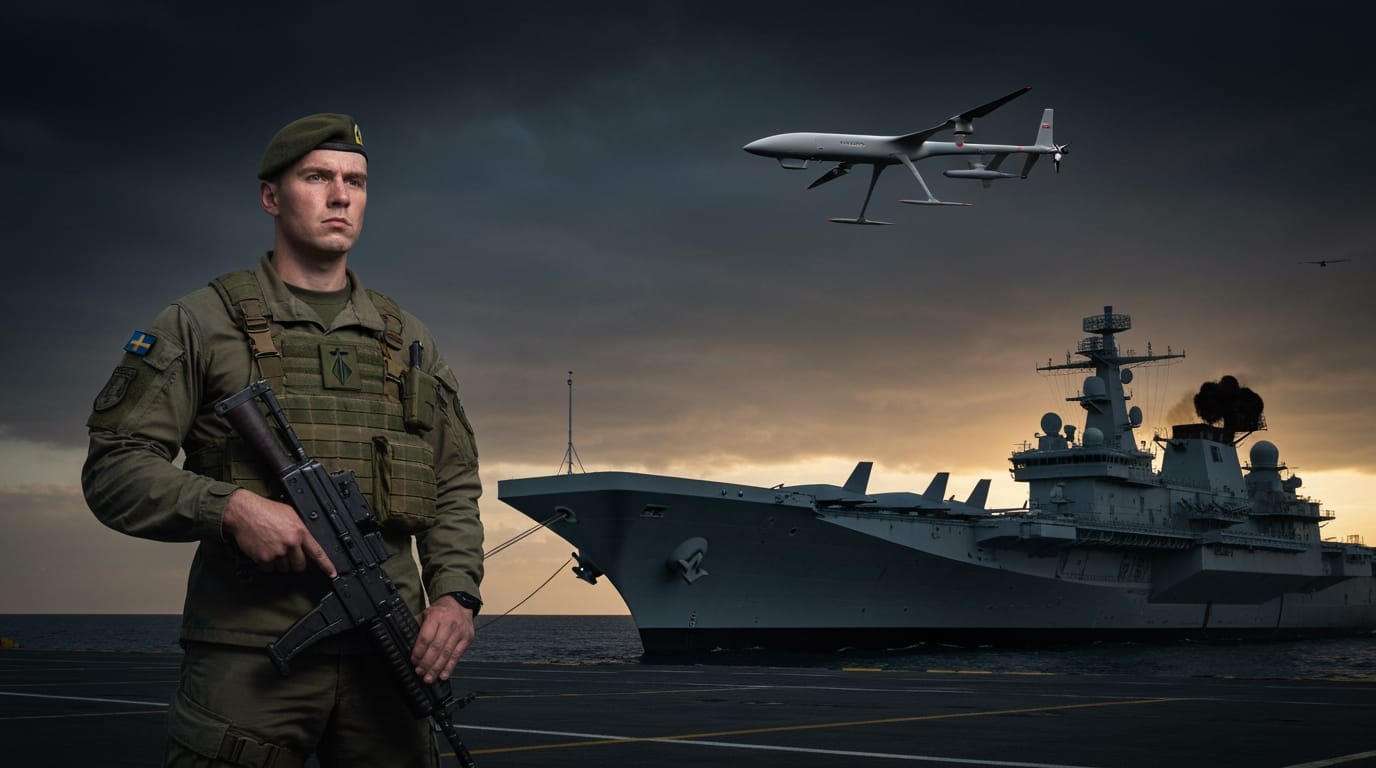
Malmö, Sweden – Swedish defense forces recently employed electronic countermeasures to neutralize a Russian drone that approached the French nuclear-powered aircraft carrier Charles de Gaulle while it was docked in the southern port of Malmö. The incident, which unfolded on February 26, 2026, has ignited fresh concerns over escalating Russian military activities in the Baltic Sea region and underscores the evolving security landscape following Sweden's recent accession to NATO. The French flagship was participating in the extensive NATO Orion-26 military exercise and Mission LA FAYETTE 26, highlighting the Alliance's bolstered presence in the strategically vital waterway.
The Encounter in Öresund
The suspected Russian drone was detected by a Swedish Navy vessel, the HMS Rapp, operating in the Öresund Strait, a narrow passage separating Sweden and Denmark. The drone reportedly originated from a nearby Russian signals intelligence ship, identified as the Zhigulevsk, which had entered Swedish territorial waters. As the unmanned aerial vehicle (UAV) advanced within approximately 7 to 10 nautical miles (about 13 kilometers) of the Charles de Gaulle, Swedish forces swiftly engaged with electronic warfare systems. These countermeasures successfully jammed the drone, causing it to disappear from detection. While its ultimate fate—whether it returned to its launch vessel or fell into the sea—remains unconfirmed, the immediate threat to the French carrier was averted. The Charles de Gaulle, a pivotal asset of the French Navy, is equipped with thousands of personnel and approximately 30 fighter jets, and its presence in Malmö marked a significant, first-time visit for such a vessel to the Swedish port.
Sweden's Assertive Stance
Swedish authorities have taken a firm stance on the incident, with Defense Minister Pål Jonson characterizing it as a likely violation of Swedish airspace and a "very serious" matter. Jonson noted the probable "strong link" between the drone and the Russian military vessel observed in the vicinity. Prime Minister Ulf Kristersson echoed these sentiments during a visit to the French carrier, stating that the drone was "likely a Russian drone" and suggesting its appearance was not coincidental, but rather a recognizable "Russian way of acting." This assertive response from Sweden reflects its heightened vigilance and its new role within the transatlantic alliance. Having formally joined NATO, Sweden brings significant naval capabilities, air superiority, and intelligence assets, particularly crucial for enhancing security in the Baltic Sea, now largely considered an "allied lake." An official investigation is currently underway to ascertain the full scope of the incident.
NATO's Bolstered Baltic Presence
The presence of the Charles de Gaulle in the Baltic Sea is a testament to NATO's reinforced defensive posture in Northern Europe. The carrier's deployment is part of Mission LA FAYETTE 26, an initiative aimed at contributing to NATO's deterrence, securing Europe's borders, and fostering interoperability among allied forces. French General Staff spokesperson Colonel Guillaume Vernet confirmed the effectiveness of the Swedish defense system, stating that it "worked perfectly" and did not impede the carrier's operations. He further clarified that while in Swedish waters, the carrier strike group operates under the protection of the host nation. French Foreign Minister Jean-Noël Barrot described the incident as a "ridiculous provocation" if its Russian origin is confirmed. This high-profile visit by a nuclear-powered aircraft carrier, a first of its kind deep into the Baltic, serves as a powerful message of solidarity and reassurance to new NATO members and allies, showcasing the Alliance's commitment to collective defense and its capability to project power into contested regions.
A Pattern of Hybrid Provocation
This drone incident is not an isolated event but rather fits into a broader pattern of what many European nations describe as Russian "hybrid actions" or "grey zone" tactics. Over the past year, there has been a noticeable increase in Russian drone incursions into NATO and allied airspaces, with notable incidents including violations over Polish airspace in September 2025 and discoveries of Russian drones in Moldova and Türkiye. These actions are often characterized as surveillance, intimidation, and a means of testing NATO's response capabilities without crossing the threshold of open conflict. Russia's military strategy includes "shaping operations" designed to probe and potentially weaken NATO countries. While Kremlin spokesperson Dmitry Peskov stated a lack of knowledge regarding the incident and dismissed the notion of Russian involvement simply due to a Russian ship's proximity as "quite absurd," the recurring nature of such events fuels concerns about regional stability and the deliberate nature of these provocations. The incident near the Charles de Gaulle underscores the continuing challenges posed by an assertive Russia and the imperative for NATO to maintain robust vigilance and sophisticated defensive capabilities across its expanded eastern and northern flanks.