Swiss Voters Resoundingly Reject Latest Bid to Slash Public Broadcasting Funding
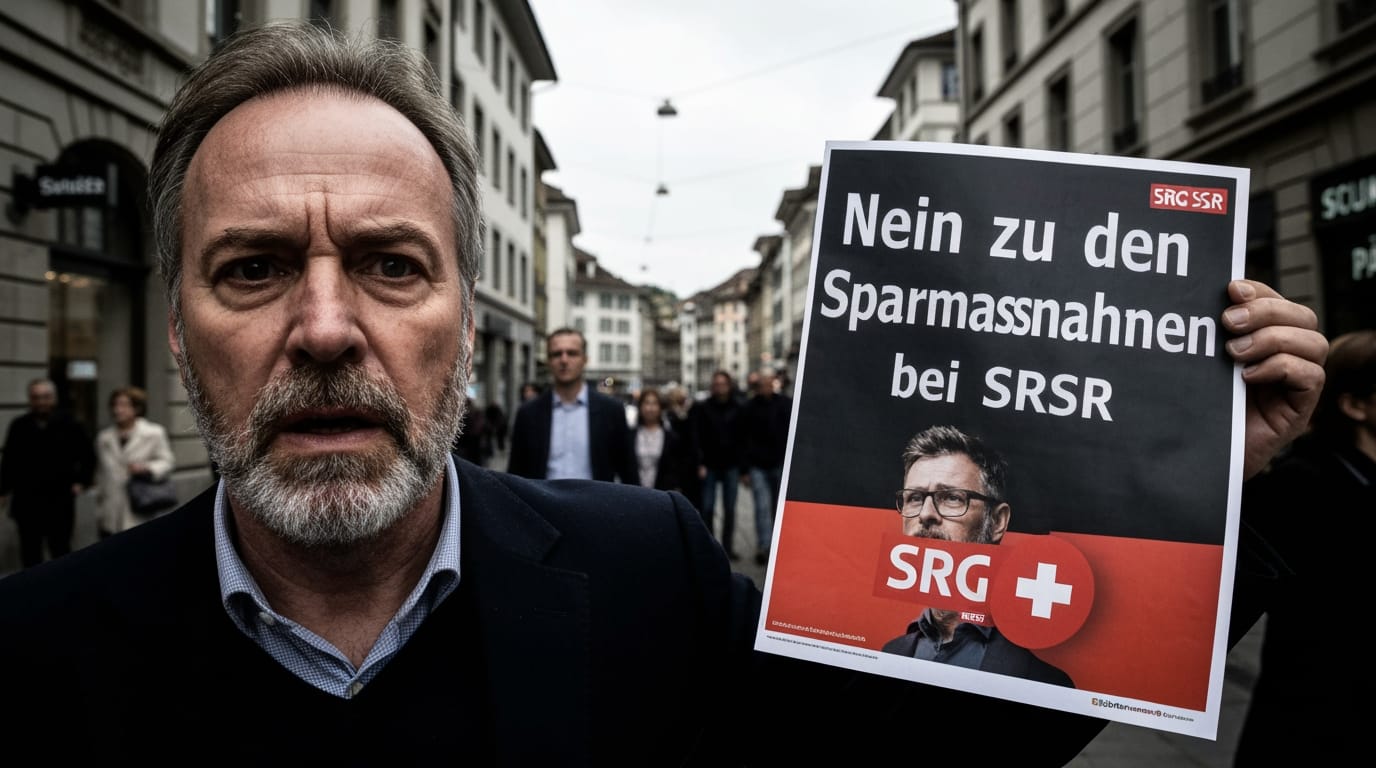
Zurich, Switzerland – Swiss citizens have once again affirmed their commitment to public service broadcasting, overwhelmingly rejecting a popular initiative to significantly cut funding for the national broadcaster, SRG SSR. In a referendum held on March 8, 2026, voters decisively voted against the "200 francs is enough!" initiative, which sought to reduce the mandatory annual radio and television fee and abolish the levy for businesses. This marks the second time in less than a decade that the Swiss electorate has rebuffed attempts to curtail the financial foundation of its public media.
A Firm "No" to Reduced Media Fees
The "200 francs is enough!" initiative proposed a reduction of the annual household fee for the Swiss Broadcasting Corporation (SRG SSR) from its current CHF 335 to CHF 200, alongside a complete exemption for companies from the levy. Proponents of the measure argued that the existing fee was excessively high, ranking among the world's most expensive, and that it imposed an undue burden on households and businesses, particularly in an era of evolving media consumption habits driven by streaming services. They contended that a lower fee would offer financial relief and better reflect contemporary usage patterns.
However, the initiative faced strong opposition from the government, most political parties, and civil society organizations who warned of severe consequences for Switzerland's unique media landscape. Provisional results indicated a clear rejection, with approximately 61.92% of voters opposing the proposal. All cantons across the multilingual nation voted against the initiative, underscoring a broad consensus on the importance of robust public broadcasting. The outcome was welcomed by SRG SSR, which stated the rejection demonstrated a commitment to a diverse, digital, and regionally anchored public service.
Echoes of "No Billag": A Prior Mandate
This recent vote echoes a similar and even more radical referendum held just eight years prior. On March 4, 2018, Swiss voters delivered an emphatic "no" to the "No Billag" initiative, which aimed to completely abolish the mandatory public broadcasting license fee. That earlier initiative, named after the firm Billag that previously collected the fees, would have deprived SRG SSR and 34 private radio and TV channels of their primary funding source.
The "No Billag" campaign had been initiated by a small group, primarily supported by the youth wing of the libertarian Free Democratic Party and later by the nationalist Swiss People's Party (UDC/SVP). They characterized SRG SSR as an overly dominant, outdated relic that distorted the media market and should be entirely self-funded through commercial means. At the time, the annual fee stood at CHF 451, later reduced to CHF 365, making it a significant financial consideration for households.
Despite these arguments, the 2018 "No Billag" initiative was rejected by an overwhelming 71% of voters, with none of Switzerland's 26 cantons supporting it. The high voter turnout, nearly 10% above the average at 54%, highlighted the public's keen interest in the future of its media. Gilles Marchand, director of SRG SSR, interpreted the 2018 rejection as a "strong sign for the public service and for private regional radio and television."
The Core Debate: Value Versus Cost
The recurring debate over public broadcasting fees in Switzerland centers on a fundamental tension between the cost of the service and its perceived value to society. Proponents of reducing or abolishing the fee consistently highlighted the financial burden on taxpayers. They argued that in an age of abundant and often free online content, coupled with rising living costs, a mandatory fee for public broadcasting was an anachronism. Some critics also raised concerns about SRG SSR's size and alleged left-leaning bias in its journalism.
Conversely, defenders of SRG SSR and its funding emphasized the crucial role public media plays in a country as diverse as Switzerland. With four national languages—German, French, Italian, and Romansh—SRG SSR is uniquely tasked with providing programming and news services across all linguistic regions, fostering national cohesion and understanding. Opponents of the fee-cutting initiatives argued that deep slashes would inevitably lead to reduced programming quality, fewer regional offerings, and significant job losses, potentially undermining media diversity and democratic discourse. They also pointed out that without public funding, smaller linguistic regions, such as Italian and Romansh-speaking areas, would struggle to maintain viable media outlets, as advertising revenues would be insufficient.
The debate also touched upon the competitive landscape. While some argued that abolishing the fee would create a more competitive market, others warned that it could weaken Swiss media against large international digital platforms and foreign broadcasters, leading to a net loss of local, high-quality information.
Direct Democracy and Future Adjustments
Switzerland's system of direct democracy allows citizens to propose constitutional changes through popular initiatives, provided they collect enough signatures, leading to national referendums several times a year. This mechanism has brought the question of public broadcasting funding to the forefront twice in recent years, demonstrating the public's direct engagement with policy issues. The consistent rejection of these initiatives underscores a prevailing public sentiment that views public service broadcasting as an essential, rather than expendable, component of Swiss society.
Despite the recent rejection of the "200 francs is enough!" initiative, the discourse surrounding public broadcasting has not been without impact. The government had already decided to implement a reduction of the household fee to CHF 300 by 2029, a move aimed at addressing public concerns about costs and promoting efficiency. In response to ongoing financial pressures and governmental mandates, SRG SSR has committed to significant internal reforms, including an expected savings program of approximately CHF 270 million by 2029. This could lead to a reduction of around 900 full-time positions across all regions, reflecting an ongoing effort to adapt and streamline operations while maintaining its public service mandate.
Conclusion: A Mandate for Adaptation
The repeated and clear rejection of initiatives to slash public broadcasting funding sends an unmistakable message: Swiss voters value the role of SRG SSR in their multilingual, direct democracy. The consistent support highlights a societal understanding of public media's importance in providing unbiased information, promoting cultural exchange, and fostering national identity.
While the votes represent a strong endorsement of the public service model, they also implicitly carry an expectation for SRG SSR to continue adapting to a rapidly changing media landscape. The planned fee reductions and internal efficiency drives indicate a recognition that public broadcasters must evolve, balance their mandate with fiscal responsibility, and remain relevant to all segments of the population in the digital age. The debate, though intense, has ultimately solidified the position of public broadcasting in Switzerland, not as an unquestioned institution, but as a valued public good that must continuously demonstrate its worth.


