Syria Charts New Course: Strategic Neutrality Emerges as Path to Stability in Volatile Region
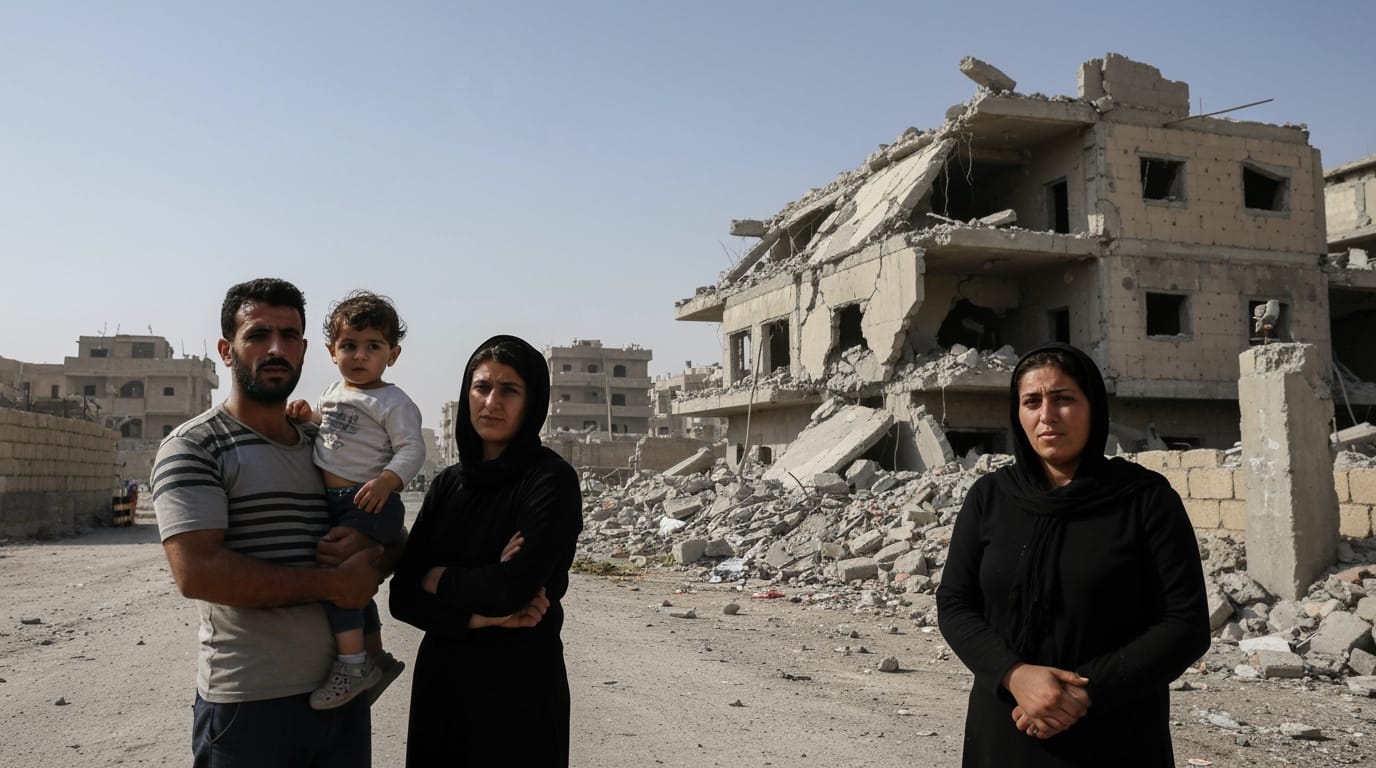
BEIRUT – Amid a Middle East increasingly embroiled in a complex regional conflict involving the United States, Israel, and Iran, Syria has remarkably repositioned itself, adopting a strategy of “active neutrality” that some observers suggest is allowing the war-battered nation to reclaim a degree of stability and international standing. Following the ouster of President Bashar al-Assad in December 2024 and the ascension of a new government led by interim President Ahmad al-Sharaa, Damascus has undertaken a significant foreign policy recalibration, moving away from its long-standing alignment with Tehran and actively seeking to avoid entanglement in the escalating regional tensions. This calculated non-alignment, coupled with efforts to rebuild international relations and foster internal cohesion, presents a new chapter for a country long synonymous with civil strife and proxy warfare.
A Seismic Shift: Post-Assad Syria Distances from Iran
The fall of the Assad regime marked a profound turning point for Syrian foreign policy. For decades, under Bashar al-Assad, Syria was a pivotal component of Iran's regional network, serving as a critical conduit for weapons transfers to proxies like Hezbollah and hosting Iranian forces and operations. This deep alliance made Syria a frequent target of Israeli strikes aimed at curbing Iran's expanding influence. However, the new Sunni Islamist leadership, which took power in late 2024, has drastically altered this trajectory.
Under President al-Sharaa, Iran's presence in Syria has reportedly been significantly reduced, and the new government increasingly views Tehran as a destabilizing force rather than an ally. Reports indicate that the Syrian government is actively working to dismantle Iran's arms smuggling routes and has even banned Iranian citizens from the country, signaling a clear departure from its previous allegiances. This strategic pivot has, at least partially, aligned Syrian interests with those of the United States and Israel, as efforts to weaken Iran's regional footprint coincide with Damascus's own objectives to reduce foreign entanglements.
Navigating the Regional Tempest with Calculated Non-Alignment
The current regional landscape is dominated by an intensifying confrontation between the United States, Israel, and Iran, sparked by US-Israeli military strikes on Iran in February 2026 and subsequent Iranian retaliation. This broader "Iran war" has seen missiles traverse Syrian airspace, and neighboring countries experience renewed conflict. Yet, in a striking departure from its past, Syria has managed to remain largely on the sidelines.
Syrian President al-Sharaa has explicitly declared his country's neutrality, emphasizing a commitment to avoid direct military involvement unless faced with aggression. Obayda Ghadban, an official with the Syrian Foreign Ministry, articulated this stance, stating that Syria has no interest in allying with either Iran or Israel, describing both as "strategic enemies" whose actions have historically aimed at weakening Syria. This strategic silence and emphasis on national sovereignty represent a deliberate effort by Damascus to insulate itself from broader hostilities, prioritizing the country's recovery after more than a decade of civil war.
A Corridor for Commerce and Diplomacy
Beyond simply avoiding conflict, Syria's new government is actively leveraging its neutral stance and strategic geographic location to foster economic rehabilitation and diplomatic reintegration. With the closure of the Strait of Hormuz amidst the regional conflict, Syria has presented itself as a viable alternative transport route for oil exports, offering its Baniyas port as a gateway to European markets. This initiative positions Syria as a crucial logistical hub, attracting attention and potential investment from Arab and Western nations seeking secure trade routes.
Diplomatically, the al-Sharaa government has embarked on an intensive campaign to reintroduce Syria as a constructive regional and international actor. This includes restoring diplomatic ties with Arab and Western countries that had shunned Syria under the previous regime, and securing partial sanctions relief. President al-Sharaa's engagement with regional and international leaders, including visits to major European capitals, signals a broader effort to rebuild legitimacy and attract political and financial support for reconstruction. Damascus is also attempting to balance its ties with Russia, which supported the Assad regime, with renewed overtures to Western powers, aiming to avoid over-reliance on any single external actor.
Internal Cohesion and Future Prospects
While its external maneuvering has garnered attention, Syria's new leadership is also focused on internal stabilization. Efforts to integrate the Kurdish-led Syrian Democratic Forces (SDF) into state structures are underway, contributing to a significant decline in violence and a reduction in ISIS attacks. The government is also working to suppress internal threats, including thwarting plots by Hezbollah-affiliated cells and curbing illicit activities. These domestic achievements are crucial for fostering a sense of national unity and providing a stable foundation for the country's recovery.
However, challenges remain significant. Despite political gains, Syria faces considerable economic hardship, with postwar reconstruction efforts potentially hampered by a regional shift in investment priorities towards defense. Domestic issues, such as resolving disputes with various factions and ensuring true political pluralism, also pose hurdles. Furthermore, Israel's continued military activities in southern Syria, while currently not drawing direct Syrian retaliation, represent an ongoing risk to the country's sovereignty and stability.
In conclusion, Syria, under its new leadership, has transformed its geopolitical stance from a battleground for proxy wars to a proponent of strategic neutrality. By actively distancing itself from the Iranian axis, engaging in robust diplomatic outreach, and positioning itself as a vital economic corridor, Damascus has achieved a remarkable degree of stability and international acceptance in a short period. This calculated approach, prioritizing national interest and internal reconstruction over external entanglements, allows Syria to navigate the turbulent regional conflicts and perhaps, against all odds, emerge as a more resilient and sovereign nation.


