Syrian Army Extends Control East of Aleppo as Kurdish Forces Withdraw
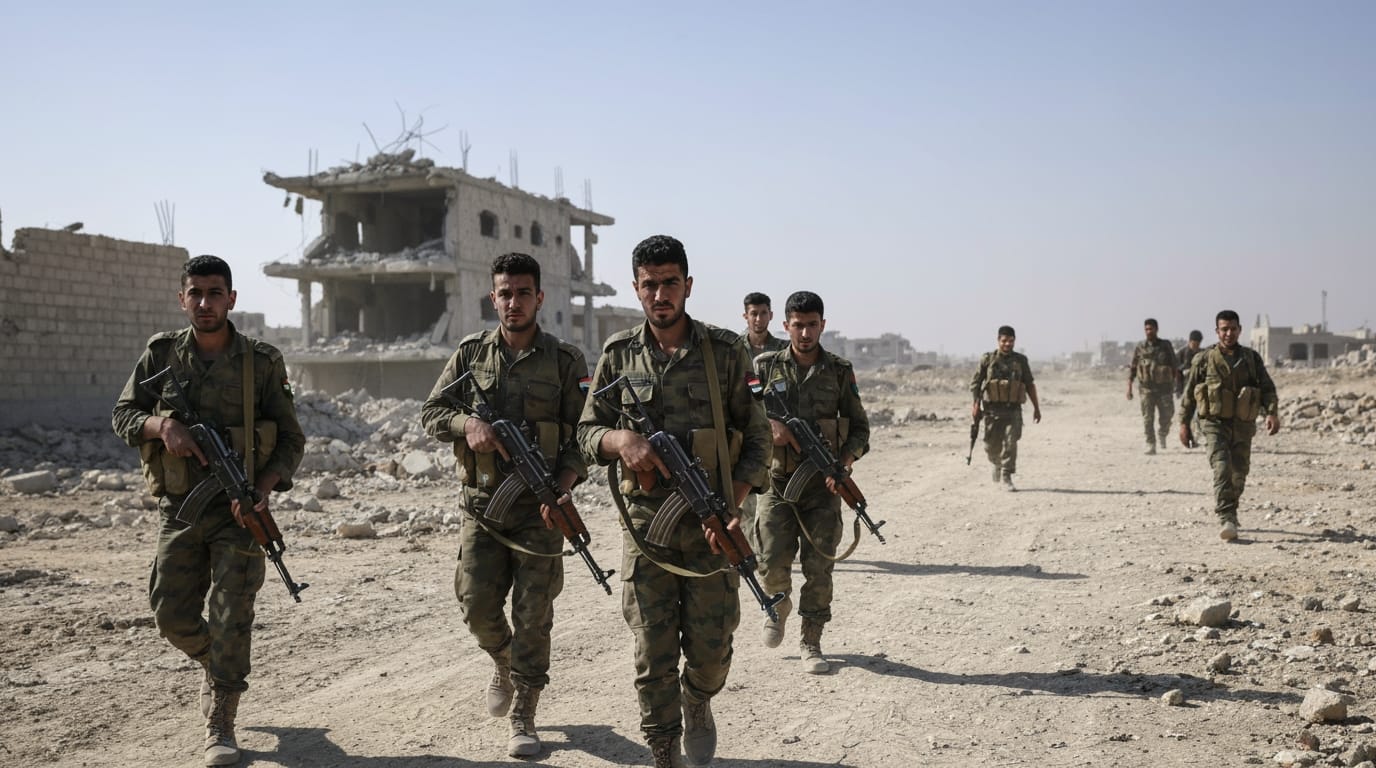
Aleppo Province, Syria – The Syrian army has recently advanced into strategic areas east of Aleppo, including the town of Deir Hafer, following an agreement that saw Kurdish-led forces withdraw from the region. This development, occurring on Saturday, January 17, 2026, marks another significant shift in territorial control in Syria's protracted conflict, recalibrating the balance of power in a crucial sector of the country and highlighting the complex and fluid alliances that continue to define the Syrian landscape.
Recalibrating Control East of Aleppo
The Syrian Arab Army (SAA) announced its entry into areas approximately 50 kilometers (30 miles) east of Aleppo city, with initial deployments reported in the town of Deir Hafer. This move came swiftly after Kurdish-led forces, specifically elements of the Syrian Democratic Forces (SDF), confirmed their agreement to pull back from the contact lines in the western Euphrates area on Friday, January 16, 2026. The withdrawal agreement, reached after a period of recent clashes, stipulated that the Kurdish units would relocate their forces to regions east of the Euphrates River. SDF Commander Mazloum Abdi reportedly announced the impending pull-back, signaling a strategic decision by the Kurdish leadership amidst evolving security dynamics.
The Syrian Ministry of Defense publicly supported the SDF's decision to withdraw, indicating an understanding between the two parties, likely mediated by external actors. The United States, a key international player in the Syrian conflict, reportedly encouraged both sides to avoid confrontation and engage in negotiations, reflecting ongoing efforts to stabilize the volatile region. Prior to the army's entry, the Syrian military had reportedly conducted shelling operations targeting militia bases affiliated with the Kurdistan Workers' Party (PKK) and former regime elements allied with the SDF in Deir Hafer, signaling a preparatory phase for the advance. Furthermore, the Syrian army declared areas west of the Euphrates, particularly Deir Hafir and Maskanah, as designated military zones, urging civilians to avoid them until they were secured and cleared of war remnants.
Echoes of Past Strategic Shifts: The 2019 Precedent
This latest territorial adjustment echoes similar, broader realignments that occurred in late 2019, particularly in the wake of Turkey's "Operation Peace Spring." That offensive, launched in October 2019 by the Turkish Armed Forces and allied Syrian National Army against the SDF, aimed to clear border areas of Kurdish-led forces, which Turkey considers a security threat due to their alleged links to the PKK. The incursion triggered a significant crisis, pushing the SDF, previously a key U.S. partner in the fight against ISIS, to seek an urgent agreement with the Syrian government and its ally, Russia.
Under the terms of these Moscow-brokered deals, Syrian government forces were deployed into numerous towns and strategic areas across northeastern Syria, including Manbij, Kobani (Ain al-Arab), and parts of Raqqa and Hasakah governorates. The agreements effectively saw the Kurdish-led administration cede control of vast swathes of territory to Damascus in exchange for protection against the Turkish military advance. This pragmatic decision by Kurdish forces stemmed from a difficult choice between making "painful compromises" with the Syrian government and Russia, or facing potential "genocide" at the hands of the Turkish operation, as articulated by SDF commander Mazloum Abdi at the time. Russia played a pivotal role as a mediator, facilitating these agreements and expanding its military presence across northeastern Syria, filling a vacuum created by the partial withdrawal of U.S. forces. This historical context underscores a recurring pattern where Kurdish-led forces, under existential threat, have turned to Damascus to preserve some level of stability and prevent further territorial losses.
Geopolitical Chessboard: Implications and Actors
The ongoing shifts in control have profound implications for all parties involved and the broader trajectory of the Syrian conflict. For the Syrian government, regaining control over areas east of Aleppo, and indeed other regions previously held by the SDF, represents a significant step toward asserting its sovereignty and territorial integrity over the entire country. These deployments allow Damascus to solidify its presence in strategically important corridors and potentially reconnect various parts of the country.
For the Kurdish-led forces, these agreements represent a continuous series of difficult strategic compromises. While these withdrawals prevent further Turkish incursions and potential escalations, they also diminish the vision of a self-administered region, forcing a recalibration of their long-term political aspirations within a Syrian state framework. The balancing act involves navigating pressures from Turkey, which continues to view the YPG (the backbone of the SDF) as a terrorist organization and seeks to create a "safe zone" free of their presence along its border. The 2019 Sochi agreement between Russia and Turkey, for instance, established a framework for joint patrols and a demilitarized zone, further shaping the operational environment for all actors.
Russia's influence as a primary power broker in Syria continues to be solidified through its role in mediating such agreements. By facilitating rapprochement between the Syrian government and Kurdish forces, Moscow not only helps de-escalate immediate crises but also reinforces its strategic position and diplomatic leverage over the conflict's outcome. The United States, despite its encouragement for negotiations, faces a complex challenge. Its partial withdrawal in 2019 was seen by many as abandoning Kurdish allies, thereby reducing its leverage and inadvertently paving the way for increased Russian and Syrian government influence. The recent diplomatic encouragement to avoid confrontation highlights a continued, albeit cautious, engagement in the region.
The Human Element and Future Uncertainty
Beneath the geopolitical maneuvering, the lives of civilians in these areas remain profoundly impacted by the constant shifts in control and the enduring conflict. The initial Turkish offensive in 2019 led to significant displacement, with an estimated 180,000 people leaving their homes in the first three weeks alone. While the recent withdrawal from Deir Hafer may avert direct conflict, it introduces new uncertainties for residents accustomed to a different administrative reality. Concerns about the future of local governance, security under Syrian government rule, and the potential for a rollback of any local autonomies remain prominent. The Syrian army's warning to civilians to avoid recently designated military zones until cleared of mines and war remnants underscores the physical dangers that persist even after immediate clashes subside.
The agreements, though crucial for de-escalation, are often fragile and do not fully resolve underlying grievances or the complex web of loyalties. The Syrian conflict continues to be characterized by a mosaic of competing interests and foreign interventions. While the Syrian army's reassertion of control in areas east of Aleppo represents a consolidation of central authority, it also necessitates careful management of diverse local populations and their expectations. The long-term stability of these regions will depend on inclusive governance, effective post-conflict reconstruction, and addressing the deep-seated divisions that have fueled the conflict for over a decade.
Conclusion
The Syrian army's latest advance into areas east of Aleppo, facilitated by a Kurdish withdrawal, represents another pivotal moment in the ongoing Syrian conflict. This event, much like similar shifts in 2019, underscores the pragmatic yet often painful choices faced by various Syrian factions as they navigate the complex interplay of regional powers and internal dynamics. While such movements reshape the map of control and contribute to the Syrian government's ambition of regaining full sovereignty, they also highlight the fragility of peace and the persistent challenges of achieving lasting stability. The intricate dance of alliances, withdrawals, and deployments continues to redefine Syria's future, leaving its civilian population to grapple with the enduring uncertainties of war and its aftermath.


