Syrian Court Charges Assad Cousin Atef Najib With War Crimes, Marking Landmark Accountability Effort
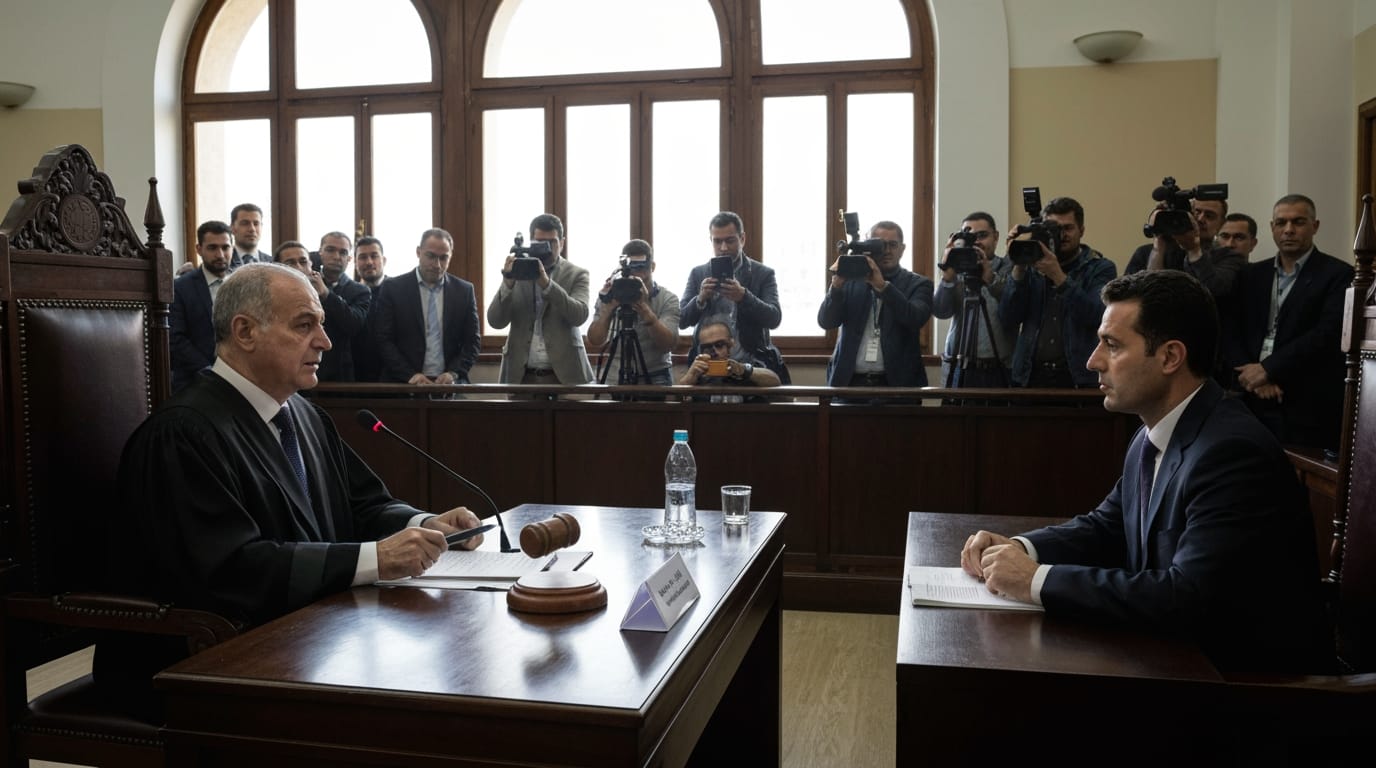
DAMASCUS, Syria – In a development signaling a potentially new era of accountability for atrocities committed during Syria's protracted conflict, Atef Najib, a first cousin of former Syrian President Bashar al-Assad and a central figure in the brutal crackdown that ignited the 2011 uprising, is currently facing war crimes charges in a Damascus court. The trial represents the first public prosecution within Syria of a high-ranking official from the ousted Assad regime, focusing on crimes that include murder, torture, and kidnapping, with a particular emphasis on the infamous torture of schoolchildren in Daraa that served as a flashpoint for the civil war.
The Genesis of a Revolution: Daraa's Defiance
Atef Najib, who served as the head of the Political Security Branch in Daraa Governorate until April 2011, became a notorious figure due to his alleged role in precipitating the Syrian revolution. In February and March 2011, in the southern city of Daraa, a group of between 12 and 18 schoolchildren were arrested for spray-painting anti-government slogans on a school wall, a phrase echoing the broader Arab Spring protests: "The people want the fall of the regime." Under Najib's command, these teenagers were subjected to brutal torture, reportedly including electric shocks, severe beatings, and having their fingernails pulled out.
When families and tribal elders sought the release of the children, Najib reportedly responded with defiance, dismissing their pleas and suggesting they "forget your children" and "make more." This callous response, coupled with the torture of minors, ignited widespread outrage in Daraa. The incident transformed initial calls for reform into mass protests, fundamentally altering the trajectory of the country and marking the beginning of a prolonged and devastating civil war.
Escalation and a Brutal Crackdown
The public's anger over the torture of the Daraa schoolchildren quickly led to demonstrations in the city, with protestors demanding political freedoms and an end to corruption. Security forces, reportedly under Najib's direction, met these peaceful gatherings with live ammunition, killing multiple demonstrators. Further allegations against Najib's forces include preventing ambulances from reaching the wounded, exacerbating casualties.
As protests intensified, the Syrian Army, including the 4th Armoured Division led by Bashar al-Assad's brother Maher al-Assad, initiated a ten-day siege of Daraa on April 25, 2011. This military operation involved tanks and up to 6,000 troops, leading to widespread arrests and hundreds of deaths, with many victims reportedly being children. The siege and the violent suppression of dissent in Daraa were critical in escalating the uprising into an armed rebellion. Despite his central role in the crackdown, Najib was not immediately removed but instead transferred to Idlib as head of political security, while a travel ban was imposed on him in June 2011. The United States also imposed sanctions on Najib in April 2011, banning any dealings with him due to his alleged human rights abuses.
A New Chapter for Accountability
After years largely out of public view, Atef Najib was arrested on January 31, 2025, in Latakia by Syrian security forces following the fall of the Assad regime. This arrest came as part of a broader effort by the new Syrian transitional government, led by interim President Ahmed al-Sharaa, to prosecute former regime officials implicated in war crimes.
His trial, which began with a preliminary hearing on April 26, 2026, before the Fourth Criminal Court at the Palace of Justice in Damascus, marks a significant moment for justice in Syria. Najib appeared in the dock in shackles, facing multiple charges related to his actions in Daraa. Prosecutor Omar Al Radii reportedly stated that Daraa was "the cradle of the revolution, and the path to justice must begin from there," emphasizing that the events there "marked the beginning of a long history of violations against civilians." While Najib is the first high-ranking official to be tried in person, Bashar al-Assad and his brother Maher al-Assad have also been charged in absentia.
Broader Pursuit of Justice
The trial of Atef Najib within Syria occurs amid a global push for accountability for crimes committed during the Syrian civil war. International and national courts outside Syria, particularly in European countries like Germany and France, have been actively prosecuting Syrian war criminals under the principle of universal jurisdiction. These efforts, often aided by evidence collected by the UN's International, Impartial and Independent Mechanism (IIIM), have led to convictions for crimes against humanity and war crimes, even for high-ranking officials tried in absentia.
Notable cases include the conviction of three senior Syrian regime officials in France for the disappearance and murder of French-Syrian citizens, and trials in Germany against former intelligence officers. These international efforts highlight the widespread recognition of the need for justice for victims of the Syrian conflict, regardless of where the perpetrators are apprehended.
A Long Road Ahead
The trial of Atef Najib in Damascus symbolizes a crucial step toward addressing the profound human rights abuses that fueled Syria's devastating civil war. For many, it represents the potential for long-awaited justice for the countless victims who suffered under the former regime. While the Syrian justice system itself is undergoing significant reforms after decades of repression, the commitment to prosecute figures like Najib signifies a new resolve to hold perpetrators accountable. The path to comprehensive transitional justice in Syria remains complex and challenging, yet the ongoing proceedings against Atef Najib offer a glimmer of hope that impunity will not prevail and that justice, however delayed, can eventually be served.


