Syrian Doctor Sentenced to Life in Germany for War Crimes
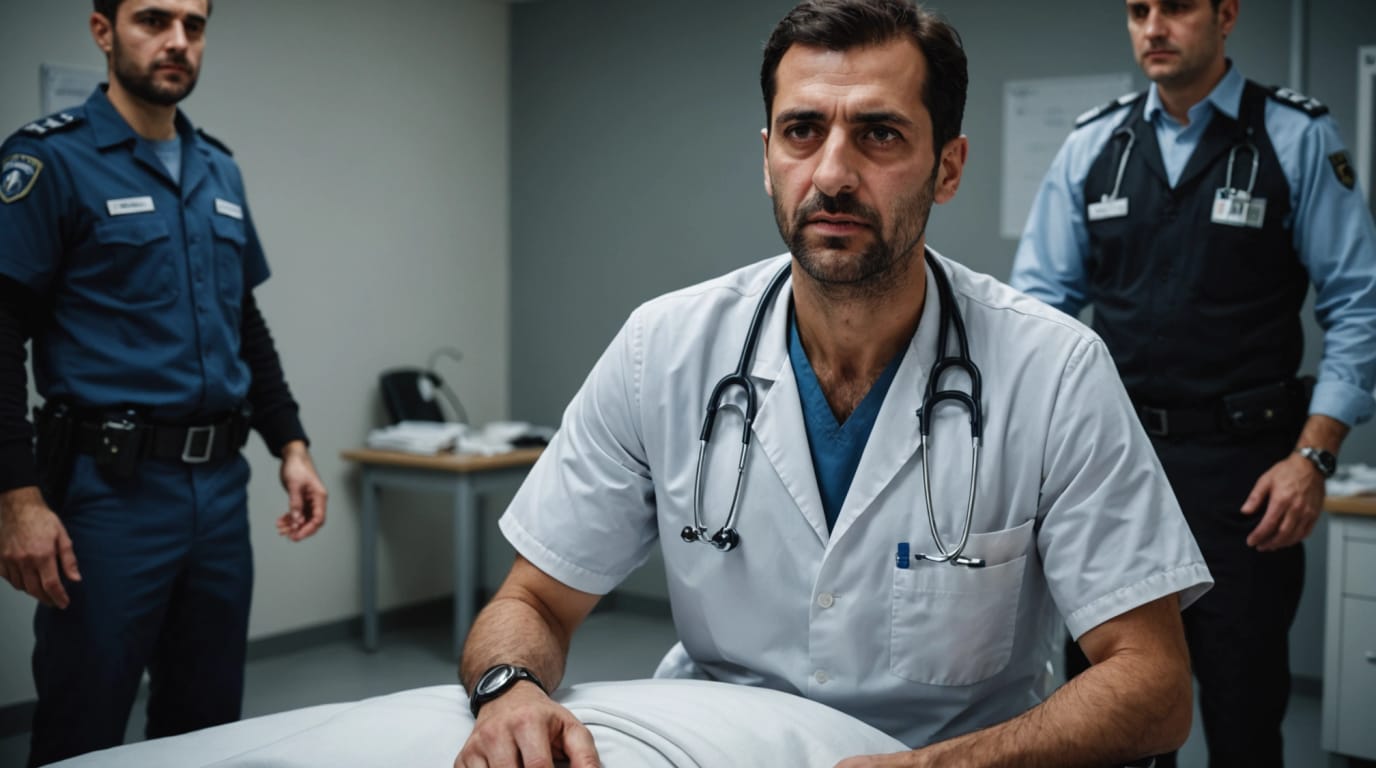
A German court has sentenced a Syrian doctor to life in prison for committing war crimes and crimes against humanity in his home country during the early years of the Syrian civil war. The landmark verdict, delivered Monday in Frankfurt, marks the culmination of a years-long legal battle and underscores Germany's commitment to prosecuting atrocities committed abroad under the principle of universal jurisdiction.
Gruesome Acts of Torture Detailed
Alaa Mousa, 40, was found guilty of torturing and killing detainees at military hospitals in Homs and Damascus between 2011 and 2012. The Frankfurt Higher Regional Court determined that Mousa's actions were part of the Assad regime's systematic campaign of repression against opposition figures. The court heard harrowing testimonies from victims who described being subjected to beatings, electric shocks, and having their wounds set on fire. In one particularly gruesome instance, Mousa was found to have poured flammable liquid on a prisoner's wounds before igniting them and kicking the man in the face, shattering his teeth.
Presiding Judge Christoph Koller emphasized the sadistic nature of Mousa's crimes, stating that the doctor "enjoyed harming people that seemed inferior and low-value to him." The judge also praised the courage of the witnesses who came forward to share their stories, noting that their willingness to testify was crucial to clarifying the facts of the case.
Universal Jurisdiction and the Pursuit of Justice
The trial against Mousa is one of the most significant cases brought under Germany's principle of universal jurisdiction. This legal principle allows German courts to prosecute individuals for serious crimes committed abroad, regardless of their nationality or the location of the crimes. Germany has become a leading country in applying universal jurisdiction to prosecute war crimes and crimes against humanity committed in Syria, as well as other countries.
Mousa's case highlights the importance of international cooperation in the pursuit of justice for victims of atrocities. He had been living in Germany for ten years, working as an orthopedic surgeon, before being arrested in 2020 after being recognized by his victims in a TV documentary about Homs.
The Assad Regime's Brutal Crackdown
The court's verdict also served as a condemnation of the Assad regime's brutal crackdown on dissent during the Syrian civil war. Judge Koller stated that the verdict underscored the "brutality of Assad's dictatorial, unjust regime." Prosecutors argued that the abuse inflicted on detainees at military hospitals was not isolated incidents but rather part of a systematic policy of torture and repression.
Witnesses testified that political prisoners were regularly brought to military hospitals under the guise of medical treatment, but instead were subjected to horrific abuse. These facilities, including the Mezzeh Military Hospital No. 601, were described as "human slaughterhouses" where detainees were tortured and killed with impunity.
Implications for Future Cases
The life sentence handed down to Mousa sends a strong message that perpetrators of war crimes and crimes against humanity will be held accountable, regardless of where they seek refuge. The verdict is likely to encourage other victims of atrocities to come forward and seek justice through the courts of countries that recognize universal jurisdiction.
The trial also sets a precedent for future cases involving crimes committed during the Syrian civil war. Germany has already prosecuted several other individuals linked to the Assad regime, and further investigations are underway in Germany and other European countries. These efforts aim to bring to justice those responsible for the widespread human rights abuses that have occurred in Syria over the past decade.
A Glimmer of Hope for Survivors
For the survivors of torture and other atrocities in Syria, the verdict against Mousa offers a glimmer of hope that justice is possible. One joint plaintiff in the case, represented by the European Center for Constitutional and Human Rights (ECCHR), stated that the verdict "brings hope that justice is possible, not only for me, but for all survivors."
While the verdict cannot undo the suffering that Mousa inflicted on his victims, it provides a measure of accountability and sends a message that the world will not forget the crimes committed in Syria. The pursuit of justice for these crimes remains a long and difficult process, but the Mousa case demonstrates that progress is possible through the determination of victims, investigators, and courts committed to upholding international law.
The Frankfurt Higher Regional Court also established the particular gravity of Mousa's guilt, which in practice virtually rules out early release after 15 years. He was also placed in preventative detention. Alaa M. described himself as not guilty during the trial, alleging that he was the victim of a conspiracy. The verdict is not yet final.


