Syria's New Cabinet: A Step Towards Inclusivity or More of the Same?
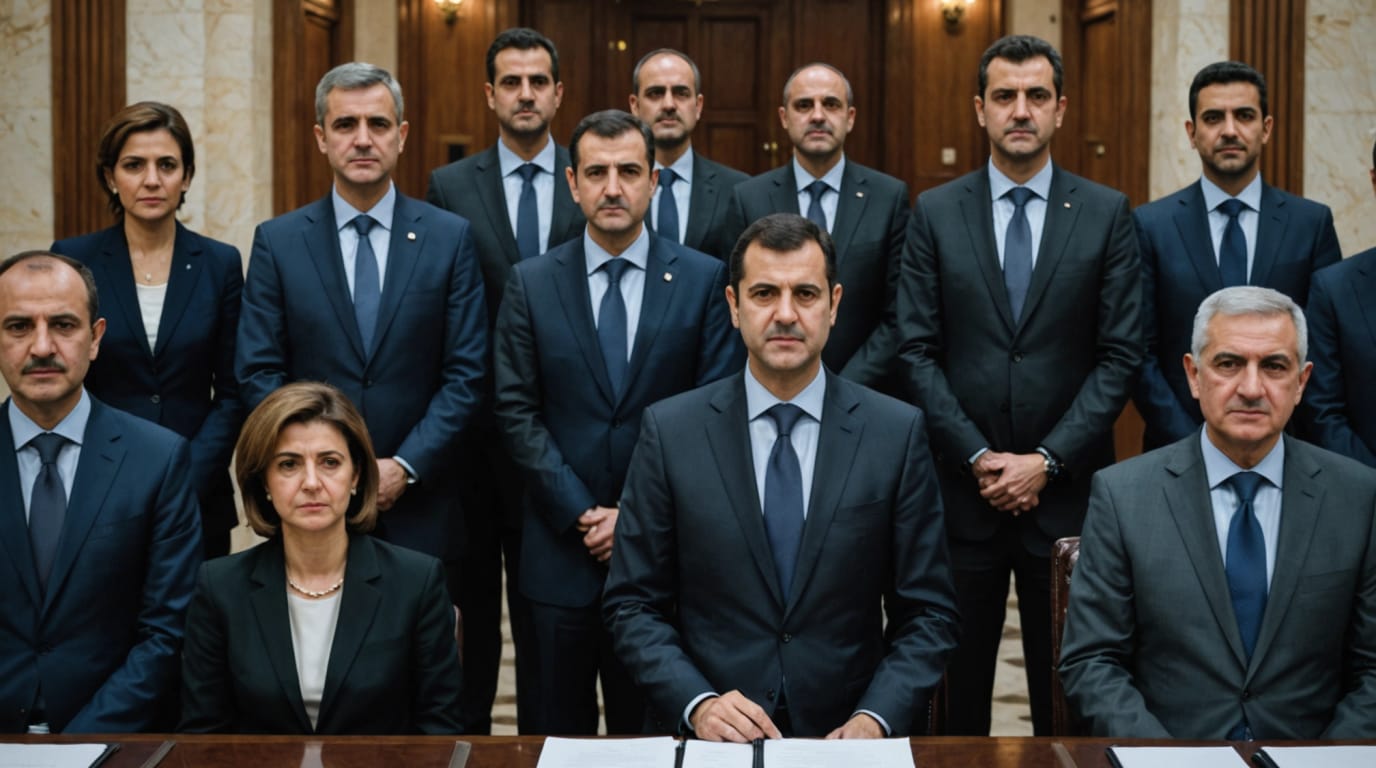
Syria's interim President Ahmed al-Sharaa unveiled a new 23-member cabinet on Saturday, March 29, 2025, a move touted as a significant step towards inclusivity and rebuilding the war-torn nation. The cabinet, composed of technocrats and members from diverse ethnic and religious backgrounds, aims to steer the country through a five-year transitional period following the ouster of Bashar al-Assad in December 2024. However, questions remain about whether this new government is truly representative and capable of addressing the deep-seated challenges facing Syria.
A Diverse Cabinet on Paper
The new cabinet includes members from various minority groups, a departure from previous administrations criticized for being dominated by close allies of al-Sharaa. Yarub Badr, an Alawite, was appointed as transport minister, while Amgad Badr, a Druze, will lead the agriculture ministry. Hind Kabawat, a Christian woman and long-time opponent of Assad, was named minister of social affairs and labor. Mohammad Terko, reportedly a Kurd, was appointed as minister of education. This representation of different communities is seen as a crucial test of whether the new leadership can address long-standing concerns about the lack of representation in post-Assad Syria.
Al-Sharaa himself emphasized the importance of inclusivity in a speech marking the formation of the government. "The formation of a new government today is a declaration of our joint will to build a new state," he said, signaling a commitment to a more representative and unified Syria. The government will not have a prime minister, with al-Sharaa expected to lead the executive branch directly.
Concerns About Real Power
Despite the apparent diversity, concerns linger about the distribution of power within the new cabinet. Key ministries, including foreign affairs, defense, and interior, remain in the hands of al-Sharaa's close allies from Hay'at Tahrir al-Sham (HTS), the group that led the rebel offensive against Assad. This has led to criticism that the new government is merely a facade of inclusivity, with real power still concentrated within a specific faction.
Analysts have pointed out that while the inclusion of technocrats and minority representatives is a positive step, the retention of key portfolios by al-Sharaa's loyalists raises doubts about the extent to which the new government can bring about genuine change. Some observers describe the new cabinet as a hybrid of technocrats and loyalists, questioning its ability to deliver on its promises without broader political reforms.
Kurdish Representation and the SDF
One of the most significant criticisms of the new cabinet is the lack of Kurdish representation. Despite a reported agreement between al-Sharaa and the Syrian Democratic Forces (SDF), a Kurdish-led militia controlling northeastern Syria, no Kurdish ministers were selected. This omission has drawn condemnation from Kurdish groups, who argue that the new government does not reflect Syria's diverse population and undermines efforts to integrate the SDF into the state structure.
The Syrian Democratic Council (MSD) issued a statement criticizing the new cabinet as one-sided and exclusionary, emphasizing that true solutions require inclusive and equal representation. The absence of Kurdish voices in the cabinet has tempered expectations about the potential for a genuine political transition in Syria.
International Reactions and Challenges Ahead
The formation of the new Syrian government has been met with mixed reactions from the international community. Western and Arab nations have been pressuring Syria to form a government that reflects its ethnic and religious diversity, and the new cabinet is seen as a response to these demands. However, many countries remain cautious, tying sanctions relief and financial support to concrete steps towards political reform and inclusivity.
The United Nations has urged Syria to form a government reflecting its diverse population, while the United States has linked sanctions relief to the destruction of chemical weapons and action against terrorism. The European Union has eased some restrictions on the energy and transport sectors, but further support will likely depend on the new government's ability to deliver on security, stability, and the return of refugees.
The new Syrian government faces enormous challenges, including rebuilding a shattered economy, addressing widespread humanitarian needs, and unifying a fragmented country. The ongoing violence, the presence of extremist groups, and the distrust among different segments of Syrian society pose significant obstacles to the transitional process.
A Long Road to Stability
Whether Syria's new technocratic cabinet is as inclusive as it could be remains a subject of debate. While the inclusion of minority representatives is a positive step, the concentration of power in the hands of al-Sharaa's allies and the lack of Kurdish representation raise concerns about the government's ability to bring about genuine change. The new cabinet faces a long and difficult road ahead as it seeks to rebuild Syria and create a more inclusive and stable future for all its citizens. The success of this transitional government will depend on its ability to address the deep-seated challenges facing the country and to build trust among all segments of Syrian society.


