Taiwan Opposition Leader Embarks on High-Stakes "Peace Journey" to China Amid Escalating Tensions
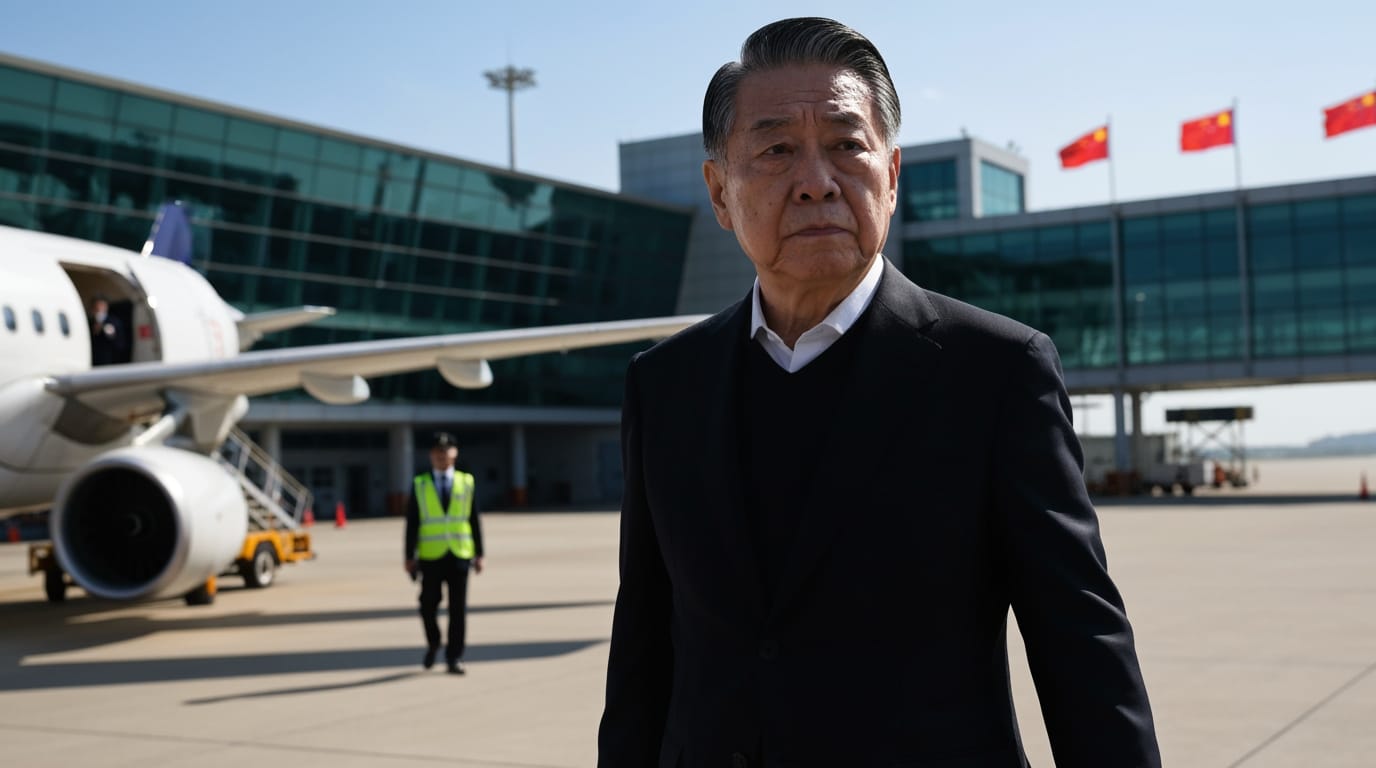
Taipei, Taiwan – Cheng Li-wun, chairwoman of Taiwan's main opposition Kuomintang (KMT) party, departed Tuesday for a six-day visit to mainland China, characterizing the rare trip as a "journey for peace" aimed at de-escalating cross-strait tensions. Her highly anticipated visit, the first by a sitting KMT leader in a decade, comes amidst heightened military posturing by Beijing, an ongoing debate over Taiwan's defense spending, and just weeks before a critical summit between Chinese President Xi Jinping and U.S. President Donald Trump. Cheng's mission seeks to demonstrate Taiwan's desire for peaceful dialogue, but it navigates a complex political landscape fraught with skepticism at home and strategic calculations from both Beijing and Washington.
A "Peace Journey" Amidst Geopolitical Volatility
Cheng Li-wun's visit, which includes stops in Shanghai, Nanjing, and Beijing, where she hopes to meet with President Xi Jinping, is framed by the KMT as a crucial effort to foster stability across the Taiwan Strait. Before her departure from Taipei Songshan Airport, Cheng emphasized that Taiwan must "spare no effort to prevent war" and that her trip is intended to show the world that the pursuit of peace is not a unilateral aspiration from Taiwan. She expressed a desire to see "sincerity and determination" from the Chinese Communist Party (CCP) in resolving differences through peaceful dialogue and exchange. The KMT, which traditionally advocates for closer ties with Beijing, views this visit as an "unavoidable historical mission" to lay a foundation for peaceful and stable cross-strait relations, contributing to regional and global peace. This push for dialogue notably occurs as Taiwan's opposition-controlled parliament has stalled a government proposal for a significant increase in defense spending, a plan strongly backed by the United States.
The Troubled Strait: A Decade of Deterioration
The backdrop for Cheng's peace mission is a cross-strait relationship described by many as one of the world's most dangerous geopolitical flashpoints. Since the last KMT chairperson visited China a decade ago, relations have steadily worsened. Beijing views democratic, self-ruled Taiwan as a breakaway province to be reunified with the mainland, by force if necessary, and refuses to engage in official dialogue with the current Taiwanese government led by President Lai Ching-te of the Democratic Progressive Party (DPP), whom it labels a separatist. This refusal has led to an intensification of Chinese military pressure, characterized by near-daily deployments of warplanes and naval vessels around Taiwan and large-scale military exercises. In December, a massive package of U.S. arms sales to Taiwan, valued at over $10 billion, was announced, further angering Beijing and leading to subsequent military drills. Taiwan's Mainland Affairs Council, its top China policy body, recently noted that nearly 80% of Taiwanese do not agree with Beijing's claim that Taiwan will eventually be part of China, and over 90% oppose the "one country, two systems" framework and military/diplomatic suppression. However, a majority also favors meaningful dialogue if conducted with equality and dignity.
Divergent Views and Domestic Divisions
Cheng's "peace journey" has elicited a spectrum of reactions both within Taiwan and from international observers. The ruling DPP remains deeply skeptical, warning that Beijing will likely exploit the visit to increase its influence over the island and obstruct further U.S. arms sales. The DPP has openly accused the KMT of potentially aiding "Chinese communists' scheme to weaken Taiwan's defense capabilities," especially given the stalled defense budget. Premier Cho Jung-tai, while wishing the KMT well in its party activities, emphasized that any public contact with the CCP by politically influential figures should face intense scrutiny.
Conversely, Beijing sees the visit as an opportunity. Chinese President Xi Jinping had notably extended congratulations to Cheng upon her election as KMT leader in October, suggesting a preference for engaging with KMT figures perceived as more amenable to dialogue. Experts suggest Beijing aims to reinforce Cheng's standing within the KMT and demonstrate that it is "not losing Taiwan altogether to the United States."
Among the Taiwanese public, opinions are mixed. While some view the trip as a pragmatic step toward reducing tensions, others remain wary, considering negotiations with the CCP as "suicidal." Inside the KMT, Cheng's leadership has also faced criticism, with some accusing her of being "too pro-China" and risking damage to the party's image by appearing overly close to Beijing. Concerns exist that such outreach could deepen public distrust in the KMT and hinder its electoral prospects.
The Geopolitical Chessboard and Broader Implications
The timing of Cheng Li-wun's visit is particularly strategic, preceding a planned meeting in May between President Xi Jinping and U.S. President Donald Trump, where Taiwan is expected to be a significant topic. Beijing's engagement with Cheng could be interpreted as an attempt to leverage internal divisions within Taiwan and influence the broader geopolitical narrative ahead of the Xi-Trump talks. The stalled NT$1.25 trillion (US$39 billion) defense spending plan in Taiwan's parliament is a critical point of contention, with Cheng having previously "railed against" the government's comprehensive proposal, instead backing a KMT plan for NT$380 billion for U.S. weapons with options for more acquisitions. The U.S., as Taiwan's primary security partner, is closely monitoring these developments, intensifying its pressure on Taiwanese lawmakers to approve defense purchases to bolster deterrence against a potential Chinese attack.
Cheng, for her part, argues that Taiwan "should not have to choose between China and the U.S.," advocating for Taiwan to act as a "peacemaker." She plans to visit the U.S. after her China trip to explain that "cross-strait peace is feasible" and that dialogue serves the interests of the international community. However, the challenge lies in balancing this pursuit of dialogue with maintaining a credible defense, a tension that defines Taiwan's precarious position in the Indo-Pacific.
Conclusion
Cheng Li-wun's "peace journey" to China represents a delicate diplomatic maneuver amidst a period of profound uncertainty for Taiwan and the broader region. While her stated intention is to de-escalate tensions and pave the way for peaceful dialogue, the visit is laden with geopolitical complexities and domestic political risks. The success of her mission will be measured not only by any potential agreements reached but also by how it impacts the delicate balance of cross-strait relations, Taiwan's internal political dynamics, and its critical relationship with the United States. As the world watches, the outcome of this rare engagement will undoubtedly shape the narrative of peace or peril in one of the globe's most contested waterways.


