Thai Military Launches Airstrikes Amid Renewed Border Clashes with Cambodia
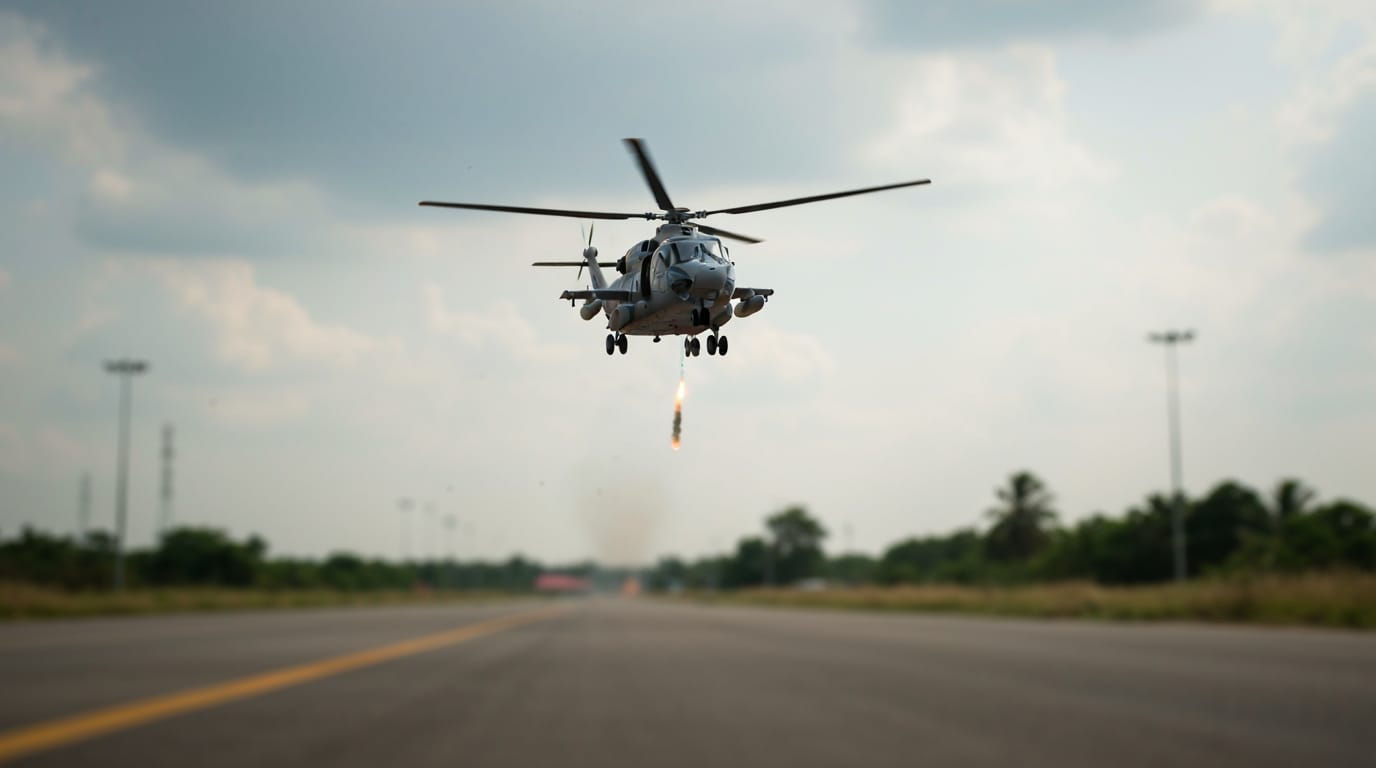
BANGKOK/PHNOM PENH – The Thai military initiated airstrikes along its contested border with Cambodia on Monday, December 8, 2025, following fresh clashes that resulted in at least one Thai soldier killed and several wounded. This escalation marks a significant deterioration of security in the long-disputed frontier region, coming less than two months after a U.S.-brokered ceasefire agreement aimed at ending earlier hostilities failed to hold. Both nations have accused each other of instigating the latest violence, rekindling fears of a wider conflict and prompting the evacuation of thousands of civilians.
Border Explodes Anew as Thai Army Responds to Fatal Attack
The latest surge in tensions began early Monday morning when Cambodian troops reportedly fired upon Thai forces in Thailand's Ubon Ratchathani province. Thai army spokesman Winthai Suvaree confirmed that Thai soldiers were "attacked with supporting fire weapons," leading to one fatality and four injuries among Thai personnel. In response, Thailand launched a series of airstrikes, utilizing aircraft to target "military targets in several areas" to suppress what it described as attacks by Cambodian forces. Cambodian Defense Ministry spokesperson Maly Socheata, however, offered a counter-narrative, asserting that Thai forces initiated the attack on Cambodian troops in the border provinces of Preah Vihear and Oddar Meanchey, and that Cambodia had not retaliated during the initial assaults. Socheata further accused Thailand of "firing multiple shots with tanks at Tamone Thom temple" and other areas near Preah Vihear temple.
Fragile Ceasefire Collapses Amid Mutual Accusations
The renewed hostilities shatter a fragile ceasefire agreement signed in October 2025, which had been brokered under the supervision of U.S. President Donald Trump and Malaysian Prime Minister Anwar Ibrahim. That agreement was intended to resolve a five-day conflict in July that claimed the lives of at least 43 people and displaced over 300,000 civilians across both sides of the border. Despite the truce, tensions had simmered, and the ceasefire was threatened last month after Thai troops sustained injuries from landmines, with both nations trading accusations over responsibility for the incidents. The recent escalation now renders the October peace accord effectively defunct, with Thailand having suspended the peace agreement on November 10. The current outbreak of violence follows a series of disputed incidents since the October accord, with both governments accusing the other of responsibility for breaches.
Deep Roots of a Century-Old Border Dispute
The core of the Thailand-Cambodia border conflict is rooted in ambiguities stemming from the 1904 and 1907 treaties between Siam (now Thailand) and French Indochina, which outlined the land border. French colonial maps, which deviated from the treaty text in certain areas, have created overlapping claims that persist to this day. A central flashpoint in this dispute has been the 11th-century Preah Vihear temple, an Angkorian ruin perched on the Dangrek escarpment. The International Court of Justice (ICJ) awarded the temple to Cambodia in 1962, a ruling reaffirmed by the ICJ in 2013. However, control over the surrounding 4.6 square kilometer area has remained contentious.
The dispute flared into open conflict between 2008 and 2011 after Cambodia sought to list Preah Vihear as a UNESCO World Heritage Site. This move ignited protests in Thailand and led to armed clashes that undermined regional efforts at conflict management. The clashes during that period, and again in July 2025, involved artillery exchanges, rocket fire, and limited incursions, resulting in significant casualties and displacement. Other ancient temples, such as Prasat Ta Muen Thom and Prasat Ta Krabey, have also been points of contention in these conflicts.
Humanitarian Impact and Calls for Restraint
The renewed fighting has already had a significant humanitarian impact. Thailand's military ordered the evacuation of villages across four provinces in its border areas, with approximately 35,000 people now registered at shelters. Earlier clashes in July resulted in an estimated 300,000 people being temporarily displaced. Met Measpheakdey, a Cambodian spokesperson for the Oddar Meanchey provincial administration, reported that a "number of villagers who live near the border are fleeing to safety". Former Cambodian Prime Minister Hun Sen, who retains considerable influence, urged Cambodian forces to exercise restraint, stating that Thailand was attempting to "pull us into retaliation". This cycle of accusations and military actions further destabilizes a region already grappling with complex geopolitical dynamics and a long history of unresolved territorial claims.
The international community, including the United Nations and ASEAN, has previously called for restraint and dialogue to resolve the dispute, emphasizing the need to safeguard heritage sites and promote regional stability. However, with the current escalation to airstrikes, the immediate focus shifts to preventing further loss of life and de-escalating military actions that threaten to unravel years of diplomatic efforts and endanger civilian populations caught in the crossfire of this enduring territorial dispute. The volatility of the border, marked by historical grievances and nationalist sentiments, presents an ongoing challenge to peace in Southeast Asia.


