Thailand and Cambodia Restart Fragile Border Peace Talks Amidst Renewed Conflict
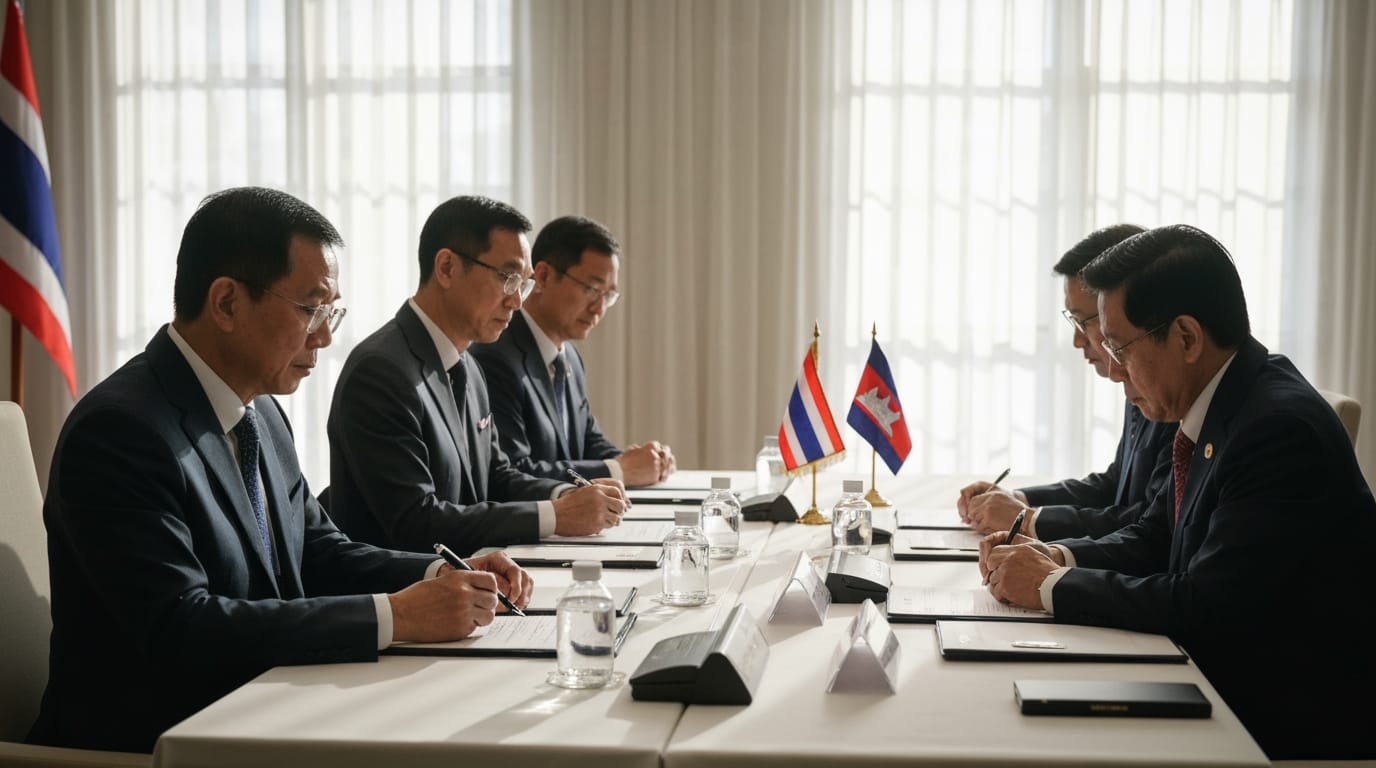
Chanthaburi, Thailand – In a critical attempt to halt escalating hostilities, military officials from Thailand and Cambodia commenced a fresh round of ceasefire talks today, December 24, 2025, at the Ban Laem border checkpoint in Thailand's Chanthaburi province. These discussions aim to forge a lasting truce after weeks of deadly clashes reignited along the disputed 800-kilometer border, displacing hundreds of thousands and claiming numerous lives. The renewed dialogue, convened under the existing General Border Committee (GBC) framework, represents a precarious step towards de-escalation, underscoring the urgent need for a viable peace mechanism between the two Southeast Asian neighbors.
Renewed Hopes for a Durable Ceasefire
The current round of talks, proposed by Cambodia and taking place following an emergency meeting of ASEAN foreign ministers in Kuala Lumpur, Malaysia, is structured to address the immediate cessation of hostilities and pave the way for a more stable peace. Thai Foreign Minister Sihasak Phuangketkeow emphasized that true progress hinges on detailed bilateral negotiations and actions on the ground, rather than mere public pronouncements. The GBC secretariat officials are scheduled to meet for four days, with the potential for a meeting between the defense ministers of both nations on December 27 if technical discussions yield sufficient agreement on critical frameworks, including troop deployments. This bilateral approach is preferred by Thailand, which has voiced skepticism about the effectiveness of previous, more hastily arranged ceasefires. International actors, including the United States, Malaysia, and China, have previously attempted to mediate, with China recently stepping up its efforts to encourage dialogue and a peaceful resolution.
A Century of Contention: The Preah Vihear Legacy
The volatile border dispute between Thailand and Cambodia traces its roots back to the early 20th century, a complex legacy of colonial-era cartography and historical claims. The core of the conflict has frequently centered on the ancient Khmer temple of Preah Vihear, a UNESCO World Heritage site situated atop the Dangrek Mountains. The International Court of Justice (ICJ) ruled in 1962 that the temple belonged to Cambodia, a decision reaffirmed in 2013 regarding the immediate vicinity. However, the precise delimitation of the surrounding 4.6 square kilometer area has remained contentious, with both nations holding differing interpretations of the 1904 and 1907 Franco-Siamese treaties and the maps produced by French surveyors. These historical discrepancies in mapping, including conflicting scales and projections, continue to fuel disagreement, particularly concerning sections of the border that remain undemarcated. The issue became a flashpoint again in 2008 when Cambodia's successful bid to list Preah Vihear as a World Heritage site triggered renewed tensions and military clashes.
The Unraveling of Previous Agreements and Escalation
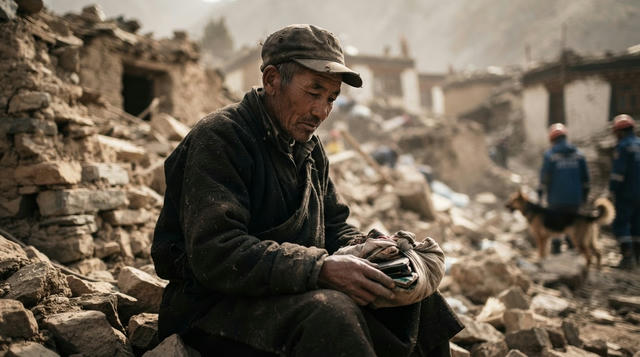
The current resumption of talks follows a significant deterioration of the security situation. A previous ceasefire agreement brokered in July 2025 and a peace declaration signed in October 2025, notably witnessed by former U.S. President Donald Trump, both failed to hold. Tensions escalated sharply on December 7, leading to renewed armed conflict that has claimed at least 44 lives and forced more than half a million civilians to flee their homes on both sides of the border. Thailand has accused Cambodia of violating these earlier agreements, citing alleged landmine placements that have resulted in Thai military casualties. This deep-seated mistrust has complicated diplomatic efforts, with Thailand emphasizing the need for genuine commitment from Phnom Penh. The recurring cycle of conflict and failed ceasefires highlights the fragility of peace in a region where historical grievances can easily be instrumentalized for domestic political gains.
The Path Forward: Technical Demarcation and Bilateral Mechanisms
Beyond the immediate need for a ceasefire, the long-term resolution of the border dispute lies in comprehensive demarcation. The Joint Boundary Commission (JBC), established in 2000, serves as the primary technical mechanism for this purpose, focusing on the survey and demarcation of the land boundary. While significant progress has been made, with approximately 603 kilometers of the 798-kilometer boundary successfully demarcated since 1997, around 195 kilometers remain unsettled. Challenges persist, particularly concerning differing interpretations of historical maps and the four disputed areas of Emerald Triangle, Ta Moan Thom, Ta Moan Toch, and Ta Krabei temples. Cambodia has indicated a preference for the 1:200,000-scale map based on Franco-Siamese treaties, while rejecting Thailand's unilaterally produced 1:50,000-scale maps. The ongoing JBC work, including recent joint surveys and the placement of temporary markers in specific areas, underscores the meticulous and often slow nature of achieving a fully demarcated and mutually recognized border.
The resumption of peace talks between Thailand and Cambodia, while fraught with challenges and the fresh memory of recent violence, offers a glimmer of hope for stability in the region. The human cost of the renewed conflict underscores the critical importance of these negotiations. Achieving a durable ceasefire and making tangible progress on border demarcation will require sustained political will, mutual accommodation, and a commitment to bilateral mechanisms. The international community watches closely, hopeful that these discussions can finally lay the groundwork for a lasting peace, allowing displaced populations to return and fostering greater cooperation between these two important ASEAN member states.