The Beautiful Game, The Strongman's Grip: How Football Helps Orbán Cement Power in Hungary
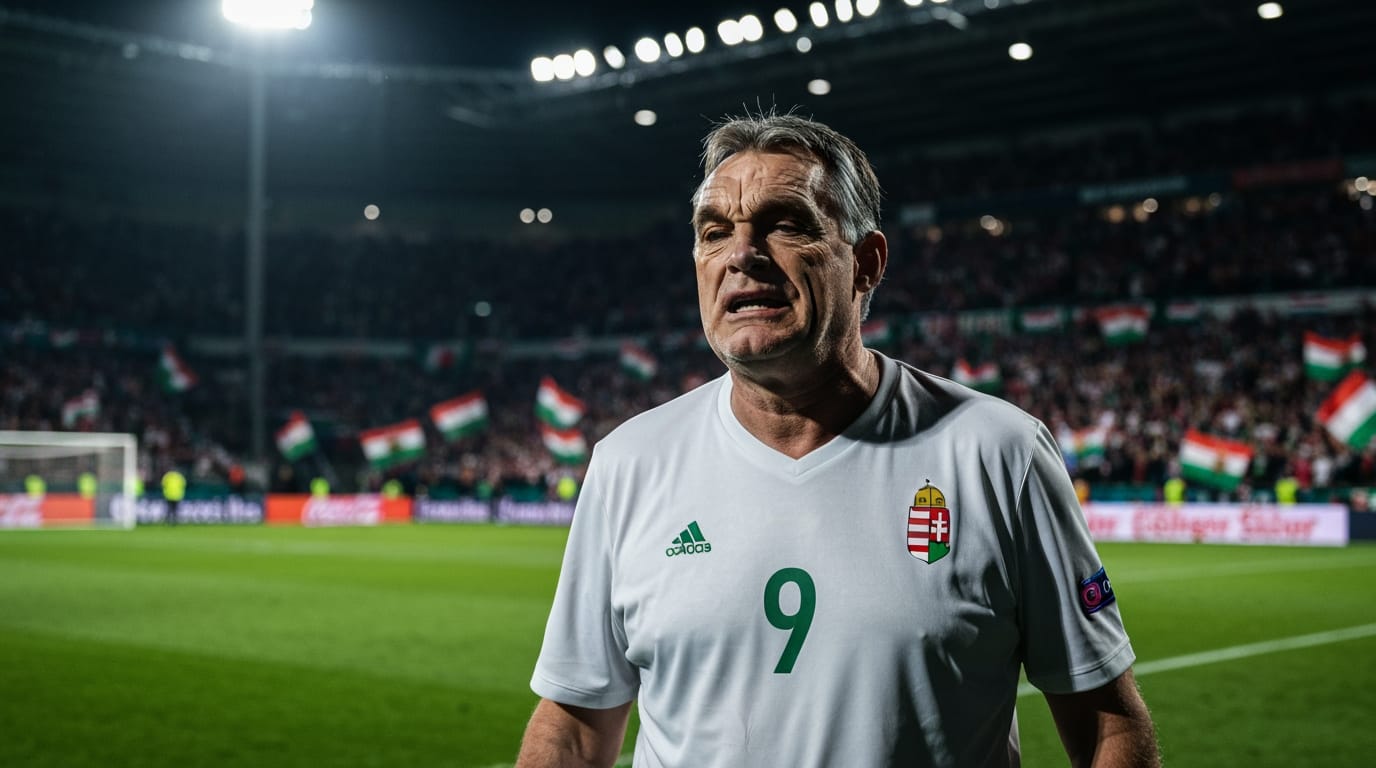
BUDAPEST – In the heart of Europe, where political currents often run turbulent, Hungarian Prime Minister Viktor Orbán has masterfully woven his deep passion for football into the fabric of his political strategy, leveraging the sport to bolster national identity, consolidate power, and secure electoral victories. Since returning to office in 2010, Orbán's government has channeled billions into football, transforming the landscape of Hungarian soccer with new stadiums and academies, intertwining the national pastime with his populist nationalist agenda. This elaborate play of sport and politics has not only redefined Hungarian football but has also become a cornerstone of Orbán's enduring political dominance.
A Personal Obsession Becomes National Policy
Viktor Orbán's connection to football is profoundly personal, rooted in his childhood in the small village of Felcsút, where he played as a hard-driving forward for the local team. His love for the game is so profound that he even rejoined FC Felcsút during his first tenure as prime minister. This personal passion translated into a sweeping national policy upon his return to power in 2010. Orbán envisioned a revival of Hungarian football, harkening back to the glory days of Ferenc Puskás and the "Mighty Magyars" of the 1950s, a potent symbol of past national greatness.
Central to this vision is the Puskás Akadémia FC, a club Orbán founded in 2007 in his hometown of Felcsút, a village of just 1,800 people. This academy and club have received substantial state support, with reports indicating over €370 million channeled into its operations through subsidies, tax schemes, and public sponsorships. The club's home ground, the Pancho Arena, is a striking, almost cathedral-like stadium with a seating capacity of 3,800 – more than double Felcsút's population. The stadium stands remarkably close to Orbán's own childhood home, a testament to the intimate link between his personal history and his political projects.
Billions Poured into Pitches and Palaces
The scale of financial investment in Hungarian football under Orbán's leadership is staggering. Since 2010, the government has spent an estimated $2.7 billion (approximately €2.5 billion) on revitalizing the sport. A significant portion of this investment has gone into infrastructure, with at least 25 new stadiums constructed across the country since Orbán's return to power. The crown jewel of this stadium-building spree is the Puskás Arena in Budapest, which hosted Euro 2020 matches and came with a price tag of nearly half a billion euros.
Much of this funding has been channeled through the controversial TAO scheme, a corporate tax relief program introduced in 2011. This scheme allows companies to receive generous tax breaks if they donate money to sports teams, effectively diverting tax revenue towards sporting infrastructure. Critics argue that this system lacks transparency and disproportionately benefits construction firms often linked to Fidesz, Orbán's ruling party. The chairman of Puskás Akadémia FC, Lőrinc Mészáros, for instance, is a close Orbán ally and has seen his wealth significantly increase, acquiring numerous businesses, including media outlets.
Beyond national borders, Hungary's football investments extend to neighboring countries with significant ethnic Hungarian populations. Billions of forints have been allocated to build academies and stadiums in regions of Serbia, Romania, and Slovakia. This cross-border strategy is widely seen as a soft-power play, aimed at strengthening ties with ethnic Hungarian communities and, crucially, securing their votes in Hungarian elections. Since legislative changes in 2011, Hungarians abroad have the right to vote, and a substantial majority of these diaspora votes have consistently gone to Fidesz, directly contributing to Orbán's parliamentary supermajority.
Football as a Tool for National Cohesion and Political Control
For Orbán, football is more than just a game; it is a powerful vehicle for fostering national pride and identity, connecting with historical narratives, and delivering political messages. Public appearances at matches by Orbán and other Fidesz politicians are frequent, with photos often highlighting the boisterous crowds rather than the match itself, underscoring the spectacle's political utility. The sport is used to evoke a sense of shared heritage and national re-awakening, portraying Orbán as the leader who is "putting his people first" by investing in a beloved national symbol.
This political engagement extends to a significant level of control over the sport's administration. Currently, eleven of the twelve clubs in Hungary's top football league are owned by individuals loyal to Orbán or affiliated with Fidesz. This pervasive influence ensures alignment with the government's broader political objectives, mirroring Fidesz's consolidation of power across various sectors, including the media.
The Cost of the Game: Criticisms and Controversies
Despite the impressive infrastructure and the undeniable enthusiasm among some fans, Orbán's football obsession has drawn considerable criticism. Opponents argue that the massive spending on stadiums and clubs is disproportionate, diverting vital public funds from other crucial areas such as education, healthcare, and social services. The lack of transparency in funding, particularly concerning the TAO scheme and the beneficiaries of construction contracts, has fueled allegations of corruption and favoritism. European Union authorities have also raised concerns, initiating action against the Hungarian government over potential misuse of EU funds in projects related to Orbán's hometown.
Furthermore, questions persist about the actual impact on Hungarian football talent. Despite the lavish investment, some analysts suggest that the quality of play and the development of new Hungarian players have not significantly improved. Critics point to the fact that many successful Hungarian players in top European leagues developed their skills outside the domestic system.
Conclusion: A Legacy Scored in Politics
Viktor Orbán's embrace of football as a political instrument is a complex phenomenon. It taps into genuine national sentiment and a deep love for the game, resonating with many Hungarians who appreciate the renewed attention and investment in their national sport. The gleaming new stadiums and improved facilities stand as tangible symbols of national pride and modernization.
However, this strategy also carries significant political and economic costs. The intertwining of sport and state has blurred lines, leading to accusations of cronyism, misuse of public funds, and a diversion of resources from critical sectors. For Orbán, football is undeniably a powerful and effective tool for maintaining his grip on power, fostering a sense of national unity, and extending his influence both domestically and among ethnic Hungarian communities abroad. Whether this will ultimately lead to a lasting footballing renaissance or remain primarily a political project designed to secure votes and loyalties, only time will tell. What is clear is that in Hungary, the roar of the crowd often echoes with the undertones of political power.